News headlines in February 2026
Bombing of Iran and retaliatory strikes ‘a grave threat to international peace and security’: Guterres
- UN News
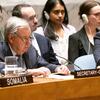
“Everything must be done” to prevent wider escalation of war across the Middle East following joint US-Israeli strikes against Iran, and retaliatory action from Tehran targeting multiple countries in the region, the UN Secretary-General told the Security Council on Saturday.
MIDDLE EAST LIVE: UN Security Council meeting in emergency session over Iran
- UN News
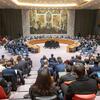
The UN Security Council is in emergency session in the aftermath of major airstrikes across Iran by the United States and Israel. In retaliation, Tehran has launched its own attacks throughout the Middle East. UN chief António Guterres told ambassadors the action risks “igniting a chain of events that nobody can control in the most volatile region of the world.” He added that “everything must be done to prevent further escalation.” Follow our live coverage from UN Web TV below. UN News app users can follow here and full meetings coverage can be found daily, here.
Iran attacks and retaliatory strikes ‘undermine international peace and security’
- UN News

UN Secretary-General António Guterres and the heads of UN agencies have condemned Saturday’s joint Israeli and US attacks on Iran and the Iranian retaliatory strikes on Israel and the Gulf Regions.
‘AI Kid of India’ urges young people to embrace technology
- UN News

16-year-old Raul John Aju – dubbed the “AI Kid of India” at home – is a business prodigy who advises government and industry and has created several innovative AI tools.
Philippines: ‘Preventing Similar Cases Requires Dismantling the Mechanisms That Treat Dissent as Crime’
- Inter Press Service

CIVICUS discusses the criminalisation of dissent in the Philippines with Kyle A Domequil, spokesperson of the Free Tacloban 5 Network, a campaign supporting journalist Frenchie Mae Cumpio, human rights defender Marielle Domequil and their co-accused and advocating for their release.
Climate Change Is Coming for Your Morning Coffee
- Inter Press Service

BULAWAYO, Zimbabwe, February 27 (IPS) - Your morning cup of coffee could soon cost more, thanks to climate change, which is raising the heat on the production of the world’s most loved beverage.
Maison des Talibés Confronts Abuse of ‘Talibé’ children in Senegal
- Inter Press Service

SAINT-LOUIS, Senegal, February 27 (IPS) - When you walk through the streets of Senegal’s cities, you notice them almost immediately: young boys in worn clothes, clutching plastic cans or tin bowls, weaving between cars and pedestrians to ask for spare change or food. They are often barefoot, alone and hungry. These children are known as talibés.
Over 25,500 Palestinians Killed: Absence of Accountability is Nothing Short of Shameful
- Inter Press Service

GENEVA, February 27 (IPS) - The situation in the Occupied Palestinian Territory is a human-made disaster.
The report before you sets out events between 1 November 2024 and 31 October 2025 that show Israel’s utter disregard for human rights in Gaza and the West Bank, and the serious violations also committed by Hamas and other Palestinian armed groups.
Massive US War Spending Hike Raises Debt, Taxes, Doubts
- Inter Press Service

KUALA LUMPUR, Malaysia, February 27 (IPS) - As US President Donald Trump pushes the world to war, arms spending has been rising worldwide. Wars secure more budgetary allocations, mainly benefiting the US-dominated military-industrial complex.
Eight years of captivity: Finding freedom and healing in Ukraine
- UN News

Four years after Russia’s full-scale invasion of Ukraine, many people are trying to overcome deep-rooted trauma and rebuild what has been lost.
Powered by