News stories by Jomo Kwame Sundaram, page 34
Revisiting privatization’s claims
- Inter Press Service

KUALA LUMPUR, Malaysia, Sep 04 (IPS) - Advocates made exaggerated claims that privatization would reduce governments' fiscal problems while ensuring more efficient, productive and competitive economies by promoting private entrepreneurship, innovation and investments.
Several arguments have been advanced to justify privatization since the 1980s. Privatization has been advocated as an easy means to:
- Reduce the government's financial and administrative burden, particularly by undertaking and maintaining services and infrastructure;
- Promote competition, improve efficiency and increase productivity in providing public services;
- Stimulate private entrepreneurship and investment to accelerate economic growth;
- Help reduce the public sector's presence and size, with its monopolistic tendencies and bureaucratic support.
Has Globalization Enhanced Development Cooperation?
- Inter Press Service

KUALA LUMPUR, Aug 21 (IPS) - Protracted economic stagnation in rich countries continues to threaten the development prospects of poorer countries. Globalization and economic liberalization over the last few decades have integrated developing countries into the world economy, but now that very integration is becoming a threat as developing countries are shackled by the knock-on effects of the rich world's troubles.
Demonizing State-Owned Enterprises
- Inter Press Service

KUALA LUMPUR, Aug 14 (IPS) - To make the case for privatization from the 1980s, their real problems were often caricatured and exaggerated.Historically, the private sector has been unable or unwilling to affordably provide needed services. Hence, meeting such needs could not be left to the market or private interests. Thus, state-owned enterprises (SOEs) emerged, often under colonial rule, due to such ‘market failure' as the private sector could not meet the needs of colonial capitalist expansion.
Global Economy Vulnerable a Decade After
- Inter Press Service

SYDNEY & KUALA LUMPUR, Jul 30 (IPS) - Ten years ago, deteriorating confidence in the value of US sub-prime mortgages threatened a liquidity crisis. The US Federal Reserve injected considerable capital into the market, but could not prevent the 2008-2009 global financial crisis (GFC).
The 2008 meltdown exposed the extent of finance-led international economic integration, with countries more vulnerable to financial contagion and related policy ‘spillovers' exacerbating real economic volatility. It also revealed some vulnerabilities of the post-Second World War (WW2) US-centred international financial ‘architecture' – the Bretton Woods system – modified after its breakdown in the early 1970s.
Globalization, Inequality, Convergence, Divergence
- Inter Press Service

KUALA LUMPUR, Malaysia, Jul 26 (IPS) - Economic divergence among countries and regions was never pre-ordained. According to the late cliometrician Angus Madison and other economic historians, the great divergence between the global North and South, between developed and developing countries, began around five centuries ago, from the beginning of the European, particularly Iberian colonial conquests.
Will Trump’s Trade War Make America Great Again?
- Inter Press Service

SYDNEY & KUALA LUMPUR, Jul 16 (IPS) - The United States has had the world's largest trade deficit for almost half a century. In 2017, the US trade deficit in goods and services was $566 billion; without services, the merchandise account deficit was $810 billion.
Agricultural Trade Liberalization Undermined Food Security
- Inter Press Service

KUALA LUMPUR AND SYDNEY, May 21 (IPS) - Agriculture is critical for achieving the Sustainable Development Goals (SDGs). As the Food and Agriculture Organization (FAO) notes, ‘From ending poverty and hunger to responding to climate change and sustaining our natural resources, food and agriculture lies at the heart of the 2030 Agenda.'
Blending Finance Not SDG Financing Silver Bullet
- Inter Press Service
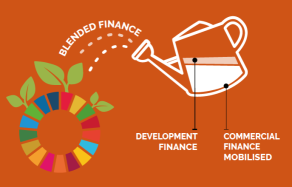
SYDNEY & KUALA LUMPUR, Apr 30 (IPS) - After largely failing to provide 0.7 per cent of their Gross National Income (GNI) in aid to developing countries for almost half a century since making the commitment, donor countries have recently promoted blended finance (BF) as a solution to the financing for development challenge. Blending refers to combining public development funds (in the form of grants, technical assistance or interest indemnification) with loans from private lenders.
What’s different about Trump’s tariffs?
- Inter Press Service
KUALA LUMPUR, Malaysia, Apr 03 (IPS) - At Davos in January, US President Donald Trump warned that the US "will no longer turn a blind eye to unfair economic practices" of others, interpreted by many as declaring world trade war. Before the US mid-term elections in November, Washington is expected to focus on others' alleged "massive intellectual property theft, industrial subsidies and pervasive state-led economic planning" pointing to China without always naming names. With the Republican Party already united behind his tax bill, Trump senses an opportunity to finally unite the party behind him and to continue his campaign for re-election in 2020.
Trump’s Trade War in Perspective
- Inter Press Service

SYDNEY & KUALA LUMPUR, Mar 12 (IPS) - US President Donald Trump's recent announcement of steep tariffs on steel and aluminium imports seems to have shocked US allies, even though these were among his 2016 election promises. The European Union (EU), Australia and Canada reacted sharply, in contrast to the more restrained response from China, the main target of earlier actions.
Powered by