News stories by Katsuhiro Asagiri
Central Asia Marks 20 Years of Its Nuclear-Weapon-Free Zone With Renewed Call for Disarmament
- Inter Press Service

TOKYO, Japan, September 11 (IPS) - Twenty years after five Central Asian states signed a landmark treaty banning nuclear weapons across their region, their foreign ministers have used the anniversary to warn that faltering arms-control agreements, nuclear modernization and deepening international mistrust are placing global security under growing strain.
Beyond the Death Penalty Debate: Human Dignity and Justice in Japan
- Inter Press Service

TOKYO, Japan, September 8 (IPS) - A symposium examining Japan’s death penalty through the lens of human dignity was held on September 5 at Joseph Hall of St. Ignatius Church in Yotsuya, Tokyo.
35 Years After Semipalatinsk, Kazakhstan’s Nuclear Choice Still Challenges the World
- Inter Press Service
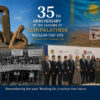
TOKYO / ASTANA, August 31 (IPS) - Across the vast steppe of northeastern Kazakhstan, the scars of the Cold War remain visible. At the Semipalatinsk Nuclear Test Site, the Soviet Union conducted 456 nuclear tests between 1949 and 1989, exposing nearby communities to radiation and leaving health and environmental consequences that have endured across generations.
Hiroshima’s Question: Will We Continue to Live Under the Nuclear Shadow?
- Inter Press Service

HIROSHIMA, Japan, August 7 (IPS) - This year’s Hiroshima Peace Declaration did not begin with words of remembrance alone. It opened instead with what the declaration called “military invasions using nuclear weapons as tools of intimidation,” “imperious actions by major powers in violation of international law,” and the failure of the Nuclear Non-Proliferation Treaty, or NPT, Review Conference — for the third consecutive time — to adopt a final document.
From the Nuclear Age to the Age of Artificial Intelligence: Can Humanity Build a New Architecture for Peace?
- Inter Press Service

VATICAN CITY, July 13 (IPS) - More than eight decades after the atomic bombings of Hiroshima and Nagasaki ushered humanity into the nuclear age, the world is confronting another technological revolution whose consequences extend far beyond science and industry.
Understanding an Interconnected World: Why Roberto Savio Believes Global Citizenship Matters More Than Ever
- Inter Press Service
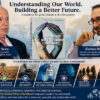
ROME, July 1 (IPS) - When Roberto Savio begins talking about The Global Citizen Handbook, he does not begin with the book itself.
Japan and Kazakhstan: A Partnership for an Age of Energy Insecurity and Nuclear Risk
- Inter Press Service

TOKYO, Japan, May 25 (IPS) - The relationship between Japan and Kazakhstan is often described in terms of diplomacy, investment and regional cooperation. But at a time of growing geopolitical uncertainty, it deserves to be understood in broader terms: as a partnership linking cities, resources, technology and peace.
Japan and Kazakhstan Draw Closer as Iran Crisis Reshapes Energy and Security Priorities
- Inter Press Service

TOKYO, Japan, April 7 (IPS) - As tensions surrounding Iran deepen and uncertainty spreads across global energy markets, Japan is once again confronting a structural weakness: its heavy dependence on Middle Eastern oil.
Can “Human Fraternity” Move Peace?
- Inter Press Service

ABU DHABI, United Arab Emirates, February 24 (IPS) - As wars drag on and the international order grows increasingly unstable, Abu Dhabi has been offering a different kind of narrative. It sought to recognize early efforts at reconciliation, bring religious leaders into the same space, and place former adversaries under the same spotlight. At the heart of the February 4, 2026 Zayed Award for Human Fraternity ceremony was an attempt to make visible, in a public setting, the choice of moving in the direction of easing conflict.
Central Asia–Japan Leaders’ Summit in Tokyo Backs Trans-Caspian Corridor; Tokayev Warns Nuclear Risks Are Rising
- Inter Press Service

TOKYO, Japan, December 22 (IPS) - Leaders of Japan and the five Central Asian states met in Tokyo on Dec. 20 and adopted the “Tokyo Declaration,” launching a new leaders-level format under the “Central Asia plus Japan Dialogue” (CA+JAD). The declaration places at the core of cooperation two priorities: strengthening supply-chain resilience for critical minerals, and supporting the Trans-Caspian Corridor (the Trans-Caspian International Transport Route), which links Central Asia with Europe without transiting Russia.
Powered by