News stories by Daud Khan, page 3
COVID-19: Developing Countries Must Not be Left Behind
- Inter Press Service

WAGENINGEN, Netherlands / ROME, May 05 (IPS) - Globalization has been a driver for increased prosperity world-wide, but it has been in reverse in the last years due to the growth of populism in the USA and Europe. The COVID-19 pandemic may well provide further momentum to increasingly national-interest oriented policies in the west.
The Economic Impact of COVID-19 on Developing Countries - Part 2
- Inter Press Service

AMSTERDAM/ROME, Apr 06 (IPS) - What is likely to be the impact of the COVID-19 pandemic on developing economies? In the first of this two part article we looked at possible short term disruptions and discussed actions by the private sector and Governments.
The Economic Impact of COVID-19 on Developing Countries
- Inter Press Service

AMSTERDAM/ROME, Apr 01 (IPS) - Part 1 – Addressing the Short Term Aspects
What is likely to be the impact of the COVID-19 pandemic on developing economies? It is difficult to make predictions, because much will depend on the spread of the disease, especially in Africa, Latin America, Asia and the Middle East, and the measures various Governments will take in the coming weeks and months.
Improving Development Impact
- Inter Press Service
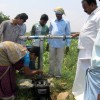
ROME, Mar 24 (IPS) - Most developing countries have good policies, programmes and projects in place. Many of these have been prepared with assistance from development partners or international financing institutions such as the World Bank, the regional development banks, the UN agencies or bilateral aid agencies.
Most of these are of high quality and have gone through intensive review and quality control. The major challenge is to effectively implement these policies, programmes and projects. Unfortunately this does not often happen and leads to huge lost opportunities. This is particularly the case in the poorest countries, many of which are conflict affected.
What Should FAO's New Director General Focus on?
- Inter Press Service

ROME, Jul 10 (IPS) - On 23 June 2019 Mr Qu Dongyu of China was elected as the new Director General of the Food and Agriculture Organization. FAO is one of the largest UN specialized agencies with a budget for 2018-19 of US$2.5 billion, offices in over 130 countries and more than 11,000 employees.
Liberalism and Developing Countries
- Inter Press Service

AMSTERDAM/ROME, Jun 24 (IPS) - As China rapidly replaces Europe and the USA as the key player in developing countries, the Western press is full of articles about the dangers of dealing with the Chinese.
Lessons From China: Fostering Agricultural Growth and Poverty Reduction
- Inter Press Service

ROME, Apr 18 (IPS) - As China has moved from a poor isolated country to a major player in the world economic and political sphere, developing countries need to learn how to engage.
China and Developing Countries: Managing Chinese Investments
- Inter Press Service

ROME, Apr 03 (IPS) - Fifty years ago China was a poor country with little influence in the international sphere and without even a seat at the United Nations. Since then rapid economic growth in China has made it an economic powerhouse that increasingly plays a leading role on the world stage as a trade partners as well as a source of investment.
The Rohingya – The Forgotten Genocide of Our Time
- Inter Press Service

AMSTERDAM/ROME, Jan 09 (IPS) - The Rohingya are a minority community living in Rakhine State in Myanmar. The Muslim Rohingya are considered intruders into Buddhist Myanmar - illegal immigrants from bordering Bangladesh. They have been always discriminated against, looked down upon, ostracized, and denied any civil and judicial rights.
Pakistan: Food Security and Reducing the Price of Wheat
- Inter Press Service

ROME, Dec 17 (IPS) - Robert W. Fogel, the 1993 Nobel Prize Laureate for Economics, through his work on "efficiency wages", pointed out that hungry and undernourished workers are not as productive as well fed and healthy workers. At the level of an individual firm, it would thus make sense for an employer to pay wages that are high enough to allow workers access to food and other necessities – even if such wages are higher than the going market rate.
Powered by