News stories by UN Women
Women and Girls’ Death Toll in Armed Conflict Doubles since 2021
- Inter Press Service
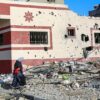
NEW YORK, October 30 (IPS) - More than 37,000 civilians were killed in conflict last year. Women and girls accounted for one in four of these deaths – double their proportion in 2021 – according to the 2026 UN Secretary-General’s report on Women, Peace, and Security, released today.
Middle East Escalation Could Leave 11.7 Million More Women and Girls Facing Food Insecurity by End-2026
- Inter Press Service

GENEVA, October 13 (IPS) - An additional 11.7 million women and girls could face food insecurity by the end of 2026, as the escalation in the Middle East and disruption to the Strait of Hormuz drive up food prices and strain livelihoods and household resources, according to a new UN Women analysis published today.
Nearly 50,000 Women and Girls Killed or Severely Injured in Gaza in Three Years of War – One in 21 Gazan Women and Girls
- Inter Press Service
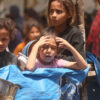
UNITED NATIONS, October 9 (IPS) - Since October 2023, 50,000 women and girls in Gaza have been killed or seriously injured.
AI is Already Rewriting Reality for Billions of People– But It is Getting Women Wrong
- Inter Press Service

UNITED NATIONS, June 23 (IPS) - A study of 133 AI systems found that 44 per cent demonstrated gender bias and 26 per cent demonstrated both gender and racial bias. Yet only 51 per cent of marketers currently use human oversight to test AI-generated creative before release. Ahead of the United Nations Global Dialogue on Artificial Intelligence Governance from 6 – 7 July and AI for Good Global Summit in Geneva, Switzerland from 7-10 July, UN Women sets out what is at stake – and what must change – to build a gender-equal digital future.
Only 1 in 7 Countries is Led by a Woman – as Global Political Power Remains Dominated by Men
- Inter Press Service

UNITED NATIONS, March 13 (IPS) - Across the world, women remain vastly under-represented in political leadership, with the most powerful decisions still overwhelmingly made by men. In 2026, only 28 countries are led by a woman Head of State or Government, while 101 countries have never had a woman leader, according to the latest data released by Inter-Parliamentary Union (IPU) and UN Women.
International Women’s Day 2026: No Country in the World has Reached Full Legal Equality for Women and Girls
- Inter Press Service

NEW YORK, March 5 (IPS) - On 8 March 2026, International Women’s Day, UN Women issues a global alert: justice systems meant to uphold rights and the rule of law are failing women and girls everywhere. Women globally hold just 64 per cent of the legal rights of men, exposing them to discrimination, violence, and exclusion at every stage of their lives.
International Women’s Day & 70th Session of the UN Commission on the Status of Women
- Inter Press Service

UNITED NATIONS, February 26 (IPS) - International Women’s Day 2026 comes at a defining moment: Women and girls have never been closer to equality, and never closer to losing it. Legal protection against domestic violence has expanded in many countries. Yet, the rights of women and girls are being rolled back in plain sight, and across the world, women still do not enjoy the same legal rights as men.
When Taliban Shut Down the Internet, Women Lost their Lifeline to Aid, Education & Each Other
- Inter Press Service

NEW YORK, October 22 (IPS) - When the Taliban recently cut off the Internet and phone networks across Afghanistan, millions of women and girls were silenced. For those with connectivity, the blackout severed their last link to the outside world – a fragile connection that had kept education, work, and hope alive.
One in Three Women Experiences Gender-based Violence
- Inter Press Service

UNITED NATIONS, Nov 20 (IPS) - Every year, the 16 Days of Activism against Gender-Based Violence (GBV) campaign led by UN Women serves as a powerful reminder of the widespread violence women and girls face worldwide.
Community Conversations in Ethiopia Prevents Exploitative Migration
- Inter Press Service

, Sep 22 (IPS) - Five years ago, when Meliya Gumi's two daughters, Gifty* and Chaltu,* aged 16 and 18, migrated to Dubai and Qatar respectively, as domestic workers, everyone thought they were moving towards a better future. As a widowed mother of eight with little resources, living in the village of Haro Kunta in the Oromia region of Ethiopia, Gumi had a difficult time making ends meet.
Powered by