

The UAE’s Great Leap: Building the City of the Future
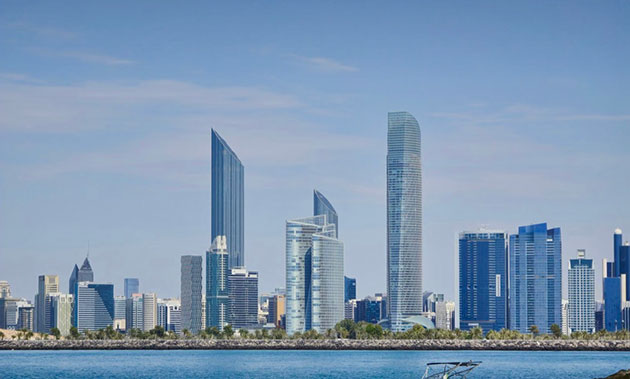
VICTORIA, Seychelles, November 4 (IPS) - I have stood on the corniche of Abu Dhabi at many moments over more than thirty years. Each time, I reflect on the distance this city has travelled: from a shoreline shaped by modest commercial buildings and dwellings to a capital whose architecture, institutions and ambitions look far beyond the horizon. Glass towers catch the Gulf light. The dome of the Louvre Abu Dhabi scatters sunlight across the water. Yet the transformation that interests me most is not the skyline itself. It is the thinking behind it.
What does it take to build a city of the future? Wealth, certainly. Technology, increasingly. But neither is sufficient without a vision of the society that city should serve. As a frequent visitor, a resident and a longstanding friend of the United Arab Emirates, I have watched that vision take shape. What I see is not a finished model, but a remarkable, evolving example of a country turning resources into possibilities.
That vision did not begin with glass and steel. Some leaders build institutions. Sheikh Zayed bin Sultan Al Nahyan built a nation, and gave it a soul. With wisdom, patience and an open heart, he brought the emirates together in 1971 and planted the seeds of unity, tolerance and generosity that still shape the UAE today. He believed in his people, cared for the land and the sea, and reached out to the world with kindness. The newly declared Zayed the Founder Day, to be observed each year on 7 January, is a beautiful way to honour a man whose vision lives on in every corner of this country. May Allah bless his soul.
No honest account of the UAE’s rise can overlook hydrocarbons. Oil provided the means for an extraordinary transformation. But natural wealth does not automatically produce lasting prosperity. Resources alone cannot build the institutions, skills and economic diversity needed to sustain development. What distinguishes the UAE, in my view, is its determination to treat oil revenue not simply as income to be spent, but as capital with which to prepare for a different future.
Trade, tourism, finance, manufacturing and technology have broadened its economy. Investment in education, healthcare and research reflects an understanding that the most enduring national resource is human capability. For small island states such as Seychelles, the lesson resonates. Our circumstances differ greatly, but the question is familiar: how do we use today’s opportunities to strengthen tomorrow’s resilience? The answer cannot be to wait until vulnerability becomes crisis.
One of the most revealing aspects of Abu Dhabi’s transformation is its investment in culture. The Louvre Abu Dhabi and the wider Saadiyat Cultural District express an ambition extending beyond tourism. They place art, history and encounters between civilisations within the country’s vision of development. The preservation of Qasr Al Hosn and other heritage sites provides an important counterpoint. A city moving rapidly towards the future must also maintain a conversation with its past. Modernity is too often measured in height, speed and scale. Museums, libraries and places of learning offer something less easily measured: space for reflection, creativity and understanding.
The same principle applies to education and healthcare. Institutions such as NYU Abu Dhabi, Sorbonne University Abu Dhabi and Cleveland Clinic Abu Dhabi illustrate the effort to make knowledge and specialised care part of the country’s foundations. Here, the city of the future acquires its deeper meaning: not only in what it displays, but in what it enables people to become.
Artificial intelligence has become central to the UAE’s ambitions. Its digital investments and the establishment of the Mohamed bin Zayed University of Artificial Intelligence signal a determination to help shape technological change. The value of that ambition lies in its human purpose: improving services, healthcare and education, and helping communities manage resources more intelligently. That responsiveness is also felt in ordinary moments.
I have often been struck by Abu Dhabi’s maintained public spaces, walkways and the sense of ease I experience walking its streets. The UAE ranks among the world’s safest places by residents’ perceptions of nighttime safety. Gallup’s 2025 Global Safety Report found that 90 percent of people surveyed in the country felt safe walking alone at night. For me, this is more than a statistic. That quiet freedom from fear is a precious part of daily well-being.
So, too, is the greening of a desert city. Trees, gardens and flowering verges soften the urban landscape. Abu Dhabi’s continuing tree-planting programmes, including native ghaf trees, seek to expand shade and improve the environment along walking and cycling routes. These are not merely decorative touches. They express care for how people experience the places they inhabit. As an islander and an advocate for ocean conservation, I am particularly interested in how urban ambition connects with environmental responsibility.
The UAE’s investment in solar power and other low-carbon energy sources, together with its net-zero commitment, reflects an effort to prepare for a changing energy future. Its continuing dependence on hydrocarbons also makes clear the complexity of that transition. The journey requires sustained implementation: cleaner energy, responsible water use, reduced emissions and habitat protection. The UAE’s mangrove restoration and marine conservation efforts are especially meaningful to me. Mangroves protect coastlines, shelter marine life and store carbon. Coral reefs sustain biodiversity and coastal livelihoods, even as warming seas place them under pressure. For Seychelles and other island nations, these are not abstract concerns. They are questions of security, identity and survival. A city’s relationship with the natural world does not end at its waterfront.
Another defining feature of the UAE is the diversity of those who live and work there. People from across the world contribute to its economy and daily life. Such diversity calls for more than mutual respect. It calls for belonging—and the assurance that every person’s safety matters, whatever their nationality. During the regional conflict, His Highness Sheikh Mohamed bin Zayed Al Nahyan gave powerful expression to that responsibility, placing the protection of citizens, residents and visitors at the top of the UAE’s priorities. “In the UAE,” he said, “everyone is Emirati through their love for this land and their contributions to it.” I find those words deeply meaningful. They speak of belonging not simply as something felt, but as a responsibility embraced by leadership. The Abrahamic Family House, bringing a mosque, a church and a synagogue together within one complex, offers another expression of coexistence. That spirit must also be lived beyond symbolic spaces. Workers’ dignity, fair treatment and opportunities across different backgrounds remain essential measures of progress. Recognising achievements need not mean overlooking the work that remains.
My perspective is also deeply personal. Over decades, I have witnessed the friendship between the UAE and Seychelles develop into practical cooperation. During my years in public office, I saw that partnership support water and electricity infrastructure, renewable energy, healthcare, housing and education. For a small island country, such cooperation is felt in families’ lives: access to treatment, reliable water, a home, or better opportunities for children. I remember with gratitude the late Sheikh Khalifa bin Zayed Al Nahyan. I also deeply value my longstanding friendship with President Sheikh Mohamed bin Zayed Al Nahyan, whose visionary leadership and commitment to his country’s development I have had the privilege of observing at close quarters. That friendship informs my account. It reinforces my belief that national achievement acquires greater meaning when it helps others strengthen their resilience.
The UAE’s experience cannot simply be replicated. Its resources, scale and circumstances are distinctive. The lesson here is not to imitate its skyline, but to draw inspiration from its willingness to imagine beyond present constraints—and to translate that imagination into action. Perhaps that is the deepest meaning of the UAE’s great leap. What I see taking shape is more than a skyline: it is a vision of prosperity that brings knowledge, culture, human well-being and care for the natural world into the same frame. Still evolving, still confronting the challenges that accompany rapid change, the UAE offers a beautiful example of what becomes possible when imagination is matched by the resolve to act.
Along Abu Dhabi’s corniche, the towers catch the light, but it is the horizon that holds my gaze. As someone who has returned to these shores over many years, and whose friendship with this country has deepened along the way, I find both beauty and inspiration in its unfolding story. I leave each walk with a feeling that reaches far beyond this waterfront: that the future need not simply be something we await. It can be something we have the courage to imagine—and the determination to build.
James Alix Michel is Former President of the Republic of Seychelles.
IPS UN Bureau



© Inter Press Service (20261104083114) — All Rights Reserved. Original source: Inter Press Service