

News headlines for “Trade, Economy, & Related Issues”, page 6
Trump’s “Comprehensive” Gaza Peace Plan a Cover for Genocide
- Inter Press Service

SYDNEY, September 8 (IPS) - It is nearly a year since the UN Security Council (UNSC) adopted Resolution 2803 on 17 November, 2025, endorsing President Trump’s 20-point framework ostensibly designed to end the war in Gaza and create a roadmap for long-term stability. It is not clear what progress has been made. In August 2026 The Jerusalem Post reported “the IDF continues almost daily strikes in Gaza”, killing more than 1,200 Palestinians since the US-brokered ceasefire deal came into effect, seizing more territory, and continuing to restrict the movement of people and goods into and out of Gaza. Nickolay Mladenov, the UN High Representative on the Board of Peace, wrote in early August 2026 that “two days of strikes across Gaza have killed civilians and destroyed medical supplies that people depend on”. Ironically, this genocidal strike happened only a few days after a US-brokered Hamas disarmament deal, which Trump called, “a monumental step” towards peace and security.
Ships and seafarers increasingly caught in the crossfire of unrelated wars
- UN News

The global shipping industry is facing a "genuinely unprecedented" convergence of maritime crises, with vessels and seafarers increasingly used as “leverage” in conflicts that have nothing to do with them.
AI datacentres pose growing threat to electricity systems worldwide
- UN News
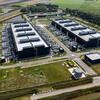
Use of data-intensive technologies – in particular artificial intelligence (AI) data centres – is growing faster than electricity infrastructure can handle, the UN’s economic commission for Europe has warned, raising concerns about the future reliability and resilience of energy systems worldwide.
UNGA 81: A United Nations at a Turning Point
- Inter Press Service

NEW YORK, September 7 (IPS) - The 81st session of the UN General Assembly (UNGA81) opens tomorrow at a particularly important moment for multilateralism. The UN80 reform initiative has entered what the Secretary-General describes as a decisive phase. Member States are selecting the next Secretary-General. The 2030 Agenda is entering its final four years, while conversations about what should follow it are beginning.
LIECHTENSTEIN: ‘We Have One of the Strictest Abortion Bans in Europe’
- Inter Press Service

CIVICUS discusses struggles for abortion rights in Liechtenstein with Gabriella Alvarez-Hummel, a journalist and reproductive rights activist who works with Fristenlösung für Liechtenstein, an organisation that campaigns for the introduction of a legal time-limit abortion model.
Nuclear Victims’ Experiences Must Be at the Heart of Global Efforts for Assistance and Remediation
- Inter Press Service
UNITED NATIONS, September 7 (IPS) - More and more, global disarmament discussions are encompassing the humanitarian and environmental impacts of the testing and use of nuclear weapons, as it becomes clear that the legacy of nuclear weapons leaves its mark on multiple generations.
Bridging Digital Transformation in an ASEAN-EAEU Cooperation
- Inter Press Service
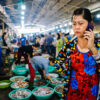
BANGKOK, Thailand, September 7 (IPS) - Physical borders are shrinking, and digital ones are quietly taking their place. As governments use digital transformation as a powerful driver of economic and sustainable development, the challenge is no longer simply a digital divide between those with technology and those without it. It is a question of digital fragmentation, where infrastructure, standards and regulations make cross-border cooperation more difficult.
Midwives: The Workforce That Will Determine Maternal and Newborn Survival and Africa’s Future
- Inter Press Service
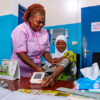
NEW YORK / ADDIS ABABA, September 7 (IPS) - Tonight, thousands of women across Africa will give birth. Whether they survive to see daylight will largely depend on where they live, how quickly they reach care, and whether the health system around them is ready to respond.
Africa’s Rangelands Are the Frontline of Resilience – COP17 Showed Why
- Inter Press Service

NAIROBI, Kenya, September 4 (IPS) - Across the Kenya-Tanzania rangelands, communities have long understood a reality that the global community is increasingly recognising: healthy rangelands support livelihoods, wildlife, water resources and local economies. They are among Africa’s most important natural assets and a foundation for resilience in a changing climate.
Nepalese Experts, Victims Contemplate the Future After the Flood
- Inter Press Service
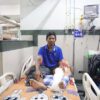
KATHMANDU, September 4 (IPS) - That day, Subash Tamang was mining sand along the banks of the Trishuli River near the Trishuli Hydropower Project, working alongside his wife, brother, sister-in-law, and two other family members. Suddenly, he noticed water gushing down from above the hydropower site. His first thought was that the dam had burst.
Powered by


Web feed for Trade, Economy, & Related Issues news headlines