News headlines for “Consumption and Consumerism”, page 10
From the Foothills of Mount Kilimanjaro, Magnolia Athletics Camp Is Helping Girls Stay in School, Pursue Athletics and Escape the Pressures of Harmful Traditional Practices
- Inter Press Service

OLOITOKTOK, Kenya, July 30 (IPS) - Before sunrise each morning, 19-year-old Josephine Sembeyo joins dozens of teenage runners leaving Magnolia Athletics Camp for training beneath the shadow of Mount Kilimanjaro.
Financing Africa’s Digital Future: Institutions Push for Smarter, Coordinated Funding
- Inter Press Service

ADDIS ABABA, Ethiopia, July 30 (IPS) - Africa’s digital revolution is gathering pace, but the financing needed to sustain it remains uneven, fragmented, and often out of reach.
Preparing Agriculture for a New Era of Extreme Weather
- Inter Press Service

URBANA, Illinois, US, July 29 (IPS) - Recently, the Food and Agriculture Organization of the United Nations put out an alert, warning countries around the world about an impending new El Niño phase that is expected to significantly increase the likelihood of drought, heat waves, storms, and flooding and pose major risks to agriculture across multiple regions.
Extreme Heatwave Escalates Urgency of Climate Adaptation in Europe
- Inter Press Service

SYDNEY, Australia, July 28 (IPS) - As Western Europe endured its worst-ever June heatwave in recorded history, the imperative for climate adaptation is now urgent as the continent accelerates beyond others to become the fastest-warming region in the world.
The Americas have the Tools to Eliminate HIV, but Gaps in Access & Coverage remain, says PAHO
- Inter Press Service

RIO de JANEIRO, Brazil, July 28 (IPS) - The Region of the Americas has more tools than ever before to prevent, diagnose, and treat HIV, yet many of them are still not reaching everyone who needs them, Pan American Health Organization (PAHO) Director Jarbas Barbosa said during the opening session of the International AIDS Conference (AIDS 2026).
Sudan’s War Economy: Funded By Gum Arabic And Gold
- Inter Press Service
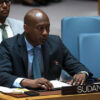
UNITED NATIONS, July 27 (IPS) - In the three years since the outbreak of the Sudanese Civil War, the humanitarian crisis has deteriorated significantly, with the United Nations underscoring a blatant disregard for international humanitarian law among warring parties. This includes the deliberate targeting of civilians in residential areas, widespread sexual violence, and attacks on critical infrastructure that have hindered aid efforts and pushed communities to the brink of collapse. To manage rising military expenses, the warring parties have increasingly relied on the exploitation of trade routes and territories, prompting humanitarian experts to express concern about a persistent, self-sustaining “war economy.”
Ongoing Need for Humanitarian Assistance in the Occupied Palestinian Territory
- Inter Press Service

UNITED NATIONS, July 27 (IPS) - On Monday July 20, a team from the United Nations Office for the Coordination of Humanitarian Affairs (OCHA) visited two displacement sites in Gaza where they found two family tents decimated by domestic fires. This incident is indicative of the increasing frequency of domestic fires in Gaza.
U.S.-Saudi Nuclear Agreement Opens Door to Civilian Nuclear Cooperation, with One Major Caveat
- Inter Press Service

UNITED NATIONS, July 27 (IPS) - On Wednesday, July 22, the U.S. Secretary of Energy, Chris Wright, and Saudi Arabia’s Minister of Energy, HRH Prince Abdulaziz bin Salman bin Abdulaziz signed a civilian nuclear cooperation agreement, best known as a 123 agreement, as well as an accompanying bilateral safeguards agreement, according to the U.S. Department of Energy and the Saudi Ministry of Energy.
Cockroach Protests: How India’s Youth Movement Led to Minister’s Resignation
- Inter Press Service

NEW DELHI, July 27 (IPS) - On July 25, after 50 days of protest at Delhi’s Jantar Mantar, Union Education Minister Dharmendra Pradhan resigned.
UNHCR: 75 years on, the Refugee Convention Remains a Lifeline for Millions
- Inter Press Service

GENEVA, July 27 (IPS) - Seventy-five years after the Refugee Convention was opened for signature on 28 July 1951, it remains the foundation of the international refugee protection system and one of the most consequential international legal instruments ever adopted.
Powered by