News headlines for “Consumption and Consumerism”, page 61
Solar-Powered Fish Farming Feeds Indigenous Communities in the Peruvian Amazon
- Inter Press Service

LIMA, August 8 (IPS) - “Our organization is showing that it is indeed possible to move toward energy transition and not depend on oil,” said Elaina Shajian, president of the Regional Coordinator of Indigenous Peoples of San Lorenzo (Corpi-SL), in the Peruvian Amazon.
Landlocked Developing Countries to Start ‘New Decade of Delivery’
- Inter Press Service

AWAZA, Turkmenistan, August 8 (IPS) - As the Third United Nations Conference on Landlocked Developing Countries (LLDC3) concludes today (Friday, August 8) in Awaza, Turkmenistan, with the adoption of the Awaza Political Declaration and the formal endorsement of the Awaza Programme of Action (2024–2034), there is optimism that LLDCs are finally at the dawn of a new era.
Beyond Lives Saved: Why Early Warning Systems Are a Smart Investment
- Inter Press Service

BANGKOK, Thailand, August 8 (IPS) - Significant progress has been made globally in implementing national and local disaster risk reduction strategies. Yet, the impact of disasters on lives and economies persists and disaster resilience is one of the most regressed areas in Sustainable Development Goal implementation.
Africa’s ‘land-linked’ economies poised to drive continent’s prosperity
- UN News

By leveraging their central location, expanding regional connectivity and embracing transformative technologies, Africa’s landlocked developing countries (LLDCs) are positioning themselves as vital contributors to the continent’s prosperity and sustainable development.
Landlocked but not left behind: UN summit in Turkmenistan wraps with bold new roadmap
- UN News
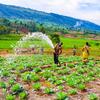
The Third UN Conference on Landlocked Developing Countries wrapped up earlier Friday in Awaza, Turkmenistan, with delegates adopting a landmark political declaration aimed at speeding up sustainable development and boosting resilience in 32 nations that lack direct access to the sea.
Women From Landlocked Developing Countries Set Sights on Open Horizons
- Inter Press Service

AWAZA, Turkmenistan, August 7 (IPS) - “Progress towards gender equality and equity remains uneven and far too slow. One in four women in landlocked developing countries (LLDCs) live in extreme poverty, and this is nearly 75 million women,” said Rabab Fatima, Secretary-General of the Third United Nations Conference on Landlocked Developing Countries or LLDC3 ongoing in Awaza, Turkmenistan.
Africa’s ‘Land-Linked’ Nations Chart a New Trade Route to Prosperity
- Inter Press Service

AWAZA, Turkmenistan, August 7 (IPS) - Once relegated to the periphery of Africa’s economic map due to their lack of coastline, the continent’s landlocked developing countries (LLDCs) are now reframing their geographic constraints as gateways to opportunity.
Latin America’s Electric Mobility on China’s Path
- Inter Press Service

RIO DE JANEIRO, August 7 (IPS) - Residents near the port of Itajaí in southern Brazil celebrated the arrival of 7,292 electric and hybrid vehicles from China aboard the ship BYD Shenzhen on May 28 as a “historic event,” with unloading taking four days.
From Semei to Hiroshima: Astana Times Editor on Bringing Global Solidarity Through Journalism
- Inter Press Service

TOKYO / ASTANA, August 7 (IPS) - Eighty years ago, the atomic bombings of Hiroshima and Nagasaki left a lasting reminder to humanity of the inhuman nature of nuclear weapons. Kazakhstan, too, is a nation deeply scarred by nuclear tests conducted during the Soviet era. Having covered the activities of Soka Gakkai International (SGI) in Kazakhstan—including its support for exhibitions and documentary productions on nuclear abolition in Astana—, INPS Japan recently interviewed Zhanna Shayakhmetova, editor-in-chief of The Astana Times, a leading English-language newspaper in the country that continues to convey messages of disarmament and peace to the world. In the interview, Shayakhmetova spoke about the role of religious leaders who will gather in Astana from around the world this September, the importance of passing on memories to younger generations, and the responsibility journalism holds in this endeavor.
Global Supply Chain Failures are Causing Pharmaceutical Contamination
- Inter Press Service

NEW YORK, August 7 (IPS) - The contamination of pharmaceutical medicines through toxic excipients is killing many and harming others. The UN agencies for health and drugs and crime warn that systemic vulnerabilities in the global supply chain have been exploited to introduce industrial-grade toxic chemicals into medicines, harming thousands of people, including children.
Powered by