News headlines for “Free Trade and Globalization”, page 201
Helping Youth Agribusiness Keep Pace with Fast Growing Africa
- Inter Press Service

IBADAN, Nigeria, Apr 08 (IPS) - From small towns to big cities, sub-Saharan Africa has the fastest urban growth rate in the world. The continent’s population is expected to double by 2050 with the youth representing 60% of the overall population.
The UN Department of Global Communication, for example, projects that for the next 15 years urban growth is set to double for several African cities: Dar es Salaam will reach over 13 million inhabitants and Kampala will exceed seven million.
A Healthy Indian Ocean Feeds, Protects, and Connects all South Asians
- Inter Press Service

COLOMBO, Sri Lanka, Apr 06 (IPS) - It is the oceans that engendered life. The lives of humans remain connected to the seas, making the good health of the seas and the efficient management of sea-based activity essential elements for the wellbeing of people and nations.
Women and Girls to the Front
- Inter Press Service

BEIJING, Apr 06 (IPS) - Women hold up half the sky.
Some years ago, Sarah al-Amiri, a young Emirati engineer, had a fixed gaze beyond the sky and towards our galaxy. “Space was a sector that we never dared to dream growing up,” she noted.
IMF, World Bank Must Support Developing Countries Recovery
- Inter Press Service
SYDNEY and KUALA LUMPUR, Apr 06 (IPS) - The COVID-19 pandemic continues to take an unprecedented human and economic toll, wiping away years of modest and uneven progress towards the Sustainable Development Goals (SDGs). Developing countries now need much more support as progress towards the SDGs was ‘not on track’ even before the pandemic.
Pandemic Accentuates Need for Caribbean Countries to Improve Food and Nutrition Security
- Inter Press Service

KINGSTON, Jamaica, Apr 02 (IPS) - Last year, Jaxine Scott was off work as a caregiver at a primary school as a result of the pandemic. One day, she noticed a green shoot emerging from some garlic in her fridge. She decided to plant it, and to her surprise, it thrived. “I thought ‘It looks like I have a green thumb, let me plant something else,’” Scott says.
She now has a backyard garden, including cucumber, pumpkin, melon, callaloo, cantaloupe, pak choy and tomatoes. “It makes me feel good,” she says. “I can help my family members and neighbours. It has saved me money. I’m not going to stop, I’m going to continue,” she says.
Many countries spending more on debt than education, health and social protection combined
- UN News
Around one in eight nations spends more on debt than on social services, according to a new report from the UN Children’s Fund (UNICEF) launched on Thursday, calling for debt service relief and restructuring to enable countries to bounce back from the pandemic.
UN Leadership Necessary for Fairer Tax Cooperation
- Inter Press Service
SYDNEY and KUALA LUMPUR, Apr 01 (IPS) - Illicit financial flows (IFFs) hurt all countries, both developed and developing. But poor countries suffer relatively more, accounting for nearly half the loss of world tax revenue.
Farming-Specific Loans Help Tanzania's Smallholders Increase Productivity
- Inter Press Service
MADABA/MAFINGA, Tanzania, Mar 31 (IPS) - Small agricultural loans, disbursed through mobile phones and targeting specific farming activities at different phases of production, have more than doubled food productivity among thousands of smallholder farmers in southern and central parts of Tanzania over the past three years, improving their livelihoods.
Recipes with a Taste of Sustainable Development on the Coast of El Salvador
- Inter Press Service
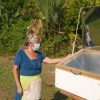
SAN LUIS LA HERRADURA, El Salvador, Mar 31 (IPS) - Salvadoran villager Maria Luz Rodriguez placed the cheese on top of the lasagna she was cooking outdoors, put the pan in her solar oven and glanced at the midday sun to be sure there was enough energy for cooking.
Covid19 a Wake-up Call to Address Development Fault Lines in Asia and the Pacific
- Inter Press Service
BANGKOK, Thailand, Mar 30 (IPS) - The world is emerging from the biggest social and economic shock in living memory, but it will be a long time before the deep scars of the COVID-19 pandemic on human well-being fully heal.
In the Asia-Pacific region, where 60 per cent of the world lives, the pandemic revealed chronic development fault lines through its excessively harmful impact on the most vulnerable. The United Nations Economic and Social Commission for Asia and the Pacific (ESCAP) estimates that 89 million more people in the region have been pushed back into extreme poverty at the $1.90 per day threshold, erasing years of development gains. The economic and educational shutdowns are likely to have severely harmed human capital formation and productivity, exacerbating poverty and inequality.
Powered by