Global Issues
News headlines for “Free Trade and Globalization”, page 363
Are Public Enterprises Necessarily Inefficient?
- Inter Press Service

KUALA LUMPUR, Malaysia, Oct 27 (IPS) - From the 1980s, various studies purported to portray the public sector as a cesspool of abuse, inefficiency, incompetence and corruption. Books and articles with pejorative titles such as ‘vampire state', ‘bureaucrats in business' and so on thus provided the justification for privatization policies. Despite the caricature and exaggeration, there were always undoubted horror stories which could be cited as supposedly representative examples. But similarly, by way of contrast, other experiences show that SOEs can be run quite efficiently, even on commercial bases, confounding the dire predictions of the prophets of public sector doom.
UN Cuba Embargo Vote: United States Abstains for First Time
- Inter Press Service

UNITED NATIONS, Oct 26 (IPS) - After 25 years of voting against a United Nations resolution condemning the United States (U.S.) embargo on Cuba, the U.S. Wednesday chose for the first time to abstain from voting. An overwhelming 191 UN member states voted for the resolution, with only Israel joining the United States in abstention.
Stronger Collaboration for Greater Energy Access in Asia Pacific
- Inter Press Service

Bangkok, Oct 26 (IPS) - The emergence of new ideas, technological advancements and innovative market-driven financing solutions has lent confidence to the idea that universal access to energy services is attainable. This is particularly good news in the Asia and the Pacific region, where, despite making significant contributions to global growth and poverty reduction since 2000, nearly half a billion citizens still have no access to modern energy, principally in rural and far-flung areas. Three-quarters of these people live in South Asia alone. Some 70% of the Pacific island households are un-electrified, a level similar to sub-Saharan Africa. The lack of electricity and clean cooking options marginalizes predominantly remote and slum communities who are trapped in energy poverty, preventing them from stepping on the first rung of the ladder to prosperity.
Cuba’s Fish Farming Industry Seeks to Double Output by 2030
- Inter Press Service
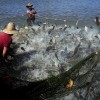
LOS PALACIOS, Cuba, Oct 26 (IPS) - Protected from the sun by broad-brimmed hats and long- sleeved shirts, workers at the La Juventud fish farm throw fish feed into the tanks for the tilapias, a fish that is scarce and in high demand in the Cuban markets.
UN Must Fight Tax Evasion, Says UN Expert
- Inter Press Service

UNITED NATIONS, Oct 25 (IPS) - A UN Human Rights Expert has called on the international community to fight tax evasion and abolish tax havens that siphon off essential resources from human rights protection and global development.
Social Media Becomes Mugabe’s Nightmare
- Inter Press Service
Who Should Lead the WHO Next?
- Inter Press Service

UNITED NATIONS, Oct 24 (IPS) - Health problems increasingly transcend the borders of the World Health Organization's 134 member states, a challenge which the six candidates vying to lead the global body must address with care.
Limitless Cigars and Rum for U.S Tourists in Cuba
- Inter Press Service

ROME, Oct 23 (IPS) - After more than a half-century of a commercial, financial and economic embargo, U.S.-Cuban trade relations took a significant step forward this month.
Student Struggle in South Africa Gains Momentum
- Inter Press Service

JOHANNESBURG, Oct 21 (IPS) - When #FeesMustFall began to trend on social media platforms in South Africa in October 2015, government shrugged it off as an example of isolated hotheads, while political pundits predicted the student campaign wouldn't last.
Privatization the Problem, Rarely the Solution
- Inter Press Service
KUALA LUMPUR, Malaysia, Oct 20 (IPS) - Privatization has been one of the pillars of the counter-revolution against development economics and government activism from the 1980s. Many developing countries were forced to accept privatization as a condition for support from the World Bank while many other countries have embraced privatization, often on the pretext of fiscal and debt constraints.
Powered by