News headlines for “Arms Control”
BRICS: Growing Ambition, Zero Accountability
- Inter Press Service

BRUSSELS, Belgium / MONTEVIDEO, Uruguay, September 30 (IPS) - At the 18th BRICS Summit, held on 12 and 13 September in New Delhi, India’s Prime Minister Narendra Modi brought together presidents Xi Jinping of China, Vladimir Putin of Russia and Masoud Pezeshkian of Iran, along with Abu Dhabi’s Crown Prince, Sheikh Khaled bin Mohamed bin Zayed, representing the United Arab Emirates (UAE). Around the table sat longstanding rivals such as India and China and, in the case of Iran, Saudi Arabia and the UAE, states on opposite sides of an ongoing war. That the summit produced a joint declaration every member could sign was a modest multilateralist success.
Overshoot of Paris Agreement and the Looming Super El Niño Drive Urgent Calls for Global Climate Action at UNGA 81
- Inter Press Service

UNITED NATIONS, September 29 (IPS) - On September 23, the United Nations held its 2026 Climate Summit as part of the High-Level Week of the 81st session of the General Assembly (UNGA 81). Convening civil society actors, climate scientists, major energy producers and consumers, development experts, and world leaders, the summit addressed critical strategies to mitigate the compounding impacts of the climate crisis and accelerate progress toward the Sustainable Development Goals (SDGs).
World News in Brief: Deadly Myanmar strikes as Malaysia begins deportations, new emergency funding released, Gaza and West Bank update
- UN News
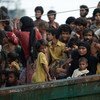
The UN chief on Tuesday strongly condemned an airstrike that reportedly killed at least 50 people at a market in Myanmar’s Rakhine state and called for those responsible to be held to account.
LIVE: Weighing nuclear risks amid rising tensions and war
- UN News
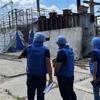
Amid rising tensions, extreme weather impacts and strikes on nuclear infrastructure in war-torn Iran and Ukraine, UN Member States are returning to the core issue of disarmament on Tuesday, closing out the General Assembly’s High-Level Week with expected calls for greater safeguards.
Security Council LIVE: DRC peace deals fail to halt fighting as Ebola deepens crisis
- UN News

The Security Council is meeting in New York on the Democratic Republic of the Congo (DRC) Tuesday, where clashes between Government forces and M23 rebels continue in the east despite a series of peace agreements. Ambassadors are likely to focus on ceasefire monitoring, rising tensions between the DRC and Rwanda, and the country’s worst Ebola outbreak on record.
DRC: Early access to care and oxygen decisive for Ebola patients’ survival – WHO
- UN News

In the Democratic Republic of the Congo (DRC), health workers fighting the country’s largest-ever Ebola outbreak are struggling to overcome critical challenges to patient care, the UN World Health Organization (WHO) warned on Tuesday.
Yemen escalation fuels fears of further cholera, measles spread
- UN News

Heavy fighting in Yemen is fuelling concerns of an uptick in cholera, measles and other preventable diseases, as overcrowding at displacement sites threatens to overwhelm the limited healthcare services still open.
Myanmar: Corporate Complicity in the Spotlight
- Inter Press Service

LONDON, September 25 (IPS) - On 15 September, Norwegian police and security services raided the headquarters of Telenor in Oslo. Authorities accuse the multinational telecoms company, majority owned by the Norwegian state, of aiding and abetting crimes against humanity in Myanmar and breaching sanctions.
UN voices grave concern as fighting spreads across northern Ethiopia
- UN News
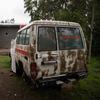
The UN said on Friday it remains gravely concerned by the continued deterioration of the security situation across northern Ethiopia, as fighting spreads across multiple fronts and increasingly disrupts humanitarian operations.
World News in Brief: West Bank demolitions accelerate, urgent support for Sudan, Haiti diplacement, AI hub to boost gender equality
- UN News
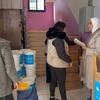
The situation in the occupied West Bank continues to deteriorate, the UN human rights office has said, pointing to the “mass destruction” of Palestinian villages and forcible transfer of residents in Msafer Yatta, South Hebron Hills.
Powered by