News stories by Samuel King
BRICS: Growing Ambition, Zero Accountability
- Inter Press Service
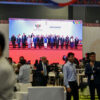
BRUSSELS, Belgium / MONTEVIDEO, Uruguay, September 30 (IPS) - At the 18th BRICS Summit, held on 12 and 13 September in New Delhi, India’s Prime Minister Narendra Modi brought together presidents Xi Jinping of China, Vladimir Putin of Russia and Masoud Pezeshkian of Iran, along with Abu Dhabi’s Crown Prince, Sheikh Khaled bin Mohamed bin Zayed, representing the United Arab Emirates (UAE). Around the table sat longstanding rivals such as India and China and, in the case of Iran, Saudi Arabia and the UAE, states on opposite sides of an ongoing war. That the summit produced a joint declaration every member could sign was a modest multilateralist success.
Development Goals Falter as Civil Society Is Shut Out
- Inter Press Service

BRUSSELS, Belgium / MONTEVIDEO, Uruguay, September 9 (IPS) - When the UN High-level Political Forum on Sustainable Development (HLPF) ended in New York in July, it took two recorded votes for states to pass a ministerial declaration that, until recently, would have been adopted without controversy. Uruguay, speaking for the Group of 77 developing countries plus China, pushed through the deletion of a reference to the agreement reached at the COP28 climate summit. Israel forced a vote on a paragraph about self-determination for people under occupation. Russia dissociated itself from the passage on peace and security. The wrangling revealed the extent to which the consensus that in 2015 saw all 193 UN states agree the Sustainable Development Goals (SDGs) – a common blueprint to end poverty, tackle climate change and build accountable institutions by 2030 – has been eroded.
A Divided Vote for the UN’s Human Rights Chief
- Inter Press Service
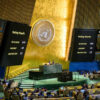
BRUSSELS, Belgium, August 26 (IPS) - On 24 July, the United Nations (UN) General Assembly reappointed Volker Türk as High Commissioner for Human Rights for a further four years. Only 10 states – among them Israel, Russia and the USA – opposed the decision.
The UN NGO Committee: Civil Society’s Gatekeeper in Hostile Hands
- Inter Press Service

BRUSSELS, Belgium, May 4 (IPS) - In January, the government of Algeria succeeded in locking two civil society groups out of access to the United Nations (UN). It raised questions at the UN Committee on Non-Governmental Organizations, known as the NGO Committee, about two civil society groups with accreditation. It alleged that Italian organisation Il Cenacolo was making politically motivated statements at the UN Human Rights Council and the Geneva-based International Committee for the Respect and Implementation of the African Charter on Human and Peoples’ Rights (CIRAC) was selling UN grounds passes. Four days later, it called a vote to revoke their status. Other states urged delay, but the no-action motion failed, and 11 of the body’s 19 members voted to recommend that the UN’s Economic and Social Council (ECOSOC) revoke Il Cenacolo’s accreditation and suspend CIRAC’s for a year.
International Tensions Spark New Nuclear Threat
- Inter Press Service

BRUSSELS, Belgium, March 20 (IPS) - When German Chancellor Friedrich Merz opened the 62nd Munich Security Conference by declaring that the post-war rules-based order ‘no longer exists’, there was plenty of evidence to back his claim. Israel is committing genocide in Gaza in defiance of international law, Russia is four years into its illegal invasion of Ukraine, the last nuclear arms control treaty between Russia and the USA has just expired and the USA has withdrawn from 66 international bodies and commitments. Since the conference, Israel and the USA have launched another war on Iran, threatening to spark a broader regional conflict. Meanwhile the UN is undergoing a funding crisis, cutting staff and programmes, and civil society organisations that relied on US Agency for International Development funding are facing closure.
Multilateralism Reaching Breaking Point
- Inter Press Service

BRUSSELS, Belgium, February 13 (IPS) - The latest World Economic Forum made clear the current crisis of multilateralism. Over 60 heads of state and 800 corporate executives assembled in Davos under a ‘Spirit of Dialogue’ theme aimed at strengthening global cooperation, but it was preceded by a series of events pointing to a further unravelling of the international system.
UN Security Council: Reform or Irrelevance
- Inter Press Service

BRUSSELS, Belgium, February 6 (IPS) - In early January, an emergency UN Security Council meeting on Venezuela followed a familiar path of paralysis. Members clashed over the US government’s abduction of Nicolás Maduro, with many warning it set a dangerous precedent, but no resolution came.
AI Governance: Human Rights in the Balance As Tech Giants and Authoritarians Converge
- Inter Press Service

BRUSSELS, Belgium, September 15 (IPS) - Algorithms decide who lives and dies in Gaza. AI-powered surveillance tracks journalists in Serbia. Autonomous weapons are paraded through Beijing’s streets in displays of technological might. This isn’t dystopian fiction – it’s today’s reality. As AI reshapes the world, the question of who controls this technology and how it’s governed has become an urgent priority.
NATO’s Trillion-dollar Gamble: The Dangers of Defence Without Accountability
- Inter Press Service

BRUSSELS, Belgium / MONTEVIDEO, Uruguay, July 14 (IPS) - Donald Trump’s bullying tactics ahead of NATO’s annual summit, held in The Hague in June, worked spectacularly. By threatening to redefine NATO’s article 5 – the collective defence provision that has anchored western security since 1949 – Trump won commitments from NATO allies to almost triple their defence spending to five per cent of GDP by 2035. European defence budgets will balloon from around US$500 billion to over US$1 trillion annually, essentially matching US spending levels.
Democracy under Attack: Why the World Needs a New UN Special Rapporteur
- Inter Press Service

BRUSSELS, Belgium / MONTEVIDEO, Uruguay, July 2 (IPS) - When tanks rolled through Myanmar’s streets in 2021, civil society groups worldwide sounded the alarm. When Viktor Orbán systematically dismantled Hungary’s free press, democracy activists demanded international action. And as authoritarianism returns to Tanzania ahead of elections, it’s once again civil society calling for democratic freedoms to be respected.
Powered by