

Indigenous Leader Warns Energy Transition Risks Turning Their Territories Into ‘Sacrifice Zones’
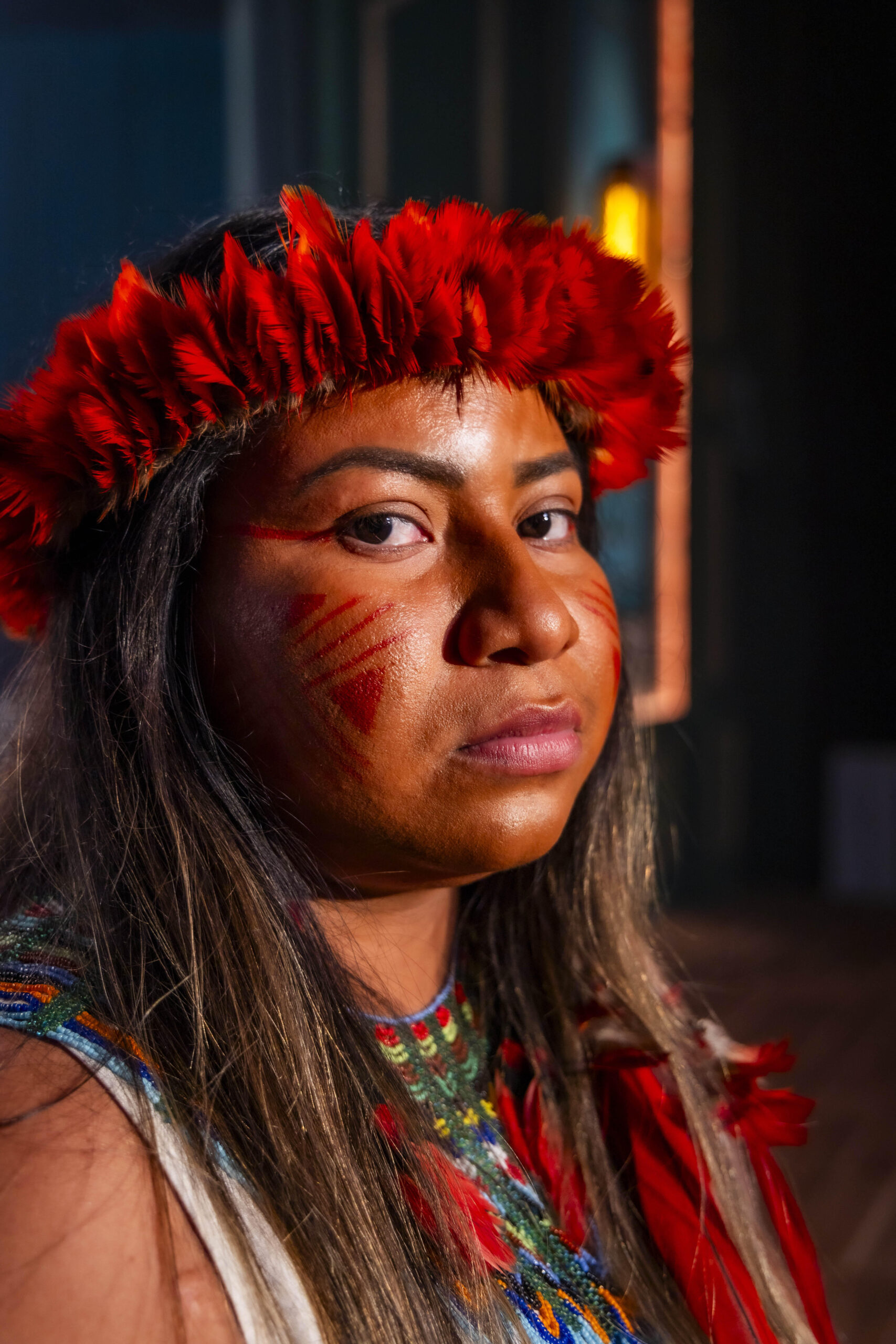
ANTALYA, Türkiye, November 17 (IPS) - Indigenous communities risk paying a heavy price for the global shift to clean energy unless governments involve them in decision-making and protect their ancestral territories, an Indigenous leader from Brazil has warned.
Luene Karipuna, executive coordinator of the Articulation of Indigenous Peoples and Organisations of Amapá and Northern Pará (APOIANP), said the energy transition was increasingly being discussed without meaningful participation from Indigenous communities, even though their territories play a major role in protecting forests and limiting the effects of climate change.
Speaking exclusively to IPS on the sidelines of the ongoing COP31 climate conference in Antalya, Karipuna said Indigenous peoples were concerned that policies designed to reduce dependence on fossil fuels could create new threats to their lands through mining and other large-scale development projects.
“For Indigenous peoples in Brazil, the energy transition must come with concrete commitments, and one of them is guaranteeing that our voice is present in the spaces where government plans are built so that the transition respects our territories,” she said.
“We have noticed that the energy transition discourse has been a construction made behind closed doors, without popular participation and without even the participation of our organisations.”
Her concerns come amid growing debate over oil exploration near the mouth of the Amazon River, an ecologically sensitive region in northern Brazil. The prospect of expanding oil activity has raised questions about the country’s commitment to protecting the Amazon while pursuing its economic and energy interests.
For communities in the region, Karipuna said, the debate over energy cannot be separated from the immediate consequences of industrial activity, pressure on ancestral lands and the need to protect their livelihoods.
Mining for Clean Energy Raises New Concerns
Karipuna said the growing demand for critical minerals and rare earth elements, which are essential for renewable energy technologies and electrification, was creating another source of pressure on Indigenous territories.
As countries seek minerals to manufacture batteries, electric vehicles and other clean-energy technologies, Indigenous communities fear that their lands could become targets for new mining projects.
She said many of these resources were concentrated in territories that Indigenous peoples had protected for generations.
“As the discussions move forward, we have realised that these critical minerals and rare earths are concentrated in our territories, territories that we have protected for a very long time,” she said.
“This puts our territories once again into a sacrifice zone, in the name of an energy transition that does not consider our lives.”
Karipuna said Indigenous organisations wanted governments and companies to recognise their territories as exclusion zones for destructive industrial activities, rather than as areas available for exploitation in the name of development.
She said the global energy transition should not reproduce the same patterns of extraction and displacement that Indigenous communities have experienced in the past.
For Indigenous peoples, Karipuna said, the issue was whether governments would recognise their rights before approving projects that could affect their territories.
Consultation Must Come Before Projects
Karipuna identified free, prior and informed consent as a fundamental requirement for any development project affecting Indigenous communities.
She referred to International Labour Organization Convention 169, which establishes protections for Indigenous and tribal peoples, including consultation on measures that may directly affect them.
Brazil is a party to the convention.
“The main measure that the government and companies need to take is to respect our territories,” she said.
“Before any project, we must have the right to free, prior, and informed consultation, which is guaranteed by ILO Convention 169.”
She said consultations must take place before decisions are made, allowing Indigenous communities to understand proposed projects and express their concerns through their own organisations.
Karipuna argued that energy transition plans developed without their participation risk overlooking the social, economic and environmental consequences for communities living in the affected areas.
The same principle, she said, should apply to oil exploration, mining and other large-scale projects.
Indigenous communities should not be expected to accept environmental damage as the price of achieving global climate targets.
“Our territories must not be placed within the narrative that our lives need to be sacrificed so that the world can transition. And we know that this is not true,” she said.
Indigenous Territories Offer a Model for Forest Protection
Karipuna also challenged the idea that Indigenous communities need to adopt an entirely new development model to contribute to climate action.
She said their traditional knowledge, relationship with nature and systems of territorial protection already offered an example of how forests could be conserved.
Figures cited in the discussions around Indigenous forest protection show that Indigenous territories cover about 13% of Brazil’s land. Between 1985 and 2023, they lost less than 1% of their native vegetation, compared with 28 percent on privately owned lands.
For Karipuna, the difference demonstrates the importance of recognising Indigenous land rights in climate policies.
“It is important to consider our territories as primary zones for this transition and for their protection, because they are the ones that protect and are already recognised as the front line in curbing the climate crisis,” she said.
She said Indigenous communities had maintained their relationship with forests through generations, protecting the natural resources on which their lives depend.
Their contribution, she added, extends beyond preserving trees. It involves protecting entire territories and maintaining ways of life that depend on the health of local ecosystems.
“We are not here asking for a new model of transition. We, as Indigenous peoples, are showing the path to this transition,” Karipuna said.
“And the path is through our way of life, our science, and how we relate to our territory.”
She said governments should recognise Indigenous knowledge as an important part of climate policymaking rather than treating it as a secondary contribution.
Lula Urged to Accelerate Land Demarcation
Karipuna called on President Luiz Inácio Lula da Silva to accelerate the demarcation of Indigenous territories that are still awaiting official recognition.
Land demarcation is a central demand of Indigenous communities in Brazil because legal recognition provides an important basis for protecting ancestral lands against encroachment, land grabbing and large-scale development.
She said the government also needed to provide financial resources to Indigenous organisations so they could protect their territories after demarcation.
“Concrete actions we expect from President Lula are, above all, that he continue demarcating the territories that are waiting to be officially demarcated,” she said.
But she stressed that official recognition alone would not guarantee protection.
“It is not enough to simply demarcate Indigenous lands. We need financial contributions and government resources so that we can protect the territories.”
She said Indigenous territories continued to face invasions by large development projects and land grabbers, while Indigenous leaders had also been murdered.
The threats, she said, made it necessary for the government to strengthen protection mechanisms and provide resources for communities working to defend their lands.
Karipuna also urged Lula’s government to place Indigenous territories at the centre of its just energy transition policies.
She said climate commitments must recognise the role of Indigenous communities in protecting forests and ensure that their organisations participate directly in decisions about development and natural resources.
Forest Protection and Oil Exploration
The debate over Indigenous rights also comes as Brazil faces questions about how to balance its energy ambitions with its environmental commitments.
The Amazon is central to global climate efforts because of its role in storing carbon and supporting biodiversity. Its protection has become a major issue in international climate negotiations.
The prospect of oil exploration near the mouth of the Amazon has brought these competing priorities into sharper focus for Indigenous communities in northern Brazil.
For Karipuna and the organisations she represents, the central concern is that decisions about energy development should not ignore the people who live in and protect the region.
She said the government must ensure that the transition away from fossil fuels does not create new forms of environmental pressure through mining and other extractive industries.
Karipuna said Indigenous communities had already demonstrated their contribution to forest conservation. What they wanted now was recognition, participation and the resources needed to continue protecting their territories.
“Scientific data already show that this is the path. We only need to be heard, and we need to be present in the decision-making spaces,” she said.
“Indigenous peoples of Brazil must not be excluded from these spaces and should participate through our Indigenous organisations.”
Her message to governments attending COP31 was that climate action must respect Indigenous land rights and recognise the knowledge of communities that have protected forests for generations.
“Our territories cannot be used as sacrifice zones in the name of development,” she said.
IPS UN Bureau Report



© Inter Press Service (20261117094358) — All Rights Reserved. Original source: Inter Press Service