News headlines for “International Criminal Court”, page 130
Were US War Profiteers the Ultimate Winners in Battle-Scarred Afghanistan?
- Inter Press Service

UNITED NATIONS, Aug 20 (IPS) - As the 20-year-old occupation of Afghanistan came to an inglorious end last week, there were heavy losses suffered by many-- including the United States, the Afghan military forces and the country’s civilian population.
Afghan Female Journalist: I may not be Alive by the time US can Evacuate Me
- Inter Press Service

NEW YORK, Aug 19 (IPS) - Steven Butler describes it as “mass panic.” As the Taliban seized control of Afghanistan, CPJ’s Asia program coordinator has been fielding “hundreds and hundreds” of daily pleas from journalists asking for help to flee the country.
As the Taliban Returns, 20 Years of Progress for Women Looks Set to Disappear Overnight
- Inter Press Service

Aug 17 (IPS) - As the Taliban takes control of the country, Afghanistan has again become an extremely dangerous place to be a woman.
Global response needed to counter rising security threats at sea
- UN News

Despite an overall decrease in maritime traffic due to the COVID-19 pandemic, piracy and armed robbery of ships rose by nearly 20 per cent during the first half of last year, a senior UN official told the Security Council on Monday.
We Were Born to Do This!
- Inter Press Service

NEW YORK, Aug 09 (IPS) - The first time I visited South Sudan in 2004 - prior to its independence - I travelled across the entire the country which was then a region devastated by man’s inhumanity to man. Although South Sudan is slightly larger than France, I could find only one concrete school building in Rumbek.
UN pledges full support to Nagasaki voices fuelling ‘powerful global movement’ against nuclear arms
- UN News
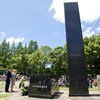
António Guterres has reaffirmed the full support of the United Nations to amplifying the powerful testimony of the survivors of the atomic bomb that was dropped on the Japanese city of Nagasaki, 76 years ago, which has helped build a “powerful global movement against nuclear arms”.
Between Horror and Hope in the Villages of Ituri
- Inter Press Service

ROME, Aug 06 (IPS) - “We have buried twenty-eight people. I have seen them with my own eyes. We also found three bodies in the fields and buried them too. I can show them to you. It’s not far from here. We buried them there.” The man points to the hills. He doesn’t want to show his face or say his name, but he agrees that his voice can be recorded, so that his words don’t get lost. The camera can’t shoot him; it can only look at the tall grass or at the forest towards the countryside where it is no longer possible to cultivate food. The man talks while music from Lengabo’s catholic church marks the time of truce and hope.
Multilateral Peace Operations in 2020: Developments & Trends
- Inter Press Service

STOCKHOLM / THE HAGUE, Aug 04 (IPS) - The writer is a Researcher with the Peace Operations and Conflict Management Programme at the Stockholm International Peace Research Institute (SIPRI) The first year of the Covid-19 pandemic saw wide-ranging impacts on multilateral peace operations.
The crisis simultaneously affected all operations, host nations, headquarters and contributing countries. It caused major disruption—from the political-strategic level where mandates are drawn up, down to the operational and tactical levels.
DR Congo, Ituri. Fleeing War, Weaving Life in IDP Camps of Bunia
- Inter Press Service

ROME, Jul 29 (IPS) - He moves aside the curtain, thin as gauze, and then bends over. The darkness dazzles for a few seconds when one enters the house—actually, a den made of earth where air and light filter through the narrow entrance. Jean de Dieu Amani Paye holds her tiny baby, wrapped in an elegant fabric, in his arms. He was a teacher of French and Latin and had a small business. He also cultivated the land: cassava, corn, sorghum, and beans.
Alarming Crisis of Impunity for Crimes Against Journalists in DRC
- Inter Press Service

NEW DELHI, India, Jul 29 (IPS) - The Democratic Republic of Congo is one of the most hostile and dangerous regions for journalists. A complex conflict, deeply rooted in the country’s past, allows very little freedom, both movement and the press.
Powered by