News headlines for “Biodiversity”, page 145
The “Kidneys of the Earth” Are Disappearing
- Inter Press Service

MADRID, Feb 02 (IPS) - This is about Wetlands, which are considered as a natural solution to the global threat of climate change. They absorb carbon dioxide, help slow global heating and reduce pollution, hence they are often referred to as the “Kidneys of the Earth”.
Damaged Natural Infrastructure Exacerbates Urban Flooding in Brazil
- Inter Press Service

RIO DE JANEIRO, Feb 02 (IPS) - People living in Jardim Pantanal, a low-income neighborhood on the east side of the Brazilian megalopolis of São Paulo, suffer floods every southern hemisphere summer. Many residents remember the three months their streets and homes were under water in late 2009 and early 2010.
When Will Countries Ever Learn how Well to do Fuel Subsidy Reforms?
- Inter Press Service

WASHINGTON DC, Jan 28 (IPS) - Consider the situation. Faced with growing fiscal stress, the government of an energy exporting country decides to cut generous subsidies, doubling the fuel price overnight.
Road to COP27: Why Africa cannot be Complacent on Energy, Climate Change
- Inter Press Service
UNITED NATIONS, Jan 27 (IPS) - A year ago, we welcomed 2021 with a sense of cautious optimism when the newly developed vaccines promised a shift in the fight against the COVID-19 pandemic. The focus turned towards building back better and doing things differently as many countries started to rethink and rebuild their shattered economies.
Heatwave and Drought Hit South America's Crops and Economy
- Inter Press Service
BUENOS AIRES, Jan 26 (IPS) - Brazil, Argentina and Paraguay, the three major agricultural producers in South America, are currently experiencing a prolonged period of drought and low water levels in their main rivers. This is severely impacting harvests, as well as river transport of important summer crops, with maize and soybeans the main casualties.
Future of Coral Reefs in the Time of Climate Change
- Inter Press Service

NEW JERSEY, Jan 26 (IPS) - Coral reefs are one of the world’s most biologically diverse and productive ecosystems. They provide abundant ecological goods and services and are central to the socio-economic and cultural welfare of coastal and island communities – throughout tropical and subtropical ocean countries – by contributing billions of dollars to the local and global economies, when combined with tourism and recreation.
Climate Inaction, Injustice Worsened by Finance Fiasco
- Inter Press Service

KUALA LUMPUR, Malaysia, Jan 25 (IPS) - Many factors frustrate the international cooperation needed to address the looming global warming catastrophe. As most rich nations have largely abdicated responsibility, developing countries need to think and act innovatively and cooperatively to better advance the South.
Renewables Are Cheaper Than Ever - So Why Are Household Energy Bills Only Going up?
- Inter Press Service

Jan 19 (IPS) - Not for the first time, global energy markets are in turmoil. Internationally traded gas prices more than quadrupled in 2021. In their wake, many energy suppliers have gone bust and household bills across Europe are set to soar. Energy prices are driving up the cost of living and inflation, but this is also a moment to realise the old saying: “never waste a good crisis”.
A Call to Action on Living Lands
- Inter Press Service

GEORGETOWN, Guyana, Jan 17 (IPS) - If the ocean is the lifeblood of the Commonwealth, then forests are the lungs that breathe life into its whole system. From the vast boreal woodlands of Canada to the rich primary forests of Papua New Guinea, the Commonwealth covers nearly a quarter of all forest land in the world - an estimated 900 million hectares. These biodiversity havens not only house about half of all animal species on earth, they also give us clean air, water and food, supporting the livelihoods of millions of people while tackling climate change.
Climate Action Incomplete Without Women's Contribution
- Inter Press Service
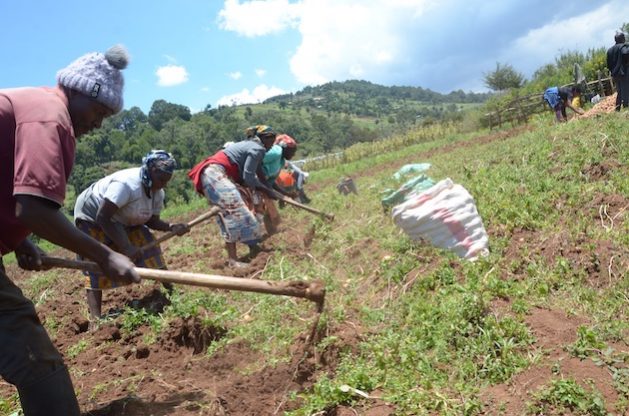
Nairobi, Kenya, Jan 12 (IPS) - Judy Wangari is one of an estimated 800,000 smallholder potato farmers who, according to the National Potato Council of Kenya, contribute at least 83 percent of the total potato production.
Powered by