News headlines for “Biodiversity”
The Year of Pastoralists Must Be More Than Symbolic
- Inter Press Service
WASHINGTON DC, August 6 (IPS) - This is supposed to be the year the world finally sees and recognizes pastoralists. The United Nations has designated 2026 as the International Year of Rangelands and Pastoralists, bringing long-overdue attention to communities who have sustained some of the world’s most fragile and important landscapes for generations.
New Chickpea Variety to Drive Climate Resilience in Africa
- Inter Press Service
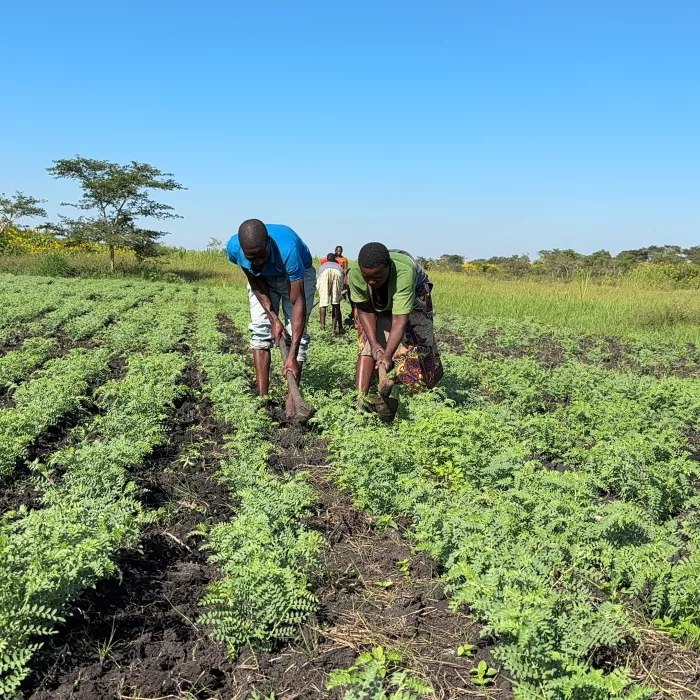
BULAWAYO, Zimbabwe , August 5 (IPS) - New chickpea seed research and production have become the new frontier of climate resilience in southern Africa as farmers battle failing cereal production.
Green transition: Pay the Least, Benefit the Most
- Inter Press Service
BANGKOK, Thailand, August 5 (IPS) - Inaction and maintaining the status quo of fossil fuel dependence carry significant costs. The recent closure of the Strait of Hormuz, for instance, caused enormous losses to the global economy, with many Asia-Pacific countries bearing disproportionately larger adverse impacts. Had these economies had a more diversified energy mix, they would have benefited from such resilience under current circumstances.
Climate Change Makes Sacred Ice Vanish in Kashmir, Locals Fear Loss of Livelihoods
- Inter Press Service

SRINAGAR, India, August 4 (IPS) - Every summer, before dawn breaks over the Himalayas, Bashir Ahmad leads his horses onto the narrow mountain trail that winds toward the Amarnath cave shrine. For decades, the annual Hindu pilgrimage has been the most important season of the year for his family. The money earned over two months pays for food, school fees, winter supplies, and the upkeep of his animals through the long snowbound months.
“Kingston’s Disappointment Should Not Extinguish Our Hope for the Deep Ocean”
- Inter Press Service

VICTORIA, Seychelles, August 3 (IPS) - Earlier this year, I called publicly for a precautionary pause on deep-sea mining, arguing that it is not a rejection of progress, but a commitment to sound science.
Accepting What It Cannot Control, CARICOM Focuses on What It Can
- Inter Press Service
GROS ISLET, Saint Lucia , August 3 (IPS) - From wars that drive up fuel prices to supply chain disruptions, inflation and increasingly frequent climate disasters, Caribbean leaders say many of the forces shaping the region’s future lie beyond their control.
Who picks up the tab for AI’s unbridled genius?
- Inter Press Service

ROME, August 3 (IPS) - For the last few years, Artificial intelligence has been making increasingly intrusive demands for our attention. It burst onto the scene like a child prodigy, enthralling us with feats of brilliance. With consummate ease, it removed drudgery from our tasks and began helping us achieve our personal and workplace objectives.
Preparing Agriculture for a New Era of Extreme Weather
- Inter Press Service
URBANA, Illinois, US, July 29 (IPS) - Recently, the Food and Agriculture Organization of the United Nations put out an alert, warning countries around the world about an impending new El Niño phase that is expected to significantly increase the likelihood of drought, heat waves, storms, and flooding and pose major risks to agriculture across multiple regions.
Extreme Heatwave Escalates Urgency of Climate Adaptation in Europe
- Inter Press Service

SYDNEY, Australia, July 28 (IPS) - As Western Europe endured its worst-ever June heatwave in recorded history, the imperative for climate adaptation is now urgent as the continent accelerates beyond others to become the fastest-warming region in the world.
UNHCR: 75 years on, the Refugee Convention Remains a Lifeline for Millions
- Inter Press Service
GENEVA, July 27 (IPS) - Seventy-five years after the Refugee Convention was opened for signature on 28 July 1951, it remains the foundation of the international refugee protection system and one of the most consequential international legal instruments ever adopted.
Powered by