News headlines for “Biodiversity”, page 177
Kashmir's New Land Laws Could Impact Biodiversity
- Inter Press Service

SRINAGAR, India, Dec 17 (IPS) - Walking in the middle of fields of delicately-scented purple saffron crocus flowers, 36-year-old Mubeen Yasin, a saffron farmer from the southern region of Indian Kashmir, is not optimistic that in a few years time the scenery will remain as beautiful as it is today.
Energy Efficiency for Developing Countries: Pivoting from Fewer Inputs to More Outputs
- Inter Press Service

WASHINGTON, Dec 16 (IPS) - Energy efficiency (EE) is often marketed as a tool to save energy and money. The oft-repeated mantra is doing “more with less”, namely producing more goods with less energy. But, as set out in a recent World Bank report (which I co-authored), EE can do something that is often much more important for developing countries: it can produce the additional goods and services needed to raise standards of living.
USA Downgraded as Civil Liberties Deteriorate Across the Americas
- Inter Press Service

São Paulo/ Washington DC, Dec 15 (IPS) - Few images better illustrate the recent decline in civil liberties in the United States than that of peaceful protesters near the White House being violently dispersed so Donald Trump could stage a photo-op.
Can Conservation and Development Be Balanced in Sri Lanka?
- Inter Press Service
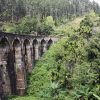
COLOMBO, Dec 15 (IPS) - The Sri Lankan government recently cancelled three circulars that protected 700,000 hectares of forests, labelled Other State Forests (OSFs), which are not classified as protected areas but account for five percent of the island nation’s remaining 16.5 percent of forest cover.
Solar Power from Argentina's Puna Highlands Reaches Entire Country
- Inter Press Service
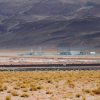
BUENOS AIRES, Dec 10 (IPS) - The unprecedented growth of renewable energies in Argentina over the last three years has borne its greatest fruit: the Cauchari solar park, with nearly one million photovoltaic panels and 300 MW of installed power, which was connected to the national power grid on Sept. 26.
If Your Civic Space is Closed, your Human Rights Dissolve
- Inter Press Service

PARIS, Dec 10 (IPS) - On Human Rights Day, civil society calls for the protection of civic space as a fundamental freedom, as more than 80% of the world’s population live in countries where civic space is closed, repressed or obstructed.
Escaz: Historic Step Towards Protecting Human Rights Defenders in Latin America and the Caribbean
- Inter Press Service

MEXICO, Dec 09 (IPS) - The global health crisis that has marked 2020 did not put an end to another pandemic that has been plaguing Latin America and the Caribbean: murders and attacks against environmental defenders.
Climate Action for Human Rights
- Inter Press Service

NEW CALEDONIA, Dec 09 (IPS) - Climate change and human rights are two key issues in international development and their interaction is increasingly in need of focus at national, regional and international levels.
In the Pacific, where the 22 Pacific Island countries and territories are on the front line of both climate ambition and the ongoing effects of the climate crisis, climate change is recognised as the region’s single greatest threat.
La Niña Weather Phenomenon Could Endanger Colombia's Food Security
- Inter Press Service

NEW YORK, Dec 08 (IPS) - After ten years without a strong La Niña weather phenomenon in Colombia, the climate pattern, coupled with the COVID-19 pandemic, could create a vacuum in food production and supply. Multilateral organizations, along with the Colombian government, are trying to implement measures to reduce malnutrition risk. Still, the population is already overwhelmed by a year of struggles that have deepened socio-economic differences.
Mexico Sticks to Natural Gas, Despite Socioenvironmental Impacts
- Inter Press Service

Mexico City, Dec 07 (IPS) - In his community of small farmers and ranchers in northern Mexico, Aristeo Benavides has witnessed the damage caused by the natural gas industry, which has penetrated collectively owned landholdings, altering local communities' way of life and forms of production.
Powered by