

News headlines for “Climate Change and Global Warming”, page 102
Using Education To Stop the Generational Cycle of Violence Against Women in the Pacific
- Inter Press Service

SYDNEY, Sep 20 (IPS) - Parliamentary representation by women in Pacific Island countries remains stubbornly low at 8.4 percent. Yet women leaders across the region have been meeting every year for the past four decades to discuss goals and drive action to address gender inequality and the most pressing development challenges in the Pacific.
Typhoon Yagi Devastates Southeast Asia
- Inter Press Service

UNITED NATIONS, Sep 19 (IPS) - In early September, Typhoon Yagi, a deadly tropical cyclone, hit Southeast Asia and Southern China, causing widespread destruction. According to the United Nations (UN), wind speeds, reaching 213 kilometers per hour, as well as heavy flooding and severe landslides, have devastated affected areas. Yagi is the strongest natural disaster to hit the South China Sea in three decades, leaving over 500 people killed, 38 missing, and 1,900 injured.
Amid Great Challenges, Hope Reigns As More Children Reached with Education Support
- Inter Press Service

UNITED NATIONS, Sep 19 (IPS) - Amid unprecedented global challenges and a growing list of countries in crisis, there is an existential threat to decades of development gains—with the global community marked by intensified armed conflict, forced displacements, and the debilitating effects of climate crises.
Governments Using Billions of Public Funds to Subsidize Climate-Destructive Industries—Report
- Inter Press Service

NAIROBI, Sep 18 (IPS) - A report examining corporate capture of public finance is accusing industries fueling the climate crisis, including fossil fuel ones, of draining public funds in the Global South, singling them out for squeezing out of governments USD 700 billion in public subsidies each year.
Explainer: Why Venezuela Needs To Reduce Its Gas Flaring
- Inter Press Service

CARACAS, Sep 18 (IPS) - The red and orange illuminated night in Venezuela may look beautiful, but they are a result of gas flaring in the oil fields of Monagas. To meet its Paris Agreement goals, the Caribbean country needs to address gas flaring. How easy will this be in a country where it's mostly gas and oil energy sector accounts for more than two-thirds of its greenhouse gas emissions?
The most visible part of gas flaring in Venezuela is the so-called "Monagas illuminated nights." These are red and orange skies, which are visible from the homes of the locals at night and which show the gas flaring in the oil fields of Monagas, a state located in the east of the Caribbean country and key in its oil production.
World News in Brief: Yemen detainee appeal, Typhoon Yagi impacts, ease asylum seekers’ plight, mpox cash boost
- UN News
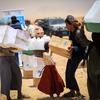
Regional directors from six UN agencies and three non-governmental organizations (NGOs) called on Wednesday for the immediate and unconditional release of scores of colleagues who have been arbitrarily detained in Yemen for 100 days.
Climate crisis: Satellites and AI offer hope for global action, says UN weather agency
- UN News
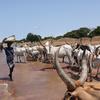
Amid renewed warnings from leading climate scientists that global warming could reach 3C above pre-industrial levels this century, the head of the UN World Meteorological Organization (WMO) insisted on Wednesday that new technology and AI offer the opportunity to implement the drastic action needed to resist the existential crisis.
How Much is Too Much for Mount Everest? Isn't it Time For Sagarmatha to Rest
- Inter Press Service

KATHMANDU, Sep 16 (IPS) - When Kancha Sherpa, the only surviving member of the first successful Mt. Everest expedition, says it is time for Sagarmatha, as the world's tallest mountain is known in Nepal, to rest, isn't it time that the world listened?"That's Mt. Everest!" I overheard this from a trekking guide to his trekkers team. I stopped and asked him—which one! He was not our guide, but I approached. He pointed a finger and showed me Mt. Everest and I cried—I don't know why. I was overwhelmed and humbled to finally witness the world's tallest mountain—it was not from the base camp but from Thyangboche while returning.
Climate change: Ozone layer still well on track for full recovery
- UN News

New evidence in the World Meteorological Organization’s (WMO) annual Ozone and UV Bulletin published on Monday reveals strong evidence that the ozone layer is well on track for a long-term recovery.
Severe Floods in Nigeria Magnify The Dire Humanitarian Crisis
- Inter Press Service

UNITED NATIONS, Sep 13 (IPS) - On Monday, the Alau dam in Maiduguri, Borno State, collapsed, causing flash floods to ravage neighbouring regions in Nigeria. This comes after weeks of torrential rain, which caused severe structural damage to the dam. The floods have changed the lives of thousands and caused high levels of damage to infrastructures. The impacts of the recent floods compound with Nigeria's pre-existing humanitarian crisis, which includes armed conflict, widespread malnutrition, and a failing economy.
Powered by


Web feed for Climate Change and Global Warming news headlines