

News headlines for “Third World Debt Undermines Development”, page 14
Accepting What It Cannot Control, CARICOM Focuses on What It Can
- Inter Press Service

GROS ISLET, Saint Lucia , August 3 (IPS) - From wars that drive up fuel prices to supply chain disruptions, inflation and increasingly frequent climate disasters, Caribbean leaders say many of the forces shaping the region’s future lie beyond their control.
East Asia and Pacific Faces a USD 900 Billion Maritime Investment Challenge
- Inter Press Service

UNITED NATIONS, July 31 (IPS) - East Asia and the Pacific’s (EAP) maritime system has powered the region’s rise as the world’s largest trading and manufacturing center, but the infrastructure supporting that system has become increasingly vulnerable.
Dual Crises in Eastern DRC as Ebola Surges and Hunger Deepens
- Inter Press Service

UNITED NATIONS, July 30 (IPS) - The Democratic Republic of Congo (DRC) is battling the fastest-growing Ebola outbreak on record, with United Nations officials warning that hunger is actively undermining efforts to contain the spread.
From the Foothills of Mount Kilimanjaro, Magnolia Athletics Camp Is Helping Girls Stay in School, Pursue Athletics and Escape the Pressures of Harmful Traditional Practices
- Inter Press Service

OLOITOKTOK, Kenya, July 30 (IPS) - Before sunrise each morning, 19-year-old Josephine Sembeyo joins dozens of teenage runners leaving Magnolia Athletics Camp for training beneath the shadow of Mount Kilimanjaro.
Financing Africa’s Digital Future: Institutions Push for Smarter, Coordinated Funding
- Inter Press Service

ADDIS ABABA, Ethiopia, July 30 (IPS) - Africa’s digital revolution is gathering pace, but the financing needed to sustain it remains uneven, fragmented, and often out of reach.
Sudan’s War Economy: Funded By Gum Arabic And Gold
- Inter Press Service
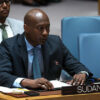
UNITED NATIONS, July 27 (IPS) - In the three years since the outbreak of the Sudanese Civil War, the humanitarian crisis has deteriorated significantly, with the United Nations underscoring a blatant disregard for international humanitarian law among warring parties. This includes the deliberate targeting of civilians in residential areas, widespread sexual violence, and attacks on critical infrastructure that have hindered aid efforts and pushed communities to the brink of collapse. To manage rising military expenses, the warring parties have increasingly relied on the exploitation of trade routes and territories, prompting humanitarian experts to express concern about a persistent, self-sustaining “war economy.”
UNHCR: 75 years on, the Refugee Convention Remains a Lifeline for Millions
- Inter Press Service

GENEVA, July 27 (IPS) - Seventy-five years after the Refugee Convention was opened for signature on 28 July 1951, it remains the foundation of the international refugee protection system and one of the most consequential international legal instruments ever adopted.
The Houthis Don’t Need to Close the Bab el-Mandeb Strait to Strangle the Suez Canal
- Inter Press Service
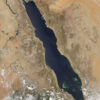
UNITED NATIONS, July 24 (IPS) - With regional friction between Iran and the Gulf monarchies escalating, Houthi leadership in Yemen has proclaimed a total maritime blockade against all vessels linked to Saudi shipping. While this declaration does not constitute a verified military obstruction of the Bab el-Mandeb Strait, it significantly heightens the risk of volatility at the Red Sea’s southern gateway, potentially severing the primary arterial link to the Suez Canal.
What Development Looks like in Myanmar Today
- Inter Press Service

YANGON, Myanmar, July 24 (IPS) - When asked what development looks like today, a community leader in Kalaw township points to these fields. Once destroyed by a typhoon, they are now productive again. What began as emergency food assistance in the first month was followed by UNDP support in the community—seeds, training, debris removal, support to microbusinesses and small infrastructure—backed by the Republic of Korea, Norway and Switzerland. One year on, the fields sustain three annual production cycles—rice and flowers—with more resilient practices and higher yields. “This is what development looks like to us,” he says.
Food and Transport Costs through Strait of Hormuz Remain High, Burdening Vulnerable Economies
- Inter Press Service
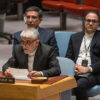
UNITED NATIONS, July 23 (IPS) - Prior to the latest round of hostilities between the United States and Iran, freight traffic had been increasing in the Strait of Hormuz, and negotiations were underway for a new agreement to fully restore trade through this channel.
Powered by


Web feed for Third World Debt Undermines Development news headlines