News headlines for “Geopolitics”
From Castel Gandolfo to Campidoglio: Call for Human Dignity to Be at the Heart of the AI Revolution
- Inter Press Service

ROME, July 24 (IPS) - After two days of debate at an international conference devoted to the challenges of artificial intelligence (AI), nuclear war and global security, Nobel laureates, former heads of state and government, scientists, human rights defenders, religious leaders and representatives of civil society adopted a joint declaration, calling for it to be based on human dignity.
The Houthis Don’t Need to Close the Bab el-Mandeb Strait to Strangle the Suez Canal
- Inter Press Service
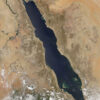
UNITED NATIONS, July 24 (IPS) - With regional friction between Iran and the Gulf monarchies escalating, Houthi leadership in Yemen has proclaimed a total maritime blockade against all vessels linked to Saudi shipping. While this declaration does not constitute a verified military obstruction of the Bab el-Mandeb Strait, it significantly heightens the risk of volatility at the Red Sea’s southern gateway, potentially severing the primary arterial link to the Suez Canal.
What Development Looks like in Myanmar Today
- Inter Press Service
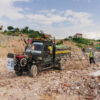
YANGON, Myanmar, July 24 (IPS) - When asked what development looks like today, a community leader in Kalaw township points to these fields. Once destroyed by a typhoon, they are now productive again. What began as emergency food assistance in the first month was followed by UNDP support in the community—seeds, training, debris removal, support to microbusinesses and small infrastructure—backed by the Republic of Korea, Norway and Switzerland. One year on, the fields sustain three annual production cycles—rice and flowers—with more resilient practices and higher yields. “This is what development looks like to us,” he says.
Security Council debrief: Race for critical minerals intensifies amidst warnings of conflict
- UN News
The world needs more critical minerals than ever before for electric vehicles, wind turbines, solar panels, batteries and smartphones.
After an Ebola centre was attacked, peacekeepers moved in next door
- UN News

A new mobile UN peacekeeping base in the Democratic Republic of the Congo (DRC) has allowed local authorities to continue responding to the fast-moving Ebola outbreak there after violence disrupted the work of medics at a treatment centre set up to contain the spread.
Middle East: UN warns against wider escalation after Houthi attacks in the Red Sea
- UN News
As fighting intensifies in the Middle East, the United Nations on Friday warned against further escalation in the US-Iran war and the risks to global shipping amid the fight over control of the Strait of Hormuz.
In El Obeid, Sudanese women face drones by day, rape by night, to reach water
- UN News

In El Obeid, women and girls now face an impossible choice over something as basic as a bucket of water: risk a drone strike by collecting it in daylight, or risk rape by waiting until dark.
Food and Transport Costs through Strait of Hormuz Remain High, Burdening Vulnerable Economies
- Inter Press Service
UNITED NATIONS, July 23 (IPS) - Prior to the latest round of hostilities between the United States and Iran, freight traffic had been increasing in the Strait of Hormuz, and negotiations were underway for a new agreement to fully restore trade through this channel.
Human-Caused Climate Change, Not El Niño, Drives Most Coral Bleaching Events – Research
- Inter Press Service

DAR ES SALAAM, Tanzania, July 23 (IPS) - Every morning, as the Indian Ocean retreats from the reef off Zanzibar’s Jambiani village, Chiku Chande steps into the knee-deep lagoon carrying bundles of seaweed seedlings. Years of farming these waters have taught her about every channel and coral outcrop. But lately, the corals that once glowed in brown and gold have become chalky white.
Trump’s Authoritarian Gambit to Muzzle the Foreign Press
- Inter Press Service

NEW YORK, July 23 (IPS) - Under a new rule proposed by the Department of Homeland Security, the duration of “I visas” for foreign media will be slashed from renewable multi year periods—often up to five years—to a maximum of 240 days, and just 90 days for Chinese journalists. Renewals would no longer be a routine administrative step tied to continued employment and compliance with the law, but a discretionary privilege the government can grant or withhold at will.
Powered by