News headlines for “Geopolitics”, page 12
UN’s Türk urges dialogue after deadly clashes on Afghan-Pakistan border
- UN News
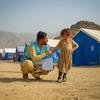
UN human rights chief Volker Türk on Thursday appealed for dialogue between Afghanistan and Pakistan amid border clashes and deadly airstrikes, while condemning ever harsher “apartheid” edicts issued by the Afghan de facto authorities that continue to severely impact women and girls.
UN drug alert stops shipment that could have made 1.6 billion lethal fentanyl doses
- UN News
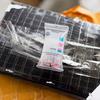
An international early warning system blocked a shipment of chemicals used to make fentanyl that could have produced up to 1.6 billion potentially lethal doses, the UN narcotics control body said on Thursday.
Why Tenure Reform Is Key to Curbing Land Degradation
- Inter Press Service
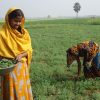
ROME, February 25 (IPS) - Farmland has long been one of the most important sources of security across generations. Writing about China nearly a century ago, Pearl S. Buck noted in The Good Earth, “If you will hold your land, you can live.” That holds true today. When farmers own land, they invest in it. When they don’t, they extract what they can today without thinking of tomorrow.
Generative AI Could Deepen Inequality, Revenue Losses in Creative Industries
- Inter Press Service

UNITED NATIONS, February 25 (IPS) - As generative artificial intelligence (AI) rapidly expands across nearly every sector of society, those that work in cultural and creative industries are expected to bear some of the greatest losses. With AI-generated content projected to dominate global markets in the coming years, combined with a lack of strong regulatory frameworks to protect intellectual property and AI’s ability to produce content quickly at a low cost, the United Nations Educational, Scientific, and Cultural Organization (UNESCO) warns that generative AI may become a major driver of inequality, threatening the livelihoods of millions of cultural workers around the world.
Central African Republic enters ‘decisive’ phase after landmark elections
- UN News
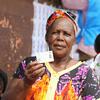
Fresh from holding the most extensive elections in its history, the Central African Republic (CAR) is entering what the UN’s top envoy in the country describes as a “decisive period” in consolidating fragile peace gains, even as security challenges persist and disarmament efforts continue.
Can “Human Fraternity” Move Peace?
- Inter Press Service

ABU DHABI, United Arab Emirates, February 24 (IPS) - As wars drag on and the international order grows increasingly unstable, Abu Dhabi has been offering a different kind of narrative. It sought to recognize early efforts at reconciliation, bring religious leaders into the same space, and place former adversaries under the same spotlight. At the heart of the February 4, 2026 Zayed Award for Human Fraternity ceremony was an attempt to make visible, in a public setting, the choice of moving in the direction of easing conflict.
Iran: A Regime with Nothing Left but Force
- Inter Press Service

MONTEVIDEO, Uruguay, February 24 (IPS) - The Islamic Republic of Iran has put down another uprising, with a ferocity that makes previous crackdowns seem restrained. The theocratic regime has survived, but it has done so by substituting violence for the economic security it cannot provide and the political legitimacy it no longer has. Its show of force is also an admission of weakness.
People’s Pursuit of Dignity, Equality and Justice is Unshakeable
- Inter Press Service

GENEVA, February 24 (IPS) - A fierce competition for power, control and resources is playing out on the world stage at a rate and intensity unseen for the past 80 years.
Loneliness on Planet Earth
- Inter Press Service

PORTLAND, USA, February 24 (IPS) - Loneliness is a significant health concern on planet Earth. It affects virtually every aspect of human wellbeing and development worldwide.
Russia Assessing the Benefits of WTO Membership
- Inter Press Service

MOSCOW, February 24 (IPS) - Despite consistent criticisms over its operations down the years, Russia still finds it difficult to leave the World Trade Organization (WTO), and instead assessing the opportunities and broad benefits of membership. WTO is not just an organization, but a multilateral bridge for strategic trade engagement and securing results-oriented partnerships. Certainly, unlocking and accelerating trade initiatives should be the key focus in the changing world.
Powered by