Global Issues
News headlines for “G8: Too Much Power?”, page 191
When Two Becomes One: Blending Public and Private Climate Finance
- Inter Press Service
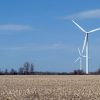
UNITED NATIONS, May 23 (IPS) - With the landmark Paris Agreement now almost two years old, funding for climate-related activities continues to be a challenge. However, efforts have been underway to bring two seemingly very different sectors together to address climate change.
$1.7 Trillion Global Spending on Military in 2017: Highest since End of Cold War
- Inter Press Service

ROME, May 22 (IPS) - According to the latest report by the Stockholm International Peace Research Institute (SIPRI), in total, countries around the world spent $ 1.739 billion on arms in 2017. Although there was a marginal increase of 1.1 percent rise in real terms on 2016, the total global spending in 2017 is the highest since the end of the cold war.
Agricultural Trade Liberalization Undermined Food Security
- Inter Press Service

KUALA LUMPUR AND SYDNEY, May 21 (IPS) - Agriculture is critical for achieving the Sustainable Development Goals (SDGs). As the Food and Agriculture Organization (FAO) notes, ‘From ending poverty and hunger to responding to climate change and sustaining our natural resources, food and agriculture lies at the heart of the 2030 Agenda.'
Africa Gains Momentum in Green Climate Solutions
- Inter Press Service

NAIROBI, Kenya, May 17 (IPS) - Promoting the widespread use of innovative technologies will be critical to combat the hostile effects of climate change and reduce greenhouse gas emissions, and many African countries are already leading the way with science-based solutions.
Fighting Inequality in Asia and the Pacific
- Inter Press Service

BANGKOK, Thailand, May 15 (IPS) - Shamshad Akhtar is the Under-Secretary-General of the United Nations and Executive Secretary of Economic and Social Commission for Asia and the Pacific (ESCAP)Inequality is increasing in Asia and the Pacific. Our region's remarkable economic success story belies a widening gap between rich and poor. A gap that's trapping people in poverty and, if not tackled urgently, could thwart our ambition to achieve sustainable development. This is the central challenge heads of state and government will be considering this week at the Economic and Social Commission for Asia and the Pacific (ESCAP). A strengthened regional approach to more sustainable, inclusive growth must be this Commission's outcome.
United Arab Emirates: Entering into a Sustainable Future
- Inter Press Service

ROME, May 14 (IPS) - The end of the oil age In the early 1970's the United Arab Emirates (UAE) was an impoverished desert, with little access to food, water and well-paying jobs. Today, this country looks nothing like it was fifty years ago. Thanks to oil, the UAE has completely transformed and now is one of the most developed economies in the Middle East, if not the world: its per capita GDP is equal to those of highly developed European nations ($68,000 - 2017 est.).
We Need a Gender Shift to save Our Girls from the Jaws of Extremism
- Inter Press Service

NAIROBI, Kenya, May 14 (IPS) - Ambassador Amina Mohamed EGH, CAV is the Cabinet Secretary for Education in the Government of Kenya and co-chair of High Level Platform for Girls Education. Siddharth Chatterjee is the United Nations Resident Coordinator to Kenya.Consider this. Boko Haram, the ISIS-affiliated insurgent group has sent 80 women to their deaths in 2017 alone. The majority of suicide bombers used by terror group Boko Haram to kill innocent victims are women and children, US study reveals.
Sustainable Food Systems; Why We do Not Need New Recipes
- Inter Press Service

ROME, May 14 (IPS) - Many believe that the food and agricultural sector is different to all other economic sectors, that it is unique, and that it requires special economic models to thrive. After all, we expect the global food and agricultural system to respond to many different goals. It needs to deliver abundant, safe, and nutritious food. It needs to create employment in rural areas while protecting forests and wildlife, improving landscapes, and preventing climate change through lower food production emissions. Well-functioning food systems are also considered essential for social stability and conflict prevention. In fact many politicians today go as far as to argue that food systems need to thrive so as to stem rural-to-urban migration and the cross-border flow of desperate people fleeing food insecure nations.
"Green Development Has to Be Equal for All"
- Inter Press Service

MANILA, May 14 (IPS) - IPS caught up with Dr. Frank Rijsberman, director-general of the Global Green Growth Institute (GGGI), at the end of the flagship side event of the GGGI during the 51st Annual Meeting of the Asian Development Bank (ADB) in Manila on May 4, 2018, which featured the Belt and Road Initiative (BRI) and its potential to create sustainable infrastructure and promote green growth pathways.
Regional Cooperation Needs a Strategic Vehicle for Inclusive Growth
- Inter Press Service

BEIJING, May 11 (IPS) - Winston Chow is Country Representative for China at the Global Green Growth InstituteThere is growing recognition that regional cooperation is a crucial driver of growth. We should now also recognize if regional trade networks are to yield the intended benefit of inclusive growth, then there needs to be a strategic vehicle for development that can be scaled.
Powered by