Global Issues
News headlines for “G8: Too Much Power?”, page 231
Release of Chibok Girls Rekindles Pressure to Free Last 196
- Inter Press Service

ABUJA, Nov 11 (IPS) - The Nigerian military announced the rescue of a missing Chibok schoolgirl Saturday, bringing to 23 the number freed since Boko Haram seized 219 girls from a secondary school in the country's northeast in April 2014.
Changing Determinants of Global Income Inequality
- Inter Press Service

KUALA LUMPUR, Malaysia, Nov 10 (IPS) - Global income inequality among different regions began to increase about five centuries ago, before accelerating two centuries ago. The data suggest a brief reversal during the Golden Age quarter century after the Second World War, and in the last decade, with higher primary commodity prices once again, and protracted stagnation in much of the North following the 2008-2009 financial crisis.
Will Free Expression Equal Terrorism in Zimbabwe?
- Inter Press Service

HARARE, Nov 09 (IPS) - Four years ago, a faceless writer using the nom de guerre Baba Jukwa set Facebook agog with detailed exposes of machinations within the ruling Zimbabwe National People's Union Patriotic Front (ZANU PF).
Privatization Cure Often Worse Than Malady
- Inter Press Service
KUALA LUMPUR and SYDNEY, Nov 03 (IPS) - Privatization of SOEs has been a cornerstone of the neo-liberal counterrevolution that swept the world from the 1980s following the economic crisis brought about by US Fed's sharp hike in interest rates. Developing countries, seeking aid from the International Monetary Fund (IMF) and the World Bank, often had to commit to privatization as a condition for credit support.
Festival Spotlights African Women Filmmakers
- Inter Press Service

JOHANNESBURG, Nov 02 (IPS) - At the Bioscope Independent Cinema in Johannesburg's trendy, gentrifying Maboneng neighbourhood last week, the two-day HER Africa Film Festival showcased films and web series from across the globe, including Mali, the U.S., Burkina Faso and elsewhere.
Rural Malawians About to Go Online
- Inter Press Service

BLANTYRE, Nov 01 (IPS) - This month, many Malawians, especially those in rural areas, will be able to start accessing the as internet easily as opening a tap to get water.
Int'l Effort to Help Ethiopia Shoulder Its Refugee Burden
- Inter Press Service

ADDIS ABABA, Nov 01 (IPS) - A concerned-looking group of refugees gather around a young woman grimacing and holding her stomach, squatting with her back against a tree. But this is no refugee camp, rather the Jesuit Refugee Service (JRS) compound just off a busy main road leading to Sidist Kilo roundabout in the Ethiopian capital.
Africa and the Paris Agreement: Which Way Forward?
- Inter Press Service
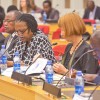
ADDIS ABABA, Oct 30 (IPS) - The Paris Agreement on climate change is set to enter into force on Nov. 4, after it passed the required threshold of at least 55 Parties, accounting for an estimated 55 per cent of the total global greenhouse gas emissions, ratifying the agreement.
Are Public Enterprises Necessarily Inefficient?
- Inter Press Service

KUALA LUMPUR, Malaysia, Oct 27 (IPS) - From the 1980s, various studies purported to portray the public sector as a cesspool of abuse, inefficiency, incompetence and corruption. Books and articles with pejorative titles such as ‘vampire state', ‘bureaucrats in business' and so on thus provided the justification for privatization policies. Despite the caricature and exaggeration, there were always undoubted horror stories which could be cited as supposedly representative examples. But similarly, by way of contrast, other experiences show that SOEs can be run quite efficiently, even on commercial bases, confounding the dire predictions of the prophets of public sector doom.
UN Cuba Embargo Vote: United States Abstains for First Time
- Inter Press Service

UNITED NATIONS, Oct 26 (IPS) - After 25 years of voting against a United Nations resolution condemning the United States (U.S.) embargo on Cuba, the U.S. Wednesday chose for the first time to abstain from voting. An overwhelming 191 UN member states voted for the resolution, with only Israel joining the United States in abstention.
Powered by