

Secretary-General hopefuls make their case in televised ‘interactive dialogues’
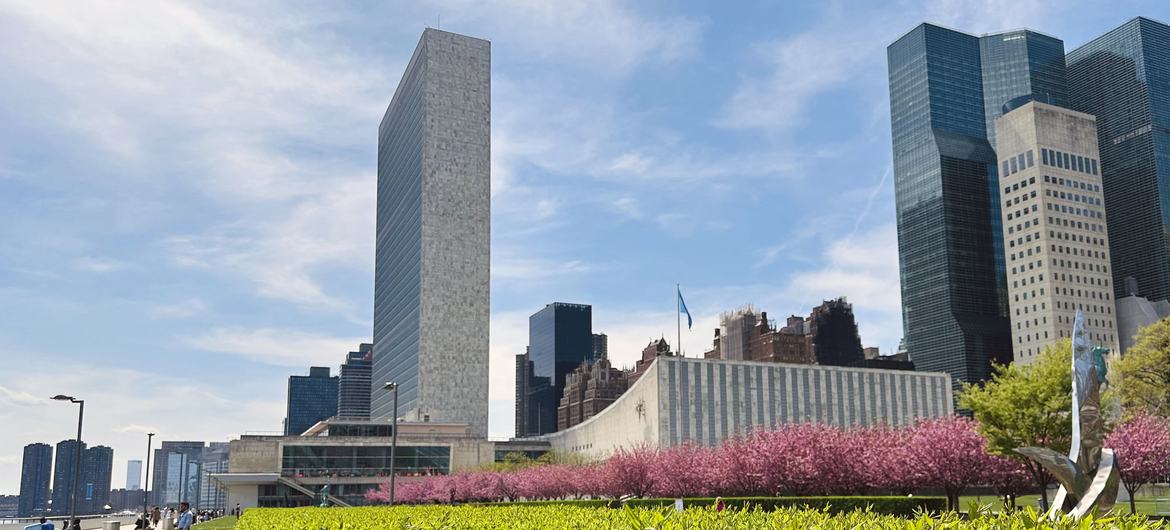
The four candidates so far in the running to be the next UN Secretary-General will each have the chance to show why they are the best choice during a series of “interactive dialogues” taking place at UN Headquarters in New York this week.
From 1 January 2027, there will be a new person in charge on the 38th floor of UN Headquarters: after 10 years, having completed the maximum two mandates, António Guterres is stepping down.
His successor will not only have to navigate profound political and financial challenges but will also be tasked with advancing essential reforms to ensure the United Nations is fit for the future – at a time when the UN and international law are under direct attack.
On Tuesday and Wednesday, the two men and two women vying for the position are taking part in meetings of the General Assembly during which they will outline their vision for the United Nations and answer questions from Member States and civil society representatives about their leadership experience and qualifications, UN reform and the three pillars of the organisation – peace and security, development and human rights.
They are Michelle Bachelet, former UN High Commissioner for Human Rights and former President of Chile; Rafael Grossi, current head of the International Atomic Energy Agency (IAEA); Rebeca Grynspan, current head of the UN trade and development agency (UNCTAD); and Macky Sall, former President of Senegal.
The dialogues are being convened by the President of the General Assembly, Annalena Baerbock, who told journalists on Tuesday morning, shortly before the first session that they mark a critical step in the selection process which, she said, comes at a pivotal moment for the United Nations.
‘The toughest job in the world’
“The selection of the Secretary-General has widespread consequences that resonate far beyond this building,” declared Ms. Baerbock. “Our choice will shape the direction of the world’s unique multilateral organization and demonstrate whether the United Nations truly represents the more than eight billion people we serve around the world, half of whom are women and girls.”
She described the selection of the next Secretary-General as not simply an administrative decision, but also a statement of intent. “It will send a powerful message about what the United Nations stands for and how it intends to address the challenges of today’s interconnected world.”
“In a nutshell, this is one of the toughest jobs in the world,” declared Ms. Baerbock, “but it is also one of the most important, as the next Secretary-General will not only shape the future of this institution but, in her or his role as the strongest defender of the UN Charter, also that of the international rules-based order.”
Michelle Bachelet (from Chile) 21 April, 10AM (ET)
Rafael Grossi (Argentina) 21 April 3PM (ET)
Rebeca Grynspan (Costa Rica) 22 April 10AM (ET)
Macky Sall (Senegal) 22 April 3PM (ET)
The Interactive Dialogues: How they work
- During the three-hour dialogues, candidates will be invited to present an opening statement of up to 10 minutes which will be followed by questions from UN Member States and civil society representatives to further explore their leadership skills and experience.
- The interactive exchange will follow two thematic segments: proven leadership abilities, experience and skills of the candidates for a strong and fit-for-the-future organization; and the three pillars of the United Nations (peace and security, development, and human rights).
- How candidates respond to the range of questions will be a defining moment in the selection process.
- The four interactive dialogues will be broadcast live on UN WebTV.
© UN News (2026) — All Rights Reserved. Original source: UN News