News stories by Samira Sadeque, page 2
Yemen - Worst Famine World has Seen in Decades Predicted
- Inter Press Service

UNITED NATIONS, Feb 19 (IPS) - Yemen is heading towards the worst famine the world has seen in decades, the United Nations Security Council was warned in a briefing yesterday.
Transition to Digital Economy Must Ensure Access to Those in the Digital Gap
- Inter Press Service

UNITED NATIONS, Feb 12 (IPS) - It is crucial to ensure that any transition to a digital economy has mechanisms in place that are non-digital to avoid “double exclusion”, according to Shahrashoub Razavi, director of the social protection department at the International Labour Organisation (ILO).
Q&A: Documenting COVID-19 Effect on Youth Sexual and Reproductive Health
- Inter Press Service

UNITED NATIONS, Feb 05 (IPS) - With the COVID-19 pandemic adding complex layers of challenges to the issue of sexual and reproductive health for the youth, governments should prioritise documenting these effects for data collection purposes, co-founder and team leader of the Youth Alliance for Reproductive Health in the Democratic Republic of the Congo, told IPS in an interview.
Why its Crucial Not to Limit the Youth's Access and Use of Family Planning
- Inter Press Service

UNITED NATIONS, Feb 04 (IPS) - With the COVID-19 pandemic negatively affecting access to Adolescent and Youth Sexual and Reproductive Health (AYSRH) services, it’s imperative governments employ community-based initiatives and peer educators to ensure these services are still available to them.
Lebanon: How to Build Back Better after Political and Economic Crisis
- Inter Press Service
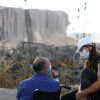
UNITED NATIONS, Jan 29 (IPS) - Lebanon must “shield and preserve” the skills, knowledge, and experience of its people in order to move forward with the country’s development, according to Christophe Abi-Nassif, the Lebanon programme director for the Middle East Institute (MEI).
Q&A: What Nigerian Feminists Hope will Come Out of the #EndSARS Movement & Pandemic
- Inter Press Service

Jan 28 (IPS) - As Nigeria’s biggest city, Lagos, reportedly experienced a massive shortage of oxygen cylinders last week — with demand increasing fivefold in one of the city’s main hospitals just as the country recorded some of its highest number of coronavirus cases — its youth leaders are concerned about the impact on vulnerable women.
Q&A: Why Survivors Should be at the Centre of Discussions on Genocide and Gender Violence
- Inter Press Service

UNITED NATIONS, Jan 25 (IPS) - Women and young girls are disproportionately affected by conflict and genocide, and that is why they should be a central part of conversations on the issue, according to Jacqueline Murekatete, a survivor of the Rwandan genocide and founder and President of the Genocide Survivors Foundation (GSF).
“Survivors need to be invited to the table to share their testimonies,” Murekatete told IPS. “When people hear personal stories they’re more likely to want to get involved. It makes a huge difference to have their testimony.”
Q&A: Mro Indigenous Community Plea for Halt of Construction of 5-Star Hotel
- Inter Press Service

UNITED NATIONS, Nov 25 (IPS) - The construction of a five-star hotel in the Chittagong Hill Tracts, Bangladesh, could lead to the forced eviction of the Mro indigenous community from their ancestral lands and destroy “the social, economic, traditional and cultural fabric of the community”, warns Amnesty International.
But local activist Reng Young Mro told IPS that the international community must rally behind the Mro indigenous community to halt the construction.
Q&A: How Desert Dust Storms Supply Vital Nutrients to the Oceans
- Inter Press Service

UNITED NATIONS, Nov 09 (IPS) - When sand and dust storms (SDS) rage in the Sahara Desert, more than 10,000 km away in the Caribbean Sea the very same storms have a range of effects on the 1,360 species of shorefish that populate the waters there.
Q&A: COVID-19 has Pushed Women Peacebuilders from Key Leadership Roles
- Inter Press Service

UNITED NATIONS, Oct 30 (IPS) - Women need to be given roles as negotiators, not just offered representation through advisory groups, Agnieszka Fal-Dutra Santos from the Global Network of Women Peacebuilders (GNWP) told IPS.
Powered by