News headlines for “Biodiversity”, page 2
What’s Special About Negotiating Agreements for Mining Critical Minerals?
- Inter Press Service
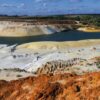
“Critical minerals” are critical in the eyes of firms and governments in industrialized countries because they are indispensable for products such as modern automobiles, AI, computers, drones, and many other consumer and defense products.
Investment in Irrigation Systems Is Vital in Preparing for the Next Climate Shock
- Inter Press Service
KIGALI, September 14 (IPS) - When the African continent experiences erratic rains, crops fail, leaving millions of people facing hunger.
Humanitarian Needs Grow as Nepal Recovers from Catastrophic Floods
- Inter Press Service

UNITED NATIONS, September 11 (IPS) - Two weeks after devastating floods struck Nepal, communities across the country are still struggling to meet basic needs as humanitarian efforts continue. The disaster, triggered by a glacial collapse, has become one of Nepal’s deadliest in recent years, leaving widespread destruction in its wake.
Development Goals Falter as Civil Society Is Shut Out
- Inter Press Service

BRUSSELS, Belgium / MONTEVIDEO, Uruguay, September 9 (IPS) - When the UN High-level Political Forum on Sustainable Development (HLPF) ended in New York in July, it took two recorded votes for states to pass a ministerial declaration that, until recently, would have been adopted without controversy. Uruguay, speaking for the Group of 77 developing countries plus China, pushed through the deletion of a reference to the agreement reached at the COP28 climate summit. Israel forced a vote on a paragraph about self-determination for people under occupation. Russia dissociated itself from the passage on peace and security. The wrangling revealed the extent to which the consensus that in 2015 saw all 193 UN states agree the Sustainable Development Goals (SDGs) – a common blueprint to end poverty, tackle climate change and build accountable institutions by 2030 – has been eroded.
How Saving Cattle in Zimbabwe is Saving Its Lions
- Inter Press Service

BULAWAYO, September 9 (IPS) - A 12-year-old male lion slipped out of Zimbabwe’s Hwange National Park one winter morning and killed a 7-year-old boy in a village it wandered into.
What 1.5°C Overshoot Means for Small Islands
- Inter Press Service

CASTRIES, Saint Lucia, September 8 (IPS) - The world is now expected to breach the 1.5 degrees Celsius warming limit that small island states have spent years defending as a threshold for survival.
Africa’s Rangelands Are the Frontline of Resilience – COP17 Showed Why
- Inter Press Service
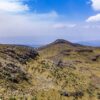
NAIROBI, Kenya, September 4 (IPS) - Across the Kenya-Tanzania rangelands, communities have long understood a reality that the global community is increasingly recognising: healthy rangelands support livelihoods, wildlife, water resources and local economies. They are among Africa’s most important natural assets and a foundation for resilience in a changing climate.
Nepalese Experts, Victims Contemplate the Future After the Flood
- Inter Press Service
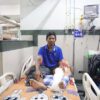
KATHMANDU, September 4 (IPS) - That day, Subash Tamang was mining sand along the banks of the Trishuli River near the Trishuli Hydropower Project, working alongside his wife, brother, sister-in-law, and two other family members. Suddenly, he noticed water gushing down from above the hydropower site. His first thought was that the dam had burst.
Between the Reef and the Stars - A reflection on humanity’s twin longings
- Inter Press Service

VICTORIA, Seychelles, September 4 (IPS) - There is an older wisdom, quieter than the noise of our times, that whispers a simple truth: we are not the architects of nature, only its guests. Long before there were nations, economies, or even language, there was the pulse of the tide, the patience of coral, the breath of forests exchanging air with the sky. Into that ancient conversation we arrived — late, curious, and forgetful — mistaking our cleverness for sovereignty and our tools for wings.
Africa Has the Answers to Its Food Security Challenges. What It Needs Is the Architecture to Act on Them
- Inter Press Service
KIGALI, Rwanda, September 3 (IPS) - As leaders gather in Kigali for the Africa Food Systems Forum, they face an urgent question: why do so many proven agricultural innovations still fail to reach the farmers and communities that need them most?
Powered by