News headlines for “Consumption and Consumerism”, page 3
‘Prioritize Social Inclusion as Rapid Transformations Risk Leaving Millions Behind’
- Inter Press Service
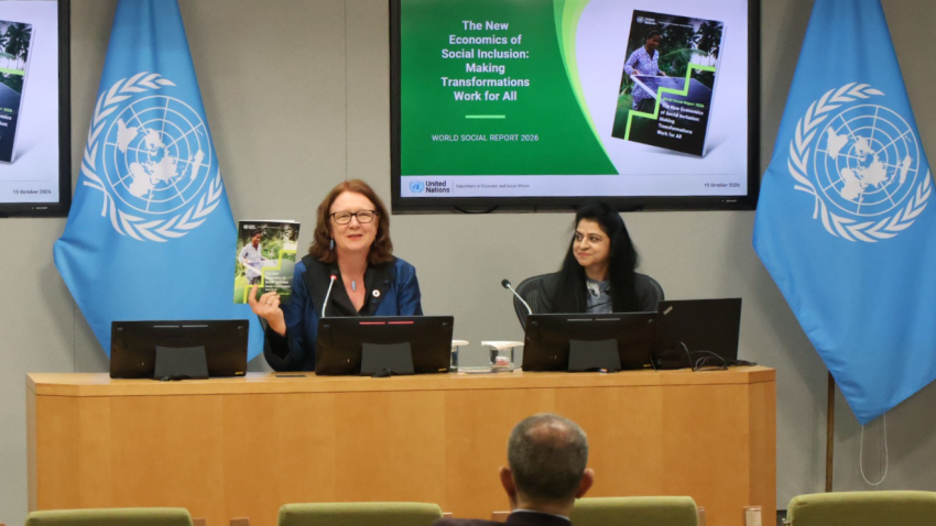
UNITED NATIONS, October 16 (IPS) - The United Nations Department of Economic and Social Affairs (UN DESA) new report, which addresses the rapid global transformations driven by artificial intelligence (AI), demographic shifts, climate change, and conflict, highlights the widening disparities in employment, social inclusion, and access to services.
If the UN COP17 Is Serious About Biodiversity, It Needs to Follow the Money
- Inter Press Service

MALMO, Sweden, October 16 (IPS) - On Monday, governments from across the world will gather in Armenia for COP17, the UN biodiversity summit, to assess progress on the global agreement to halt and reverse biodiversity loss. For anyone who cares about the livability of our planet for future generations, and the richness of life on earth, the stakes could hardly be higher. Policy makers will debate targets, implementation, and the lack of money to protect nature, in particular the failure of developed countries to fulfil their obligations. But there is a more basic question that should put at the center of those discussions: what happens when the financial system governments are counting on to fund nature protection is also financing its destruction?
International Day for the Eradication of Poverty 2026
- Inter Press Service
A safe home is more than a roof over our heads. It is the foundation of health, security, opportunity and human dignity. Yet for billions of people, that foundation remains out of reach.
Afghanistan’s Stolen Peace: The Women Who Refuse to Be Silenced
- Inter Press Service

BENGALURU, India, October 15 (IPS) - When the Taliban took control of Afghanistan in August 2021, Zahra Nader was pursuing a doctorate in Women and Gender studies at York University in Canada. Nader had planned to return to Afghanistan to continue her research, possibly teach at Kabul University, and continue exploring Afghan women’s role in political history.
AI, green energy and economic transitions risk leaving vulnerable communities behind, UN warns
- UN News

Rapid transformations – from artificial intelligence and digital technologies to renewable energy and demographic shifts – are reshaping economies worldwide, creating new opportunities but also threatening to deepen socio-economic inequalities, a new UN report warned on Thursday.
Crisis and Opportunity at the UN
- Inter Press Service

LONDON, October 14 (IPS) - At this year’s highest-profile UN event, Donald Trump publicly mused over his ‘big decision’ about whether to ‘annihilate’ Iran. Israeli Prime Minister Benjamin Netanyahu, as dozens of delegates walked out, branded those who condemn genocide in Gaza ‘moral cowards’.
World Lost More Than 7 Million Hectares of Forest in 2025
- Inter Press Service

BERLIN, Germany/WASHINGTON, D.C., USA , October 14 (IPS) - The world lost more than 7 million hectares of forest to deforestation in 2025, a modest improvement on recent years but still far from what is needed to meet global forest protection targets by 2030, according to a new assessment of international conservation efforts.
When Medicine Becomes a Tool for Torture: The Hidden Role of Medical Personnel in Russian Captivity
- Inter Press Service

KYIV, Ukraine, October 14 (IPS) - Medicine is supposed to protect human life and dignity. Yet testimonies from Ukrainians released from Russian captivity reveal a disturbing reality: medical personnel in places of detention have not only denied prisoners necessary treatment but, in documented cases, participated in torture and ill-treatment.
Middle East Escalation Could Leave 11.7 Million More Women and Girls Facing Food Insecurity by End-2026
- Inter Press Service

GENEVA, October 13 (IPS) - An additional 11.7 million women and girls could face food insecurity by the end of 2026, as the escalation in the Middle East and disruption to the Strait of Hormuz drive up food prices and strain livelihoods and household resources, according to a new UN Women analysis published today.
Dollar System Eroding Slowly, but Still Dominant
- Inter Press Service

KUALA LUMPUR, Malaysia, October 13 (IPS) - The protracted demise of dollar-gold convertibility and associated fixed exchange rates did not end dollar hegemony. With crucial and timely help from political allies, confidence in the dollar system has persisted, albeit much diminished.
Powered by