News headlines for “Consumption and Consumerism”, page 2
From Small Islands to Antalya: COP31 Must Move Climate Promises from Paper to People
- Inter Press Service

VICTORIA, Seychelles, October 21 (IPS) - When you grow up on a small island, the ocean is not scenery. It is your neighbour, your livelihood, and the measure of time itself. For decades, as I walked the beaches of Seychelles, I watched the subtle shifts that scientists were warning the world about. The tide crept a little higher up the sand each year. After a warm season, vibrant coral gardens turned ghost-white. Storms that once belonged to rare memory began arriving with unsettling regularity.
Food Insecurity and Child Malnutrition Worsen in Afghanistan Despite Strong Agricultural Season
- Inter Press Service
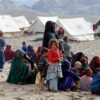
KABUL, Afghanistan, October 20 (IPS) - Nearly 40 percent of the population of Afghanistan is projected to face high levels of acute food insecurity this winter, and cases of acute malnutrition are expected to soar during 2027, the Food and Agriculture Organization of the United Nations (FAO) and the United Nations World Food Programme (WFP) warned.
People Who Choose to End Their Lives
- Inter Press Service

PORTLAND, USA, October 20 (IPS) - People who choose to end their lives through voluntary assisted dying typically face terminal, incurable, or debilitating conditions that cause severe physical or psychological suffering.
As El Niño Returns, East Africa’s Urban Poor Brace for Heavy Rains
- Inter Press Service

DAR ES SALAAM, Tanzania, October 20 (IPS) - Nearly three decades have passed, but Japhet Gimbi still remembers the rain.
Afro-Brazilian Religious Communities Face Mounting Discrimination Amid the Climate Crisis
- Inter Press Service

BELÉM, Brazil, October 19 (IPS) - In 2024, as floodwaters approached Lutalo Canti’s home in Porto Alegre, Brazil, he lifted some furniture off the floor and left in a hurry. Extreme rainfall in the country’s southern region had caused local rivers to overflow. The flooding would eventually reach more than 400 municipalities and impact over 2 million people.
CHINA: ‘My Sister Has Been in a Chinese Prison for Eight Years Because I Exercised My Freedom of Speech’
- Inter Press Service

CIVICUS discusses the persecution of Uyghurs and activism in exile with Rushan Abbas, an Uyghur American activist, founder and executive director of Campaign for Uyghurs and chair of the Executive Committee of the World Uyghur Congress.
Two Summits in Bangkok: IMF/World Bank and Finance Ministers Inside, the People’s Assembly Outside
- Inter Press Service

BANGKOK, Thailand, October 19 (IPS) - Bangkok hosted two summits last week. Inside the Queen Sirikit Convention Center, more than 15,000 finance ministers, central bank governors and CEOs of the world’s largest banks and corporations attended the Annual Meetings of the International Monetary Fund (IMF) and the World Bank. They flew in business class and slept in five-star hotels to talk about growth, inflation and public spending, and thus to decide the destiny of billions of people they will never meet. Outside, hundreds of social movements and civil society organizations held the People’s Assembly, for the 99% whose voice would not be heard. They flew economy and often shared modest rooms. The first was the summit of money and power. The second, the summit of the rest of us.
COP17: The world has a plan to save nature. Is it working?
- UN News

The UN Secretary-General has called for an end to the “war on nature”. On Monday, governments gathering in Yerevan, Armenia, will have to confront a more practical question: are they doing enough to win the peace and put the world’s biodiversity goals back on track?
Ebola Spread Raises Fresh Urgency for Africa’s Domestic Health Funding
- Inter Press Service
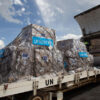
BULAWAYO, October 16 (IPS) - An Ebola death last week in Kenya is highlighting the urgency of Africa’s public health emergency preparedness and how the continent’s governments are committing their national budgets to the health sector.
Finding Silver Linings Amid Haze of Climatic Uncertainty
- Inter Press Service

KUALA LUMPUR, October 16 (IPS) - With the city enveloped in a cloak of haze, the urgency of tackling the climate crisis could hardly have been clearer as the four-day Global Tipping Points Conference 2026 drew to a close at Malaysia’s Sunway University on Thursday.
Powered by