News headlines for “Free Trade and Globalization”, page 7
Central Bank Hedging Triggered Gold Fever
- Inter Press Service

KUALA LUMPUR, Malaysia, March 24 (IPS) - In mid-1971, US President Nixon ended the dollar’s gold peg at $35 per ounce, triggering de-dollarisation. The 2025 gold and silver rush followed private speculators trying to profit from central banks hedging against perceived new risks.
“At Africa’s First Our Ocean Conference, a Test of Global Will on High Seas Protection and Deep-Sea Mining”
- Inter Press Service

VICTORIA, Seychelles, March 23 (IPS) - When the 11th Our Ocean Conference opens in Mombasa and Kilifi, Kenya, from June 16-18, 2026, it will mark the first time this influential meeting has been held on African soil. For coastal and island nations across the continent and the wider Indian Ocean – and for the Global South more broadly – the stakes could not be higher: the promises and commitments made there will help decide whether the ocean becomes a source of justice and resilience, or deepens existing inequalities.
‘The Political System Only Moves When Threatened Directly’
- Inter Press Service

CIVICUS discusses Nepal’s upcoming election with youth activist Anusha Khanal of the Gen Z Movement Alliance, a youth-led civil society coalition mobilising for democratic accountability and governance reform in Nepal.
Dire fertiliser shortage a lurking threat due to Hormuz crisis
- UN News

Since the start of the Middle East conflict with Israeli and US strikes on Iran on 28 February, concerns have been growing over rising oil and commodity prices.
Running on Sunshine: Pakistan’s Solar Boom to Tide Over Middle East Energy Crisis
- Inter Press Service

KARACHI, Pakistan, March 20 (IPS) - Energy expert Vaqar Zakaria believes solar power makes “excellent economic sense” – and he lives by it. For over five years, his rooftop panels have slashed his bills, sometimes to zero, even allowing him to sell surplus electricity back through net metering.
80 Percent of Rural Households Without Direct Water Access – World Water Report
- Inter Press Service

NEW YORK & SRINAGAR, India, March 19 (IPS) - A new United Nations report has warned that global water inequality remains one of the most pressing development challenges of the decade, with billions still lacking safe drinking water and sanitation – while women and girls continue to bear the heaviest burden of water insecurity.
Middle East war shockwaves ripple through Asia-Pacific fuel and supply chains
- UN News
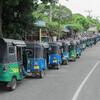
The fallout from the war in the Middle East is rippling far beyond the Gulf, disrupting fuel supplies, shipping routes and supply chains across Asia and the Pacific, with some of the region’s most vulnerable economies already feeling the strain through rising prices, rationing and threats to jobs, food security and remittances.
Africa’s Minerals Boon, Cautious Optimism Amid Geopolitical Disruptions
- Inter Press Service

BULAWAYO, Zimbabwe, March 18 (IPS) - Africa’s eye on minerals as the be-all-and-cure-all for the continent’s development agenda is being tested by geopolitical gamesmanship as global superpowers jostle to carve new spheres of influence.
CHINA: ‘The State Is Using Generative AI to Engineer Reality Through Informational Gaslighting’
- Inter Press Service

CIVICUS discusses China’s tech-enabled repression with Fergus Ryan, a Senior Analyst at the Australian Strategic Policy Institute (ASPI), where he specialises in how the Chinese Communist Party shapes global information environments through censorship, propaganda and platform governance. His research includes a major study on China’s AI ecosystem and its human rights impacts, as well as investigations into China’s use of foreign influencers.
Oil Shocks, Political Upheaval and the One Solution Governments Keep Ignoring
- Inter Press Service

LONDON, March 16 (IPS) - Once again, global oil prices are spiking, driven by the Israeli-US war against Iran. With Iran retaliating by attacking infrastructure and transport hubs and blocking the Strait of Hormuz, through which one-fifth of the world’s oil passes, oil supplies from the region are being choked, pushing up prices. The cost of a barrel of Brent crude – the international benchmark for oil prices – stood at US$73 before the conflict but has surged beyond US$100 since. It could go higher still as war continues.
Powered by