News headlines for “Health Issues”
PARAGUAY: ‘Transparency Should Strengthen Democracy, Not Turn Criticism of Those in Power into a Cause for Suspicion’
- Inter Press Service

CIVICUS discusses the challenges posed by Paraguay’s ‘anti-NGO law’ with Hugo González, executive director of the Paraguayan Network of LGBTQ+ Artists (REPAR+), a civil society organisation (CSO) that promotes the rights of LGBTQI+ people, which has joined the constitutional challenge against this law.
African Rights Advocates Coordinate Response to Family Law Backlash
- Inter Press Service
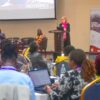
NAIROBI, August 13 (IPS) - Women’s rights advocates, judges and lawyers have launched a coordinated campaign to reform family laws that discriminate against women and girls in Africa.
Why Dhaka Floods Every Monsoon
- Inter Press Service

DHAKA, Bangladesh, August 13 (IPS) - Dhaka’s recent and recurrent flooding is often treated as a natural disaster, but rain is only the trigger. The deeper causes are political, planning and ecological failure: wetland loss, canal encroachment, unplanned growth, weak enforcement, fragmented institutions and short-term engineering fixes. Dhaka is not drowning because it rains; it is drowning because it has been built as if water had nowhere to go.
Nicaragua: End of the Electoral Illusion
- Inter Press Service
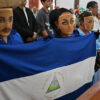
MONTEVIDEO, Uruguay, August 12 (IPS) - On 19 July, the 47th anniversary of the Sandinista revolution that first brought him to power, Nicaraguan President Daniel Ortega declared that his country would hold ‘no more elections’ so that the opposition could never again try to ‘seize power’. Just like that, he scrapped a presidential vote that had previously been pushed back to 2027, abandoning even the fiction of democratic legitimacy. The move changes little in practice, since no free vote had been possible for years. But it’s still revealing: a government that controls the army, the courts, the electoral machinery and the police, and will still not risk even a stage-managed ballot, is one that has lost confidence in its people.
UN Special Rapporteur Urges the Protection of Children’s Rights Amid Deepening Conflict and Digital Threats
- Inter Press Service

UNITED NATIONS, August 12 (IPS) - On July 7, the United Nations (UN) Secretary-General Antonio Guterres presented a report from the Special Rapporteur on the sale, sexual exploitation, and sexual abuse of children, Ai Kihara-Hunt, to the General Assembly, underscoring her goals and priorities for the implementation of protection measures for children worldwide. The report, submitted in coordination with the Human Rights Council, highlights the systemic barriers that leave children increasingly vulnerable to sexual exploitation and abuse, including weak government oversight, limited support and justice services for victims, and worsening protracted crises.
WHO chief voices concern over Trump Administration’s executive order on vaccines
- UN News

The head of the World Health Organization (WHO) on Wednesday upheld the safety of childhood vaccines in response to a new directive from the White House to overhaul the recommended inoculation schedule.
Obstetric Violence: Syrian Women Speak Out
- Inter Press Service
ALEPPO, Syria, August 11 (IPS) - The abuse 30-year-old Nour Al-Badawi experienced in an Aleppo public hospital while giving birth resulted in her having two major follow-up operations and left her with depression and anxiety.
Resilience Is Not Enough: OCHA Sounds Alarm on Underfunded Humanitarian Crisis in Afghanistan
- Inter Press Service
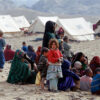
UNITED NATIONS, August 11 (IPS) - “Mainly, people tell me they’re exhausted. They’re exhausted from being poor, from being hungry, from repeated climate shocks, mounting debt, and the daily struggle to provide for their families,” Olga Cherevko, Spokesperson for the UN Office for the Coordination of Humanitarian Affairs (OCHA) in Afghanistan, told UN reporters on August 4.
Ebola deaths top 2,000 as scientists race to develop vaccine
- UN News

Local officials in the DR Congo (DRC) reported on Tuesday that deaths from the Ebola virus disease have surpassed 2,000, with half of that number in the last 20 days.
Living Longer at Age 80
- Inter Press Service

PORTLAND, USA, August 10 (IPS) - Upon reaching the age of 80, men and women are living longer than ever before. These gains in longevity among octogenarians represent a remarkable demographic achievement. The additional years of life provide new opportunities for older adults and their families while also presenting important social, economic, and healthcare challenges for societies.
Powered by