News headlines for “Health Issues”, page 61
Typhoon Yagi Devastates Southeast Asia
- Inter Press Service

UNITED NATIONS, Sep 19 (IPS) - In early September, Typhoon Yagi, a deadly tropical cyclone, hit Southeast Asia and Southern China, causing widespread destruction. According to the United Nations (UN), wind speeds, reaching 213 kilometers per hour, as well as heavy flooding and severe landslides, have devastated affected areas. Yagi is the strongest natural disaster to hit the South China Sea in three decades, leaving over 500 people killed, 38 missing, and 1,900 injured.
UNAIDS: Rising debt in sub-Saharan Africa costing lives
- UN News
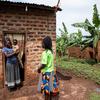
The report details how this debt crisis is jeopardising progress aimed at ending AIDS in Sub-Saharan African countries, which account for a significant majority of people living with HIV globally – 25.9 million people of the nearly 40 million total.
Humanitarian Crisis in Gaza Worsens While Polio Vaccine Campaign Succeeds
- Inter Press Service

UNITED NATIONS, Sep 17 (IPS) - Today, the chief of the United Nations Relief and Works Agency for Palestine Refugees in the Near East (UNRWA), Philippe Lazzarini, confirmed that the first round of Gaza's polio vaccination campaign had ended successfully, reaching 90 percent coverage. The second round of this campaign is set to begin by the end of September, delivering Gaza's children with a critical second dose of the polio vaccine.
Odious Debts: What Can Bangladesh Learn from Ecuador?
- Inter Press Service

SYDNEY, NEW YORK, Sep 16 (IPS) - Bangladesh's White Paper committee will review foreign loan deals signed by the fallen kleptocratic regime. We recommend that it identifies and declares the loans or portions of loans that did not benefit the nation as unpayable, because they were siphoned off the country by corrupt politically powerful elites, or worse used to buy deadly weapons and surveillance equipment to oppress people. Such loans are "odious" – they stink and are detestable.
Leaders Can Rise to the Summit, Together
- Inter Press Service

NEW YORK, Sep 16 (IPS) - As heads of state and government fly into New York for the United Nations General Assembly and the Summit of the Future (September 22-30), 2.3 billion mothers, fathers, and children are unsure where their next meal will come from. Millions face the terror of brutal, protracted armed conflicts that make no distinction between civilians and soldiers.
Sanitary disaster in Gaza ‘worsening by the day’, warns UNRWA
- UN News
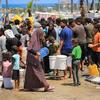
Overcrowded shelters in Gaza, a lack of running water and the constant threat of disease are making conditions worse by the day for people in the enclave, the UN agency for Palestine refugees, UNRWA, warned on Monday.
Gaza: WHO chief hails ‘massive success’ of polio campaign amid tragic reality
- UN News
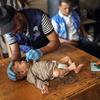
Around 560,000 children under ten have been successfully vaccinated against polio during the first round of an emergency campaign in the Gaza Strip, the UN World Health Organization (WHO) reported on Friday.
WHO approves first mpox vaccine to boost access in Africa
- UN News
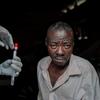
The World Health Organization (WHO) has approved the use of an mpox vaccine for the first time, which it says should facilitate “timely and increased access” for millions at risk in Africa where the latest outbreak has infected more than 20,000 so far this year.
Incorporate Genetics, Social Support and Place of Residence into Public Health Campaigns
- Inter Press Service

ABUJA, Sep 12 (IPS) - A recent study published in Journal Communications Medicine explores how people from different income levels and urban or rural backgrounds view the factors that influence health across eight countries: Brazil, China, Germany, Egypt, India, Indonesia, Nigeria, and the United States.
It found that those with higher incomes are more likely to think genetics are the most important factor for health, while those with lower incomes value social support more. In contrast, urban residents prioritize healthcare, while those in non-urban areas place more importance on social support. This information can influence public health messaging.
Africa Taking Targeted Preparedness Measures as Mpox Cases Increase
- Inter Press Service

ADDIS ABABA, Sep 12 2024 (IPS) - As the mpox virus continues to spread to new countries across Africa, triggering a continental health emergency, health authorities are sparing no effort in taking targeted measures to control the outbreak—and have called on funders to ensure that resources are distributed fairly.
Powered by