Corruption: Promises, But Not Enough Progress from G20 Countries
ROME/BERLIN, Feb 27 (IPS) - Open data is a pretty simple concept: governments should publish information about what they do to fight corruption– data that can be freely used, modified and shared by anyone for any purpose, according to two major international anti-corruption watchdogs. This is particularly important in the fight against corruption.
In 2015 the Group of 20 (G20) governments agreed on a set of G20 Anti-Corruption Open Data Principles. These principles aim to make crucial data public specifically because they can help stop corruption, a joint research published by Transparency International (TI) and the Web Foundation has revealed.
"In 2015 the G20 (Group of the 20 most industrialised countries) agreed that in order to help stop corruption, governments should publish data on open data platforms so that civil society could monitor the use of public resources, including how taxes are spent, how contracts are awarded and how money is funnelled into political campaigns."
Publishing this data would allow civil society to monitor things like the use of public resources and taxes, the awarding of public contracts, and the sources of political party finance, the research underlines, explaining that this would make it easier to hold governments to account and deter criminal activities like bribery and nepotism, adds the research.
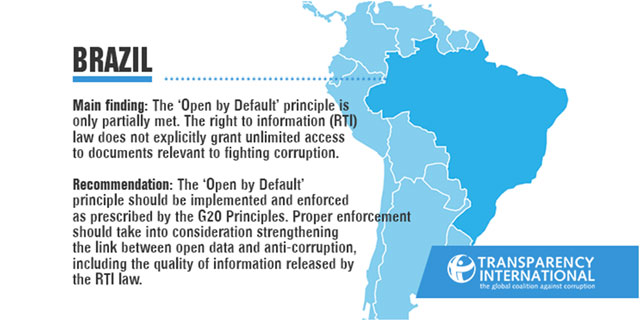
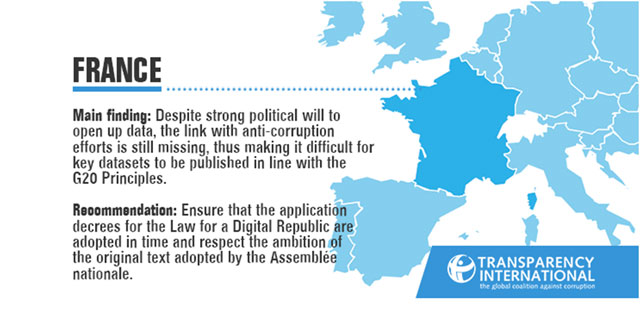
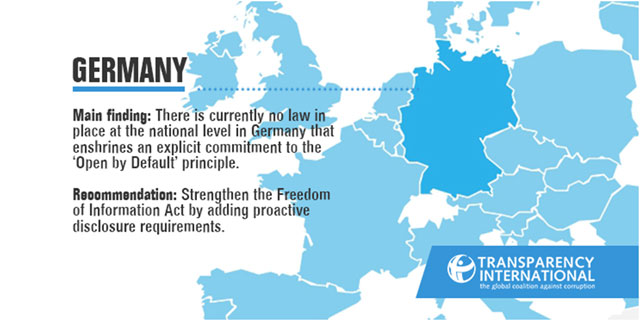
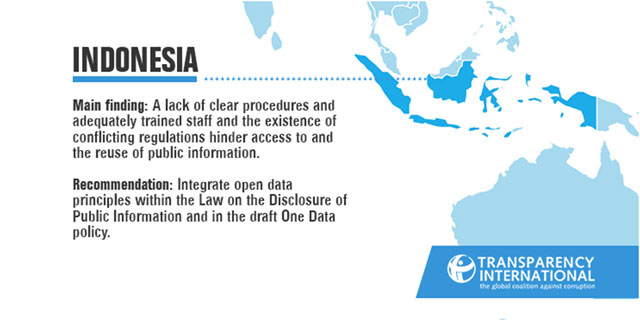
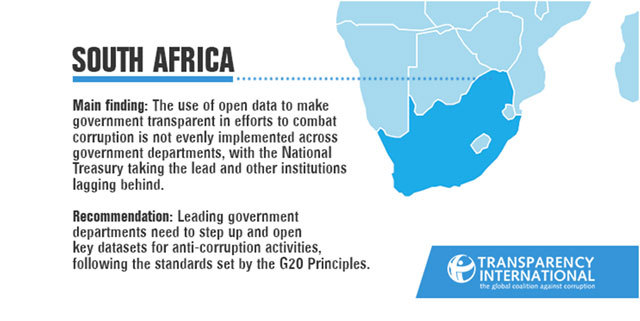
"Alongside the overview report, five country-level studies (Brazil, France, Germany, Indonesia and South Africa) revealed a range of shortcomings in national commitments to G20 open data principles. The graphics below summarise the main finding and recommendation for improvement per country."
Transparency International and the Web Foundation examined the extent to which five G20 countries – Brazil, France, Germany, Indonesia and South Africa – are living up to these principles. There are individual country reports (see below) as well as an overall report.
The basic conclusion: there isn't enough progress. No country released all the data-sets required, and much of the information proved either hard to find or difficult to use.
© Inter Press Service (2017) — All Rights Reserved. Original source: Inter Press Service
Where next?
Browse related news topics:
Read the latest news stories:
- ‘Safeguard the postwar order,’ China tells UN General Assembly Saturday, September 26, 2026
- Countries adopt global blueprint to tackle fast-evolving crime in digital age Saturday, September 26, 2026
- The Takeaway: UN General Assembly debate Day 4 Saturday, September 26, 2026
- Nepal’s Devastating Floods Have Put Women and Girls at Greater Risk Friday, September 25, 2026
- Myanmar: Corporate Complicity in the Spotlight Friday, September 25, 2026
- Forty Years of the ‘Right to Development’: When Growth Excludes, Is It Still Development? Friday, September 25, 2026
- Haiti at ‘watershed moment’, Prime Minister tells UN, urging full backing for security force Friday, September 25, 2026
- Pakistan’s Sharif warns any diversion of Indus waters will be ‘treated as an act of war’ Friday, September 25, 2026
- UN voices grave concern as fighting spreads across northern Ethiopia Friday, September 25, 2026
- Tuvalu urges decisive global action as rising seas threaten its future Friday, September 25, 2026
Learn more about the related issues:
Share this
Bookmark or share this with others using some popular social bookmarking web sites:
 Bluesky