

Bahrain and US float Security Council resolution on the Strait of Hormuz
Bahrain and the United States have circulated a draft Security Council resolution calling for Iran to cease attacks in the Strait of Hormuz, their ambassadors outlined to journalists at UN Headquarters in New York on Thursday.
The text is supported by Kuwait, Qatar, Saudi Arabia and the United Arab Emirates (UAE), whose representatives also took part in the stakeout.
The development comes a day after the UN Security Council met in closed session following Monday’s missile and drone attacks on the UAE, which the Iranian military denied carrying out.
Call for collective action
The Strait of Hormuz is critical not only to the stability and the prosperity of the Gulf region, but also to the global economy, Ambassador Jamal Fares Alrowaiei of Bahrain told reporters.
“Recent developments have underscored the importance of keeping this strategic waterway safe, secure and fully open. They have also shown the need for collective action,” he said.
He explained that the Bahrain-US text builds on the “historic” Council resolution 2817 (2026). Adopted in March, it condemned in the strongest terms “egregious attacks” by Iran against seven neighbouring countries.
The draft resolution calls for Iran to immediately cease all attacks and threats against merchant and commercial vessels in the Strait of Hormuz. It also addresses the placement of mines and illegal tolling in the critical maritime channel.
“Allowing such action to become normalized is unacceptable. In addition, the draft addresses participation in the United Nations efforts to establish a humanitarian corridor in the Strait,” he added.
Global trade at stake
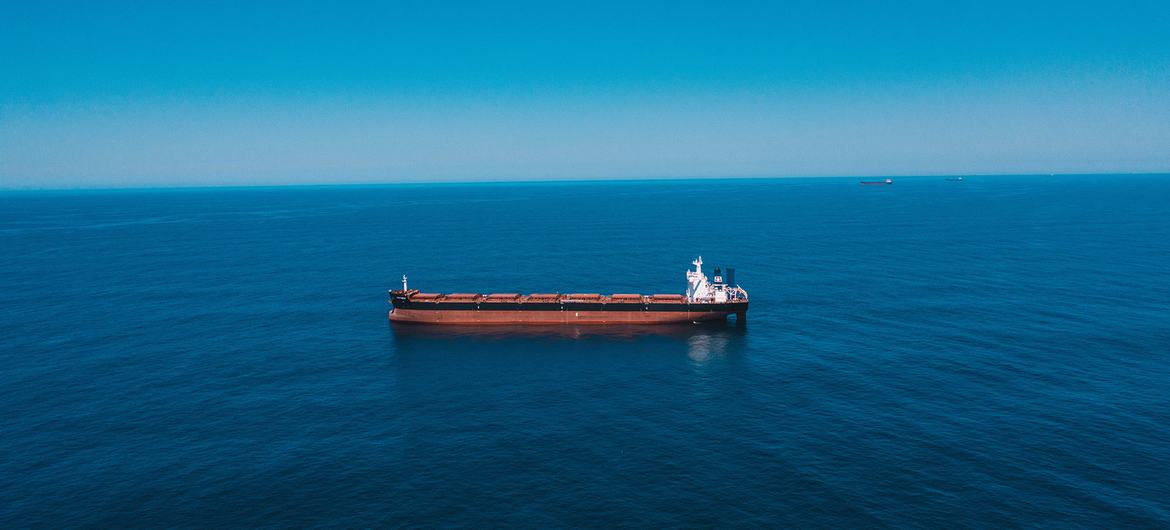
US Ambassador Mike Waltz underscored that the freedom of navigation for the entire global economy is “what’s at stake here – nothing less than a cornerstone of worldwide stability and commerce.”
He warned that “those who abuse it, or seek to throw it out, are setting a very, very dangerous precedent – and frankly setting the stage to doom global trade.”
Mr. Waltz said the draft resolution “requires Iran to do some very simple, straightforward things,” however he noted Tehran’s announcement earlier this week of the Persian Gulf Straits Authority which requires international ship captains to pay a toll when transiting the waterway.
“So that doesn't just affect this region. It affects the entire world,” he said.
Resolution is ‘deeply flawed and one-sided’: Iran
Iran’s Ambassador Amir Saeid Iravani told reporters at the stakeout later in the day that the draft resolution was “deeply flawed, and one-sided”.
“They claim that their actions are intended to protect freedom of navigation in the Strait of Hormuz and made some baseless allegations against my country. The facts on the ground prove otherwise,” he said.
He said Washington’s actions contradicted the administration’s stated objectives “and have served only to escalate tensions and deepen instability in the region.”
He added that the only solution to the Hormuz crisis was a permanent end to the war and lifting of the US maritime blockade.
Crucial corridor
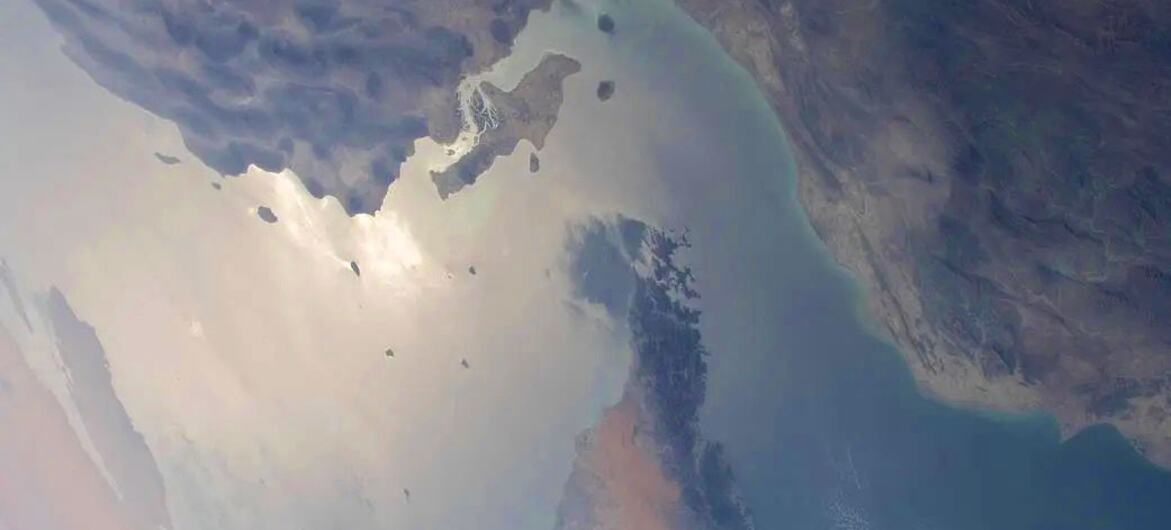
The Strait of Hormuz, located off the coast of southern Iran, is a key transit route for about a quarter of global seaborne oil trade and significant volumes of liquefied natural gas as well as fertilizers.
The crisis there erupted in late February following US and Israeli airstrikes against Iran, with counterstrikes by Tehran across the region.
© UN News (2026) — All Rights Reserved. Original source: UN News