

Millions of children return to schools that still can’t provide clean water or a working toilet
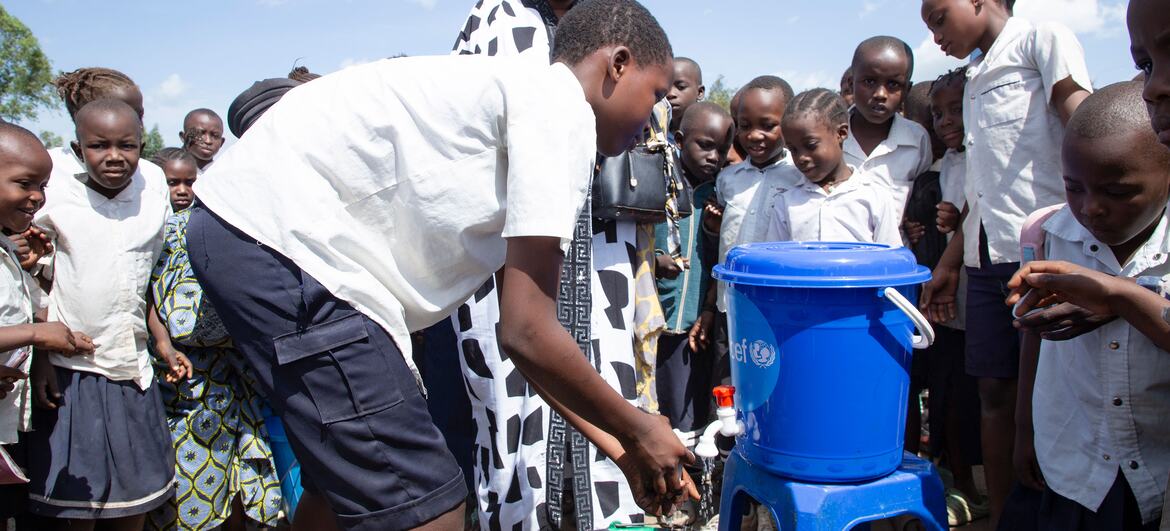
A new academic year is underway in many countries across the world, yet millions of children still attend schools where the water is unsafe to drink, toilets are unusable and there is nowhere to properly wash their hands.
That’s according to a report by the World Health Organization (WHO) and child rights agency UNICEF that reviews progress on Water, Sanitation and Hygiene (WASH) in schools from 2015 to 2025.
WASH services are critical at schools as they can impact learning, health, and dignity, particularly for girls.
During this period, the proportion of schools with basic drinking water services rose from 67 per cent to 78 per cent. Global coverage of basic sanitation also increased, up from 67 per cent to 77 per cent, as did basic hygiene, from 59 per cent to 72 per cent.
Progress in danger
Despite these improvements, the report warns that the world remains off track in ensuring universal access by 2030, as stipulated under the Sustainable Development Goals (SDGs).
It reveals that in 2025:
- 429 million school-age children lacked drinking water services at school
- 460 million lacked a basic sanitation service
- 545 million lacked a basic hygiene service, with water and soap for handwashing
Inequalities among countries
Significant inequalities persist, with the largest gaps reported in low-income and fragile settings, particularly in sub-Saharan Africa.
For example, only 54 per cent of schools in low-income countries had basic drinking water services, while 50 per cent had basic sanitation services and 35 per cent had basic hygiene services.
By comparison, coverage of all three services exceeded 99 per cent in richer countries.
Challenge in sub-Saharan Africa
Sub-Saharan Africa had the lowest levels of coverage. Fewer than half of schools there had basic drinking water services, 46 per cent, or basic sanitation services, 43 per cent. Only 39 per cent had basic hygiene services.
Nearly three in five children globally who lack basic drinking water at school, around 250 million, live in the region, which is also home to some 264 million children who lack basic sanitation and 282 million lacking basic hygiene.
Achieving universal access for both basic drinking water and hygiene services in schools over the next five years would require a fourfold increase in the current rate of progress, and a fivefold increase for sanitation services.
UNICEF stressed that “without faster action, hundreds of millions of children will still lack these essential services at school in 2030.”
© UN News (2026) — All Rights Reserved. Original source: UN News