

Kenya’s Civil Society Calls on COP31 Climate Negotiators To Draw From Grassroots
NAIROBI, November 6 (IPS) - As the world prepares for the 31st United Nations Conference on Climate Change (COP31) in Antalya, Türkiye, Kenya’s priorities for the negotiations are being shaped by lived experiences of communities who are on the frontline of the climate crisis.
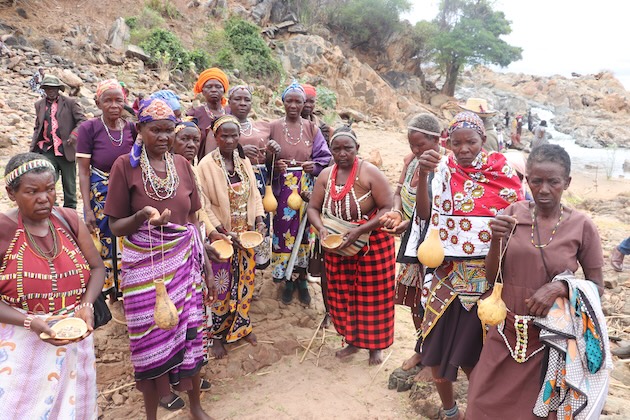
At the recently concluded annual Tharaka Biocultural Festival in Tharaka-Nithi County, farmers gathered to showcase, exchange and celebrate traditional seeds, some which were already on the verge of extinction, and traditional foods that were celebrated by their ancestors over generations.
“This is a semi-arid region, and there were those seeds that our ancestors used to plant, which could easily survive such tough climatic conditions without fail,” said Simon Mitambo, the Chief Executive Officer at the Society for Alternative Learning and Transformation (SALT), the convener of the annual festivals.
“We have been convening these festivals every year for the past 10 years, and as a result we have been able to revive some of the most important seeds, such as the canton melon, which many young people think is a new crop because they had never seen it, yet it was one of the most important fruits in Tharaka, used to prepare Kathongo, the main staple food that fed our forefathers for generations before maize came in to interrupt those diets,” he said.
The community has also been able to revive the communal grazing system to enhance biodiversity recovery, support natural vegetation cover, and aid climate adaptation. They have also managed to recover traditional millet varieties such as Mugeeta (white millet) and pearl millet, multiple indigenous varieties of sorghum, including Mukuumbu, and local, climate-adapted cowpea varieties.
And now, civil society organisations from Kenya, through a workshop that brought Kenyan negotiators along, want such indigenous grassroots adaptation measures to be presented on the climate negotiations table in Antalya.
“Such community-led actions provide a practical pathway to climate adaptation, restoring locally adapted crops that can withstand prevailing environmental conditions and give farming communities renewed hope for reliable harvests,” said Anym Khan, the Acting Chair of the Kenya Climate Change Working Group (KCCWG) during the Pre-COP workshop.
Apart from such lived experiences, the workshop condemned the emerging new narrative observed during the Pre-COP conference in Nadi, Fiji, and the recent IPCC meeting in Addis Ababa, that due to limited resources, the available finance should focus on Least Developed Countries (LDC) and Small Island Developing States (SIDS).
“This is a dangerous narrative for our country because communities living on border lines share climatic conditions naturally, and using the borderline to determine who receives climate finance and who doesn’t is discriminative,” said Lydia Kimani, the Executive Director, Agribusiness for Africa Markets.
For example, in Busia, which is on the border of Uganda and Kenya, people living in Busia, Uganda, will be favoured because Uganda is categorised as an LDC, while those in Busia, Kenya, will miss out on such funding because Kenya is a Lower Medium Income Country (LMIC). Yet the impacts of climate change within the Busia community are exactly the same in both countries.
“We are calling on our negotiators to be so vigilant to avoid that kind of narrative in the negotiations,” said Kimani. “Let the funding continue targeting developing countries, or if the language has to change, then it should be LDC, SIDS and Africa,” she said.
Another concern is the proposal listed by the Subsidiary Body for Scientific and Technological Advice as agenda item 15, “Promoting sustainable dietary practices, reducing animal-based diets and transitioning to plant-based diets.”
“We will need to argue against that agenda item because Article 2.1b of the Paris Agreement clearly states that adaptation should happen without threatening food security,” said Michael Okumu, one of the country’s lead negotiators.
The article on adaptation and resilience states that “enhancing adaptive capacity, fostering resilience, and promoting low-emission development without threatening food production.”
According to Kimani, livestock in Kenya and the entire continent go beyond animal-based diets. “It is from our livestock that we get organic manure, which has kept our soils healthy and productive for generations,” she said.
In Tharaka, livestock, particularly goats, are considered to be very important domestic animals that support culture in terms of performance of sacred rituals; they are used during bridal ceremonies, they provide milk and meat, they are a source of income, particularly for smallholder farmers, and most importantly, they are resilient to tough climatic conditions.
Pastoral communities in the country, such as the Maasai, Borana, Rendile and Kenyan Somalis, depend on livestock entirely for their livelihoods, making it one of the most important sectors in the country and across Africa.
The team also pointed out that transition to low-emission development must address inequality, protect livelihoods and ensure that affected communities participate meaningfully in decisions.
“Energy transitions and critical-mineral extraction must not transfer environmental and social costs to local communities, while agriculture and food systems must be recognised as integral to a just transition,” observed Jacqueline Kimeu, the Senior Climate and Energy Advisor at Christian Aid.
According to the United Nations University, COP 31 must show whether political commitments can translate into more predictable, accessible and effective financial support, particularly for adaptation and countries facing the greatest climate risks.
IPS UN Bureau Report



© Inter Press Service (20261106064132) — All Rights Reserved. Original source: Inter Press Service