

DR Congo: Ebola responders under pressure as outbreak expands
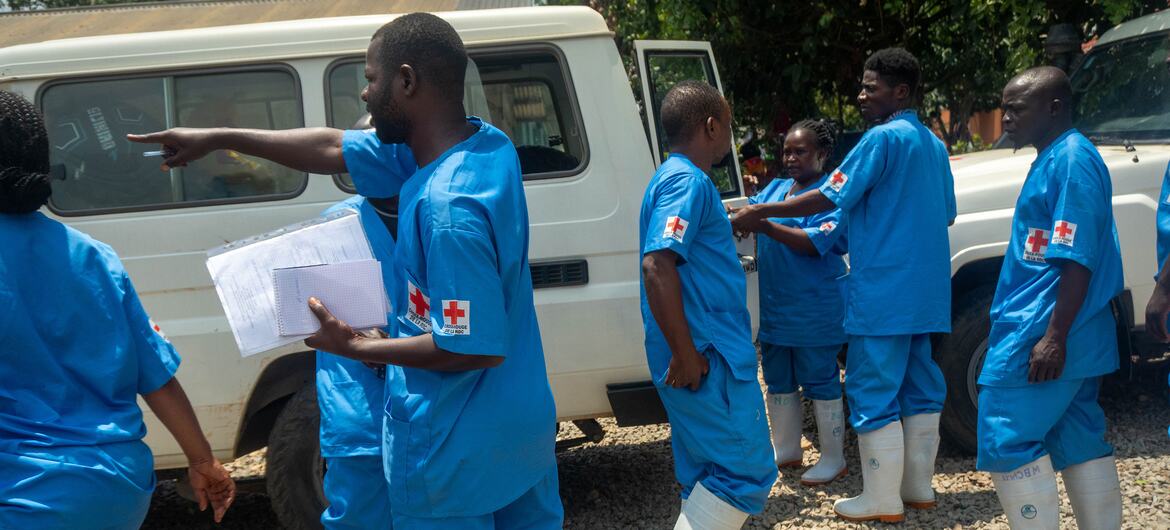
As the deadly Ebola disease outbreak reached an eighth province of the Democratic Republic of the Congo (DRC), investigators pursued all leads on Thursday to assess the risk of the disease spreading in Nigeria.
Authorities in Abuja confirmed their first case of infection in an individual arriving from Uganda, which borders the worst-hit provinces in DRC.
“The source of exposure is still not known and the travel history of the patient is being pieced together now in terms of her movement from Uganda up to Nigeria,” said Dr Patrick Otim, from the UN World Health Organization (WHO)’s Emergency Response programme, in an online update.
“This is rapidly evolving. As we get more information, we’ll try to determine where she was exposed. And then it’s at that point where we can say whether there is any transmission happening.”
Nigeria is the fifth country this year after DRC, France, Uganda and Kenya to confirm the presence of Ebola disease caused by Bundibugyo virus.
The original DRC outbreak was declared in mid-May where it has led to more than 4,600 deaths and a total of 9,552 confirmed infections. Around six in 10 of these deaths have occurred outside health centres, indicating the continuing difficulty of halting community transmission.
The latest DRC province to confirm infections is Nord Ubangi, which borders Central African Republic, where ongoing armed violence continues to uproot thousands of people, increasing the difficulty of halting transmission.
Nairobi controls
The Kenyan authorities have reported a total of nine cases of infection including one death earlier this month, of a Kenyan national who had been working in DRC before flying back to Nairobi via Entebbe, Uganda.
Uganda previously recorded two deaths and 20 confirmed cases of infection, before officially declaring the Ebola threat over at the end of August.
“Immediately after [the death of the Kenyan patient], we commenced on contact tracing,” said Dr Patrick Amoth, Director General of Kenya’s Ministry of Health, adding that 135 contacts with the deceased patient have been traced “and we have been able to account for them, 100 per cent”.
According to the Nigerian authorities, the patient developed symptoms on 7 October and sought care at a clinic before being hospitalised 48 hours later.
Genetic sequencing of the infection is underway to confirm that it is the same Ebola Bundibugyo disease circulating inside DRC. More than 40 close contacts have been identified to date, WHO has said.
“All the Infection Prevention and Control measures have been put in place to try to ensure that the risk of amplification of transmission within the health facilities is limited,” said WHO’s Dr Otim.
“The message is being passed to all the private facilities within [Abuja] and also all the other health facilities within the country to step up.”
Vaccine research ongoing
Inside DRC, in addition to the essential work of contact tracing, vaccination research is ongoing using Ervebo vaccine, which was originally designed for and is effective against Ebola disease caused by Zaire virus, in a bid to find out if it provides protection against Ebola Bundibugyo.
“We still do not have preliminary data yet as to whether there is…sufficient cross-protection between the Ervebo vaccine – which is for the Zaire species – and the Bundibugyo species. As soon as we get it, we'll be able to share that information,” Dr Otim told journalists.
Remote communities hardest-hit
Responding to questions about the Ebola response inside DRC, the UN health agency highlighted ongoing transmission of infection and reports last week of 15 deaths per day in the rural commune of Mangina in Beni territory, North Kivu province.
After negotiating access, an emergency response team from WHO arrived there two weeks ago and started working with impacted communities.
“There was a lot of community preoccupation and community resistance in the beginning to receive help, it’s a very highly insecure area,” said Dr Anne Ancia, WHO Country Representative in DRC.
“Ebola does not wait. It follows movement, exploits gaps and tests the strength of our health systems,” said Dr Mohamed Janabi, Regional Director for WHO Africa, underscoring that the virus is “no longer confined to one place, it is a regional concern”.
He added: “We must reach people earlier, bring safe care closer and strengthen trust before fear becomes a barrier to survival. We also know that success is possible where surveillance is strong, where contacts are found and followed.”
© UN News (2026) — All Rights Reserved. Original source: UN News