

Samarkand: A ‘living museum’ on the Silk Road grapples with a tourism boom
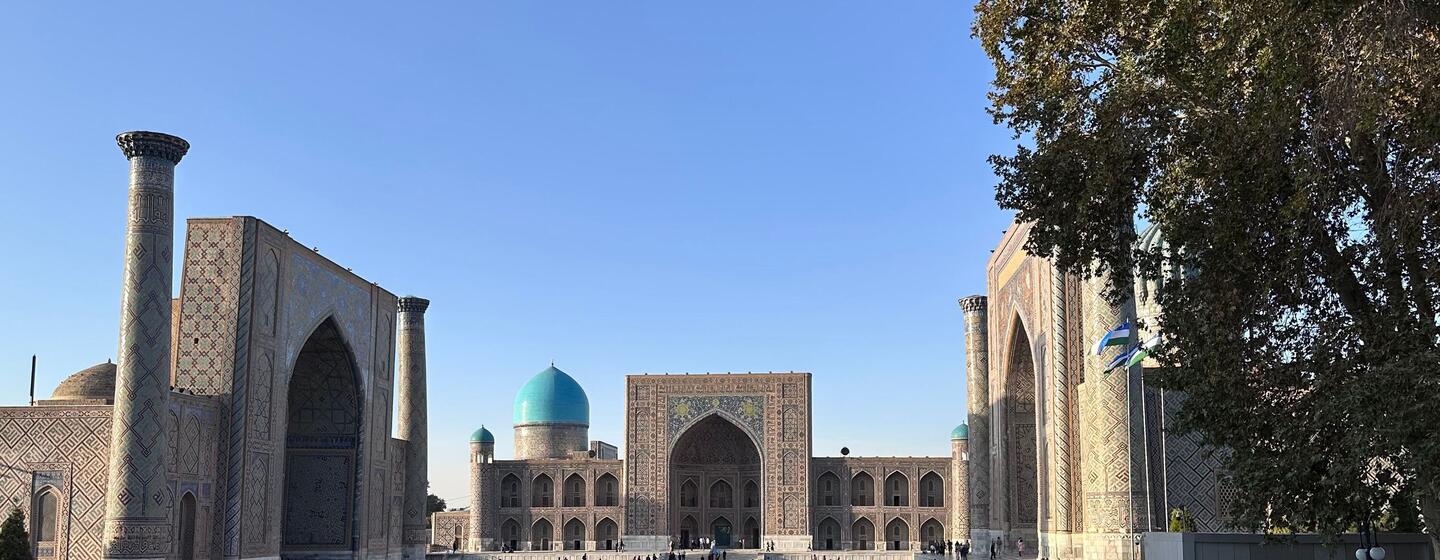
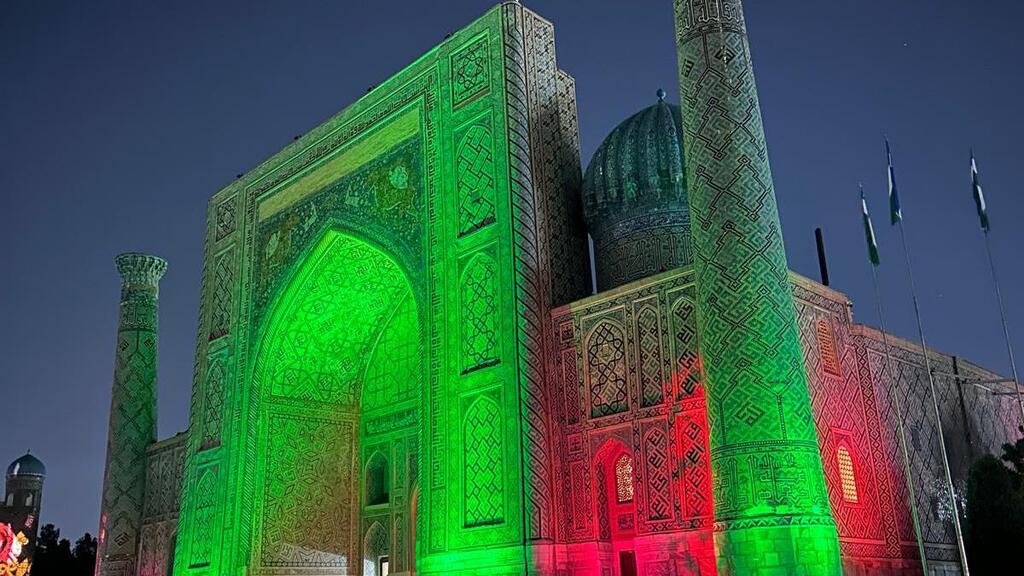
As the sun sets over Samarkand’s majestic Registan, its last rays glint across the turquoise mosaics. Dusk settles on the ancient square where great trade routes have crossed for centuries.
Tourists linger at the stalls as the lights come on, lending the square an air of mystery.
The Registan is part of historic Samarkand, a UNESCO World Heritage site. But this is more than a city of monuments. People live here; schools, shops and workshops are open, and old neighbourhoods stand alongside new districts.
UN News visited ahead of World Cities Day to ask: how can civil leaders preserve its heritage while it keeps growing?
That question is at the heart of Samarkand’s “Silk Road” International University of Tourism and Cultural Heritage, which trains specialists in both fields from a campus in the city centre.
The university’s rector, Professor Muhsinjon Kholmukhamedov, told UN News that for centuries Samarkand was a crossroads not only for trade, but for ideas, crafts and cultures, flourishing in the eighth and ninth centuries and again in the Timurid era, when it became a centre of science, culture and the arts.
A first for UN Tourism
The university began working with the World Tourism Organization, now UN Tourism, in 2023 and renewed the partnership this year.
“We are the first partner university of this organization. We have established cooperation in several areas,” the rector said.
It is translating courses from the organization’s online academy for residents and preparing to open an INSTO tourism observatory – the first in Central Asia.
The observatory will track not only visitor numbers, but tourism’s impact on jobs, the urban environment and residents’ daily lives, as similar observatories already do from Barcelona and Vienna to Gifu in Japan and Nuevo León in Mexico.
Undoing the repairs of the past
Heritage preservation is another strand of its UN work, through a UNESCO Chair. One challenge, Mr. Kholmukhamedov said, is the legacy of restoration work in the 1990s.
“Unfortunately, gypsum, concrete and rebar were used then. We are now conducting research with experts and providing evidence-based recommendations on the use of modern composite materials that do not damage the historic fabric of the monuments,” he said.
Laser scanning lets researchers build three dimensional models of buildings and spot dangerous deformations in time. “If there is a critical tilt, we try to support the structure,” the rector said.
He calls Samarkand a living museum, where people go to work, meet friends and eat out beside monuments of global significance – a city that teaches its residents to value history.
Visitors feel that energy too. “Visiting Samarkand always reminds me of its special hospitality and energy. It is truly inspiring to see the city grow so vibrant and culturally rich,” UN Resident Coordinator in Uzbekistan Sabine Machl told UN News.
Why Timur chose Samarkand
Legend has it that Amir Timur picked his capital by having meat hung in several cities to see where it would take longest to spoil.
In Samarkand, the rector said, it stayed fresh longest – thanks, he believes, to the climate, the Zarafshan River and the nearby mountains.
Legend or not, Samarkand’s place in a fertile oasis at the crossroads of trade routes shaped its fortunes – and made it a welcome stop for merchants after arduous journeys.
A crossroads once more
Today, according to the rector, new railways are expected to connect Uzbekistan with China and Afghanistan, and on to South Asia, while a planned high speed highway should cut the Samarkand–Tashkent journey to about two and a half hours. Both are due for completion between 2030 and 2032.
The skies are busier too, with direct flights from Samarkand to more than 40 destinations.
A tenfold tourism boom
According to Mr. Kholmukhamedov, about 1.2 million tourists visited Uzbekistan in 2016, compared with nearly 12 million in 2025. He estimates Samarkand alone received around seven million visitors last year; more than 10 million came in the first nine months of 2026, and the city expects around 14 million by year’s end.
Many come for the food – not least Samarkand palov - a rice pilaf – cooked and served in layers with local sesame oil. Uzbek palov culture is on UNESCO’s Intangible Cultural Heritage list.
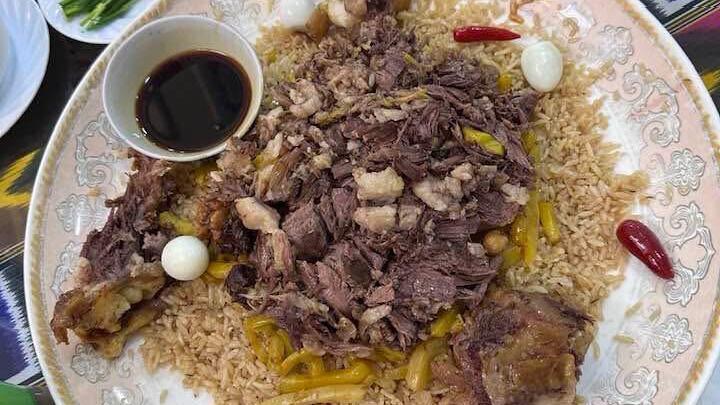
Homes for the people
Rapid growth is raising urgent questions about housing for Samarkand’s own residents – fitting, as this year’s World Cities Day theme is Urban Renewal: Affordable Housing for All.
More than 1,100 apartment buildings have gone up in Samarkand Region over the past eight years. UN-Habitat is now developing the Samarkand Housing Profile, Uzbekistan’s first, with the national Government.
The city’s master plan to 2040 foresees a big expansion of housing, but also looks at the condition, energy efficiency, affordability and upkeep of existing homes – most of them individual houses. The Profile will recommend ways to make adequate housing more affordable, resilient and sustainable for all.
“In Samarkand, heritage is not only the monuments. It is also the mahallas, the traditional neighbourhoods where people live and where community life happens.
“The best approach is to upgrade homes and services in place rather than replace them: better water, heating and energy efficiency, sensitive renovation that respects the historic urban fabric, and new growth steered to areas outside the historic core,” Katja Schaefer, a UN-Habitat representative working on the project with local specialists, told UN News.
“Above all, residents should be involved in decisions about their neighbourhoods. Done this way, heritage and better living conditions support each other,” she said.
“Every era has left its mark,” she added. Much of the Soviet era housing and infrastructure is now outdated, and since independence the city has grown rapidly, at times without a plan, squeezing the green spaces that make it pleasant to live in.
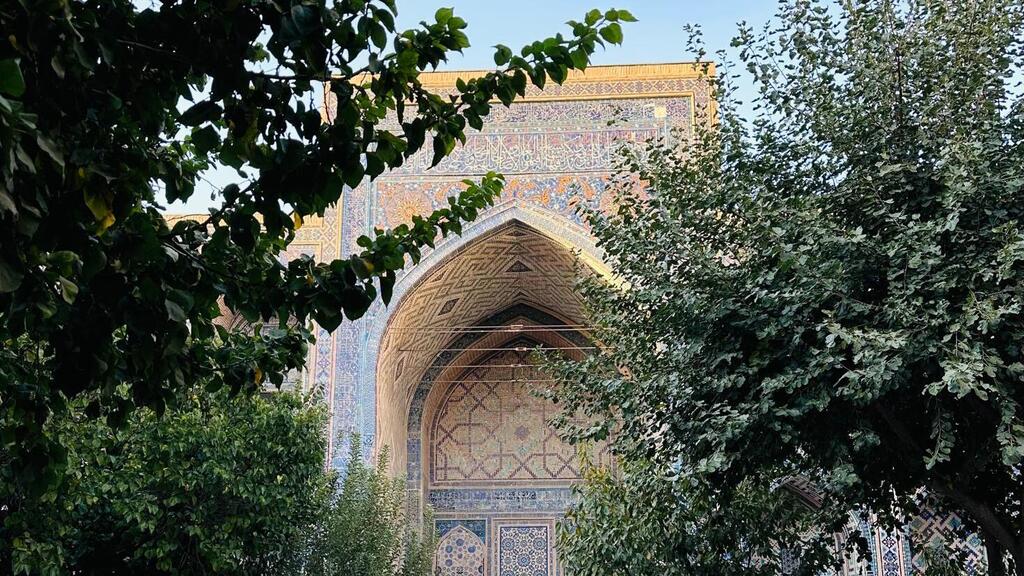
Growing a ‘green city’
Ms. Schaefer hopes the new master plan and the Green City Action Plan will tackle these challenges together.
In August, Samarkand and Tashkent joined the Green Cities Network of the Food and Agriculture Organization (FAO), a group of cities working towards greener, healthier urban environments.
“What struck me most in Samarkand is how much of its greatness came from being a meeting place. Its position on the Silk Road made it a crossroads of trade and cultures for centuries, and it drew scholars from across the region.
“Under Ulugh Beg, it became one of the world’s leading centres of astronomy, mathematics and science. That spirit of exchange and innovation is still part of the city’s identity,” she said.
“Our generation’s task is to preserve Samarkand while making it future proof so that it stays liveable for future generations while keeping its identity, through resilient communities,” Ms. Schaefer said.
© UN News (2026) — All Rights Reserved. Original source: UN News