News headlines for “Mainstream Media”, page 2
ECUADOR: ‘Criminalisation Serves as a Deterrent, Seeking to Discipline Others’
- Inter Press Service

CIVICUS discusses the rapid erosion of civic space in Ecuador with Gabriela Panchana, an activist, communicator and founder of the En Voz Alta and Rumbo Plural digital platforms.
How the Taliban Hunt Women in Afghanistan
- Inter Press Service
ROME, August 20 (IPS) - FIVE years after the Taliban returned to power, Fawzia Koofi, the former Deputy Speaker of the Afghan Parliament, denounces what she describes as “gender apartheid.”
PARAGUAY: ‘Transparency Should Strengthen Democracy, Not Turn Criticism of Those in Power into a Cause for Suspicion’
- Inter Press Service

CIVICUS discusses the challenges posed by Paraguay’s ‘anti-NGO law’ with Hugo González, executive director of the Paraguayan Network of LGBTQ+ Artists (REPAR+), a civil society organisation (CSO) that promotes the rights of LGBTQI+ people, which has joined the constitutional challenge against this law.
Pakistan’s Crackdown on Journalists Comes Under Heavy Fire
- Inter Press Service
UNITED NATIONS, August 14 (IPS) - Pakistan, one of few South Asian countries to oscillate between democratic governments and authoritarian regimes, is cracking down on journalists, including foreign correspondents covering the political situation in the world’s fifth most populous nation, with an estimated population of over 250 million people and ranking behind India, China, the United States, and Indonesia.
Nicaragua: End of the Electoral Illusion
- Inter Press Service
MONTEVIDEO, Uruguay, August 12 (IPS) - On 19 July, the 47th anniversary of the Sandinista revolution that first brought him to power, Nicaraguan President Daniel Ortega declared that his country would hold ‘no more elections’ so that the opposition could never again try to ‘seize power’. Just like that, he scrapped a presidential vote that had previously been pushed back to 2027, abandoning even the fiction of democratic legitimacy. The move changes little in practice, since no free vote had been possible for years. But it’s still revealing: a government that controls the army, the courts, the electoral machinery and the police, and will still not risk even a stage-managed ballot, is one that has lost confidence in its people.
Burkina Faso’s Cancelled Democracy
- Inter Press Service
LONDON, August 7 (IPS) - Burkina Faso’s charismatic young military leader, army captain Ibrahim Traoré, has stopped pretending. In April, he declared that people should ‘forget about the question of democracy’ because ‘democracy isn’t for us’. When Traoré seized power in September 2022, ousting a leader who’d staged a coup earlier that year, he promised elections by June 2024. The junta broke that pledge, pushing any transition back to 2029. Now Traoré has confirmed he has no intention of restoring democracy. Instead, Burkina Faso’s military junta is tightening its repression, while working with neighbouring states to internationalise its dangerously undemocratic model.
CHINA: ‘The Ethnic Unity Law Means There Is One Acceptable Way to Be Chinese’
- Inter Press Service

CIVICUS speaks about China’s recently implemented Ethnic Unity Law with Gulchehra Hoja, a correspondent for Reporters Without Borders and a Uyghur activist and journalist known for her reporting on human rights abuses against Uyghur people in China.
Cockroach Protests: How India’s Youth Movement Led to Minister’s Resignation
- Inter Press Service

NEW DELHI, July 27 (IPS) - On July 25, after 50 days of protest at Delhi’s Jantar Mantar, Union Education Minister Dharmendra Pradhan resigned.
Guatemala: A Narrow Opening in a Captured Justice System
- Inter Press Service
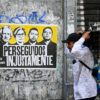
MONTEVIDEO, Uruguay, July 24 (IPS) - José Rubén Zamora, founder of elPeriódico, Guatemala’s now-defunct leading investigative newspaper, spent 1,295 days in detention before a court granted him house arrest on 12 February. He endured long stretches of solitary confinement in a military jail, held in near-constant darkness and subjected to treatment that six UN experts warned could amount to torture. His offence was simply doing his job. For decades, he exposed the corrupt dealings of Guatemala’s economic and political elites. Prosecutors are still trying to send him back to prison.
Trump’s Authoritarian Gambit to Muzzle the Foreign Press
- Inter Press Service

NEW YORK, July 23 (IPS) - Under a new rule proposed by the Department of Homeland Security, the duration of “I visas” for foreign media will be slashed from renewable multi year periods—often up to five years—to a maximum of 240 days, and just 90 days for Chinese journalists. Renewals would no longer be a routine administrative step tied to continued employment and compliance with the law, but a discretionary privilege the government can grant or withhold at will.
Powered by