News headlines for “Natural Disasters”, page 10
UNHCR: 75 years on, the Refugee Convention Remains a Lifeline for Millions
- Inter Press Service
GENEVA, July 27 (IPS) - Seventy-five years after the Refugee Convention was opened for signature on 28 July 1951, it remains the foundation of the international refugee protection system and one of the most consequential international legal instruments ever adopted.
From Castel Gandolfo to Campidoglio: Call for Human Dignity to Be at the Heart of the AI Revolution
- Inter Press Service

ROME, July 24 (IPS) - After two days of debate at an international conference devoted to the challenges of artificial intelligence (AI), nuclear war and global security, Nobel laureates, former heads of state and government, scientists, human rights defenders, religious leaders and representatives of civil society adopted a joint declaration, calling for it to be based on human dignity.
Children in Conflict Zones and Remote Areas Bear the Brunt of Poor Health Access
- Inter Press Service

UNITED NATIONS, July 22 (IPS) - Despite growing up and working in vastly different geographic regions and environments — one shaped by decades of armed conflict and political instability, and the other by remote, hard-to-reach areas — both Sagal and Johao encounter children daily who have never been vaccinated. Sagal and Johao are members of UNICEF’s Global Youth Health Advisory Group, where they advance children’s health by shaping UNICEF’s strategies, policies, and campaigns, while working directly in their own countries to connect community realities to global conversations about children’s health.
Africa’s Health Defenses Have Improved But Its Funding Has Not
- Inter Press Service

BULAWAYO, Zimbabwe, July 22 (IPS) - In September 2024, an outbreak of Marburg virus disease in South Ethiopia was confirmed, contained, and declared over within three months.
Artificial Intelligence and the Future of Humanity: Nobel Laureates Call for Global Safeguards
- Inter Press Service
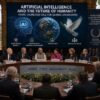
BORGO LAUDATO SI’, Italy, July 21 (IPS) - “I’m sorry, Dave. I’m afraid I can’t do that.” By bringing the supercomputer HAL 9000 to life in his 1968 film 2001: A Space Odyssey, American director Stanley Kubrick created one of the most powerful symbols of the fear of artificial intelligence (AI) escaping human control.
Renewed Hostilities in the Strait of Hormuz Threaten to Compound Global Supply Chain Costs
- Inter Press Service

UNITED NATIONS, July 17 (IPS) - A continuation of hostilities within the Strait of Hormuz is once again threatening one of the world’s most critical supply chain arteries, posing another wave of disruption which could choke the global energy, shipping and commodity markets. With roughly a quarter of global seaborne oil trade transiting through the Strait, alongside significant flows of liquefied natural gas and fertilizers, further constraints on commercial traffic could send new cost pressures cascading through supply chains that have yet to absorb the full effects of the earlier conflict.
How Farmers Are Learning About Restoring Soils and Scaling Agroecology in Kenya
- Inter Press Service
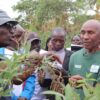
MAKUENI, Kenya, July 15 (IPS) - At Yumbuni Village in Kenya’s Makueni County, farmers from Vihiga and Kakamega counties have travelled over 560 kilometres to join their colleagues in Kathonzweni Ward and see the progress of experiments being carried out on different homemade organic fertilisers and other farm inputs.
WHO: Urgent Action Needed for the Future of Cancer Care
- Inter Press Service

UNITED NATIONS, July 15 (IPS) - One in five people will be diagnosed with cancer in their lifetime, and when the emotional and physical toll on close family members is factored in, an estimated 92 percent of people globally will be affected by cancer at least once in their lifetime. This staggering statistic is the centerpiece of the World Health Organization (WHO)’s latest global report on cancer.
UN Raises Alarm Over A Sharp Rise in Human Rights Abuses and Cholera-Related Deaths in Sudan
- Inter Press Service

UNITED NATIONS, July 13 (IPS) - Throughout 2026, the humanitarian crisis in Sudan has deteriorated significantly, prompting the United Nations (UN) to raise alarm over the escalation of human rights violations. Persistent clashes between the Sudanese Armed Forces (SAF) and the Rapid Support Forces (RSF) continue to cause mass civilian casualties, drive widespread displacement, and obstruct the delivery of life-saving aid. As a result, war-torn communities are being pushed further into catastrophe, struggling with severe shortages of essential basic services and the rapid spread of infectious disease.
Women Peacebuilders: The Missing Voices at the Negotiating Table
- Inter Press Service

BENGALURU, India, July 13 (IPS) - For most individuals, the process of peace starts with the signing of a ceasefire or an agreement among politicians. However, those who live in regions experiencing violence understand that peace is made long before politicians meet at the negotiating table. Peace is created among communities by people who work everyday to ensure that no violence takes place, and that disputes are sorted out.
Powered by