News headlines for “G8: Too Much Power?”, page 3
Fragmented Policies Hold Back Agroecology Adoption in Africa’s Congo Basin
- Inter Press Service
YAOUNDE, Cameroon, September 29 (IPS) - Agricultural, land, forestry, environmental and trade policies in the Congo Basin remain compartmentalised at country levels, leaving proven agroecological models trapped at pilot stages due to a lack of advisory services, organic inputs, market outlets and sustainable financing.
The Dollar-Gold Standard’s Lingering Demise
- Inter Press Service

KUALA LUMPUR, Malaysia, September 28 (IPS) - The 1944 Bretton Woods (BW) conference accepted the US demand to use the dollar to settle international financial transactions. This arrangement would require a US balance-of-payments deficit to issue enough dollars.
Forty Years of the ‘Right to Development’: When Growth Excludes, Is It Still Development?
- Inter Press Service
UNITED NATIONS & BULAWAYO, Zimbabwe, September 25 (IPS) - World leaders have warned that the most vulnerable people have been left behind as the right to development has promised more than it has delivered, with development seemingly the preserve of the superrich and powerful.
Norway’s Development Rethink Should See Ocean Investment as a Strategic Interest
- Inter Press Service
OSLO, Norway, September 24 (IPS) - As Norway undertakes Vendepunkt, or “Turning Point,” its reflection on the future of Norwegian development policy, it is critical that oceans remain a priority. Donors around the world are running similar audits, deciding which long-term partnerships to keep, and why. Norway has decades of expertise to offer, but also something significant at stake: healthy and well-governed oceans underpin food, livelihoods and economic activity in partner countries while supporting global seafood supply chains in which Norway itself participates.
The BBNJ Agreement: From Paper to Protection – The Real Test for Global Ocean Governance
- Inter Press Service

VICTORIA, Seychelles, September 24 (IPS) - After decades in which the high seas were too often treated as a distant frontier—vast, ownerless and beyond meaningful protection—the High Seas Treaty entered into force on 17 January 2026.
When African Smallholders Access Finance, They’ll Show You What’s Possible
- Inter Press Service
NAIROBI, Kenya, September 24 (IPS) - I was born in Rwanda, but my family soon became refugees in Uganda during the conflict and unrest on the cusp of independence. My father was a teacher and went to great lengths to make sure I was well educated. My parents were also smallholder farmers, and I saw firsthand the challenges my parents and other refugee families faced.
Africa Has the Technology to Achieve Food Security—Now It Needs Coordinated Deployment
- Inter Press Service
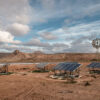
KIGALI, Rwanda, September 22 (IPS) - Africa is emerging as the world’s fastest-growing technology market, with its innovation ecosystem attracting increasing global investment. The European Investment Bank’s recent €40 million commitment to the sector underscores this growing confidence.
Sudan: Blood on Foreign Powers’ Hands
- Inter Press Service
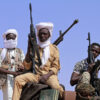
LONDON, September 21 (IPS) - Sudan’s civil war grinds on. It’s close to three and a half years since the Sudanese Armed Forces (SAF) and the Rapid Support Forces (RSF) militia began their battle for supremacy, and the two forces and their allies continue to slaughter civilians with impunity. As a recent UN report makes clear, the killing is enabled by numerous foreign powers that continue to supply weapons, personnel and logistical support. They have made a civil conflict their proxy war, and their self-interest is sustaining the killing.
Outpacing Foreign Aid, Migrant Remittances Are a Lifeline Ensuring Families Are Fed and Healthy, Says IFAD
- Inter Press Service
BULAWAYO, Zimbabwe, September 18 (IPS) - Migrants now send home more money than foreign aid, and this is pulling rural families out of poverty, according to the International Fund for Agricultural Development (IFAD).
WHO Launches New Global Health Strategy for Childhood Cancer Medications
- Inter Press Service
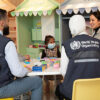
UNITED NATIONS, September 18 (IPS) - When a child is diagnosed with cancer, their chances of survival should not depend on where they live, yet according to the WHO, more than 80 percent of children with cancer in high-income countries are cured, compared with fewer than 30 percent in many low- and middle-income countries (LMICs).
Powered by