News headlines for “Food and Agriculture Issues”, page 19
Renewed Hostilities in the Strait of Hormuz Threaten to Compound Global Supply Chain Costs
- Inter Press Service

UNITED NATIONS, July 17 (IPS) - A continuation of hostilities within the Strait of Hormuz is once again threatening one of the world’s most critical supply chain arteries, posing another wave of disruption which could choke the global energy, shipping and commodity markets. With roughly a quarter of global seaborne oil trade transiting through the Strait, alongside significant flows of liquefied natural gas and fertilizers, further constraints on commercial traffic could send new cost pressures cascading through supply chains that have yet to absorb the full effects of the earlier conflict.
Full Effects of Strait of Hormuz Disruption May Not Be Felt Until Second Half of 2026
- Inter Press Service

UNITED NATIONS, July 16 (IPS) - The full economic impact of the disruptions in the Strait of Hormuz may not become clear until the second half of 2026, warns the United Nations Conference on Trade and Development (UNCTAD).
How Farmers Are Learning About Restoring Soils and Scaling Agroecology in Kenya
- Inter Press Service
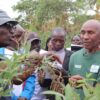
MAKUENI, Kenya, July 15 (IPS) - At Yumbuni Village in Kenya’s Makueni County, farmers from Vihiga and Kakamega counties have travelled over 560 kilometres to join their colleagues in Kathonzweni Ward and see the progress of experiments being carried out on different homemade organic fertilisers and other farm inputs.
Western Imperialist Unity Split by Rival Priorities
- Inter Press Service

KUALA LUMPUR, Malaysia, July 14 (IPS) - Trump insists the West must unite on his terms against the Rest, particularly China and Iran. Europe, however, wants greater Trump support for Ukraine’s Zelensky regime to replace Putin’s leadership of Russia.
Arab Regions Remain the Most Underrepresented in the Global Trade System
- Inter Press Service
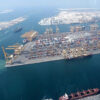
UNITED NATIONS, July 14 (IPS) - Despite the importance of international trade as an engine for economic growth and development, only fourteen of the twenty-two Arab states are members of the World Trade Organization (WTO). The remaining Arab states risk missing out on opportunities for greater integration into the global economy and the multilateral trading system facilitated by the WTO.
The Tale of Two Countries: Elite Stake and Development
- Inter Press Service
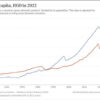
SYDNEY, July 14 (IPS) - Philippines was the most advanced Southeast Asian country with the highest per capita GDP until about the early 1960s. Its per capita GDP in purchasing power parity terms were about the same as South Korea’s and above that of Thailand in the early 1970s.
Europe’s Funding Question Puts Tanzania’s Fragile Democracy on Trial
- Inter Press Service

DAR ES SALAAM, Tanzania, July 13 (IPS) - Every evening just before sunset, Salima Kitwana hobbles into her backyard holding a photograph.
Why Pastoral Production Requires Regional Coordination, Harmonised Policy
- Inter Press Service

NAIROBI, July 10 (IPS) - At the 64th sessions of the Subsidiary Bodies (SB64) under the UNFCCC in Bonn, Germany, the Local Communities and Indigenous Peoples Platform (LCIPP) underscored the importance of ethically and equitably incorporating indigenous values and knowledge and local knowledge systems such as pastoralism into climate policies and actions ahead of the 31st Conference of Parties on climate change (COP31).
Invasive Prickly Pear Turned into Food, Clean Energy Source
- Inter Press Service
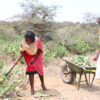
NAIROBI, July 9 (IPS) - An international academic partnership is helping turn one of Laikipia County’s most destructive and invasive plants, the prickly pear cactus (Opuntia stricta), into a source of food security and clean energy while also helping end perennial resource conflict in the region.
Feeding Africa: Women Farmers Key to Ending Hunger
- Inter Press Service
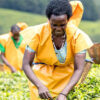
UNITED NATIONS, July 9 (IPS) - As FAO coordinates the implementation of the International Year of the Woman Farmer 2026, gender team leader Tacko Ndiaye discusses why investing in Africa’s women farmers is essential for food security, economic growth and creating more resilient agrifood systems
Powered by