

India’s Gen Z Revolt Against Disenfranchisement
LONDON, November 20 (IPS) - India’s Gen Z cockroach movement has already forced the resignation of the education minister. Now it’s part of a mass mobilisation demanding the Hindu nationalist government reverse and be held accountable for the deletion of some 130 million names from the electoral rolls.
Last year, the Election Commission of India embarked on what it calls a Special Intensive Revision of the electoral rolls, which it says is needed to remove duplicate and ineligible names, including those of people who’ve died. With the task completed in 30 of India’s 36 states and centrally administered territories, around an eighth of the electorate has been struck off. Millions have complained that they’re eligible voters who’ve been disenfranchised.
The purge threatens to turn the universal franchise into a selective privilege, violating a fundamental principle of democracy, that every adult citizen has the same right to vote. Women are disproportionately affected, because many move states when they marry, complicating the paper trail. Muslims, long vilified by the ruling Bharatiya Janata party (BJP), are disproportionately impacted. In Bihar state, around 33 per cent of final-stage deletions were of Muslims, even though they make up roughly 17 per cent of the state’s population.
The suspicion is that the changes will benefit the BJP and Prime Minister Narendra Modi.
Deletions could swing elections. In May, the BJP won the election in West Bengal state, previously an opposition stronghold, after 9.1 million names, over 10 per cent of the electorate, were removed from the roll. In some Muslim-majority constituencies, close to half of voters were removed from the roll.
Cockroaches rise
India’s cockroach movement arose in response to an insult. In May, the country’s Chief Justice, Surya Kant, told a courtroom that unemployed young people who protested and spoke out on social media were like cockroaches. Communications strategist Abhijeet Dipke posed a simple question: what if all the cockroaches came together? The answer was a movement of millions, organised around the satirical Cockroach Janta Party.
The movement found its galvanising issue in the leak of the national medical college entrance exam paper, likely the act of corrupt officials in return for bribes. Cockroach movement protesters camped out for weeks in Delhi, until the authorities unleashed violence, beating them with batons and wooden sticks, firing teargas and arresting many. Public revulsion at the violence forced the government to hold talks with the movement, and Education Minister Dharmendra Pradhan quit.
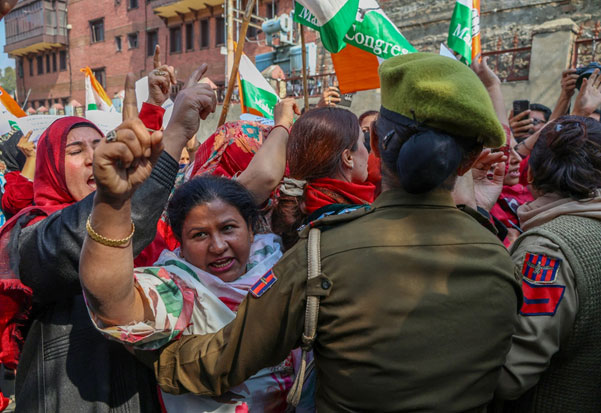
On 2 October the cockroach movement took part in nationwide protests, demanding the resignation of Chief Election Commissioner Gyanesh Kumar, a criminal investigation, reinstatement of deleted voters, a review of recent state elections and independent selection of election commissioners.
This time, the cockroach movement’s protests have formed part of a broader campaign. Civil society organisations have been raising the issue for some time, and established student movements, emerging leftist student leaders and opposition parties are active and vocal. The Congress party, once India’s dominant political force, has organised protests, including one attended by tens of thousands in Delhi on 1 November.
Civil society groups have also taken practical steps to help the disenfranchised, setting up helpdesks near places where excluded groups are concentrated so people can file petitions and gather the documents needed to get their vote reinstated. These efforts could make a crucial difference, as without the capacity to appeal, many risk losing their vote by default.
Stare lashes out
The government has made clear it has no intention of walking back the changes by mobilising large-scale force.
Ahead of the protest on 2 October, police barricaded Jantar Mantar, the main protest site, and set up checkpoints around the city. Police invoked section 133 of the Indian Citizen Safety Code, which bans gatherings of over four people, the use of slogans and speeches and other common protest activities, and authorities suspended internet services close to the protest site. When people protested regardless, police detained around 1,000, including student and political leaders. Police also banned a protest in Mumbai that same day.
The crackdown escalated on 10 October, when police detained several thousands, among them Dipke, detained as he arrived at Delhi airport from Mumbai, along with other leading Cockroach Janta Party figures. Authorities deployed around 30,000 officers, sealed Delhi’s borders, shut down public transport routes and stationed anti-riot vehicles with teargas launchers along major roads. Police ordered Delhi hotels to refuse customers, told Uber drivers not to drop people off near protest sites and said they were tracking food delivery services in case they were used to supply protesters. Following the protest, police ended Jantar Mantar’s designation as a protest site.
Police have twice detained Congress party leader Rahul Gandhi and put one of India’s most popular YouTubers, Dhruv Rathee, under house arrest. They’ve detained journalists covering the protests. Police have met subsequent protests with the same responses of barricades, transport restrictions, internet shutdowns and mass arrests. Still, the protests continue.
The state’s hostile response is part of a broader pattern. In recent years it has passed draconian laws that enable it to hold activists in lengthy pretrial detention, restrict civil society funding and force organisations to close, while police routinely use violence against protests. Having made it harder for people to speak out, organise and protest, now the government is taking away their right to vote.
Wider struggles
If the protest movement wins again, the repercussions will be felt beyond India. The story of India’s cockroach movement has travelled the world, inspiring others, as part of a wider wave of Gen Z-led protests that has unfolded in many countries. Young people are rising up against corruption, economies that fail them and out-of-touch politicians, and they’re having an impact. A student movement has just won power in Serbia, while high school protests in France have forced the government to concede several demands.
A Modi climbdown would offer further proof that mass organising and protesting, spearheaded by Gen Z, can make a difference. The Indian government should swallow its pride and offer dialogue instead of violence. The protesters have shown how much they value democracy, and made clear they intend to keep going until the damage the government has caused it is undone.
Andrew Firmin is CIVICUS Editor-in-Chief, co-director and writer for CIVICUS Lens and co-author of the State of Civil Society Report.
For interviews or more information, please contact [email protected].



© Inter Press Service (20261120093438) — All Rights Reserved. Original source: Inter Press Service