News headlines for “Food and Agriculture Issues”, page 2
Global Value Chain Trade Reaches Historic Highs, Despite Push for Reshoring
- Inter Press Service

UNITED NATIONS, July 21 (IPS) - Despite rising geopolitical tensions, trade restrictions and calls to bring production back to domestic shores, the global economy remains more interconnected than it may appear. Trade through global value chains (GVCs) reached historic levels in 2024, according to a new report from the Organisation for Economic Co-operation and Development (OECD).
Global AI Governance Cannot Wait As the Digital Divide Widens
- Inter Press Service

UNITED NATIONS, July 20 (IPS) - Throughout July 2026, various United Nations (UN) bodies and global experts have underscored the need for increased comprehensive artificial intelligence (AI) governance. Although AI yields significant potential gains for global development, persistent structural barriers continue to impede equitable access and deepen the digital divide.
Communities vs. Datacentres
- Inter Press Service

LONDON, July 20 (IPS) - Few things unite Donald Trump’s most ardent supporters with the Democratic Party’s progressive wing, but datacentres are one of them. Across the USA, communities are joining forces across the political divide to oppose developments few want but governments seem determined to impose.
The Oil Market Absorbed the War Shock, but Buffers Are Running Low
- Inter Press Service
WASHINGTON DC, July 17 (IPS) - The largest disruption to the global oil market in decades should have sent prices soaring. But after spiking at the start of the war in the Middle East, crude prices soon settled in a range of $90 to $100 per barrel, much lower than many had feared. Why didn’t prices climb higher? The answer is that a combination of factors helped cushion the initial blow. But much of that room has now been used up.
As Gold Prices Soar, Communities Pay the Price in Poisoned Rivers, Vanishing Forests and Organized Crime
- Inter Press Service

DAR ES SALAAM, Tanzania, July 17 (IPS) - The sweltering heat inside a London conference hall did not deter Indigenous leader Jackeline Mendoza Díaz from condemning the sheer destruction of the Peruvian Amazon. Her voice occasionally trembled with emotion but delivered a strong message — painting a picture far removed from the glittering gold bars traded in the world’s financial capitals.
Full Effects of Strait of Hormuz Disruption May Not Be Felt Until Second Half of 2026
- Inter Press Service

UNITED NATIONS, July 16 (IPS) - The full economic impact of the disruptions in the Strait of Hormuz may not become clear until the second half of 2026, warns the United Nations Conference on Trade and Development (UNCTAD).
How Farmers Are Learning About Restoring Soils and Scaling Agroecology in Kenya
- Inter Press Service

MAKUENI, Kenya, July 15 (IPS) - At Yumbuni Village in Kenya’s Makueni County, farmers from Vihiga and Kakamega counties have travelled over 560 kilometres to join their colleagues in Kathonzweni Ward and see the progress of experiments being carried out on different homemade organic fertilisers and other farm inputs.
Western Imperialist Unity Split by Rival Priorities
- Inter Press Service

KUALA LUMPUR, Malaysia, July 14 (IPS) - Trump insists the West must unite on his terms against the Rest, particularly China and Iran. Europe, however, wants greater Trump support for Ukraine’s Zelensky regime to replace Putin’s leadership of Russia.
Arab Regions Remain the Most Underrepresented in the Global Trade System
- Inter Press Service
UNITED NATIONS, July 14 (IPS) - Despite the importance of international trade as an engine for economic growth and development, only fourteen of the twenty-two Arab states are members of the World Trade Organization (WTO). The remaining Arab states risk missing out on opportunities for greater integration into the global economy and the multilateral trading system facilitated by the WTO.
The Tale of Two Countries: Elite Stake and Development
- Inter Press Service
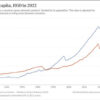
SYDNEY, July 14 (IPS) - Philippines was the most advanced Southeast Asian country with the highest per capita GDP until about the early 1960s. Its per capita GDP in purchasing power parity terms were about the same as South Korea’s and above that of Thailand in the early 1970s.
Powered by