

Eighty years at the heart of global development
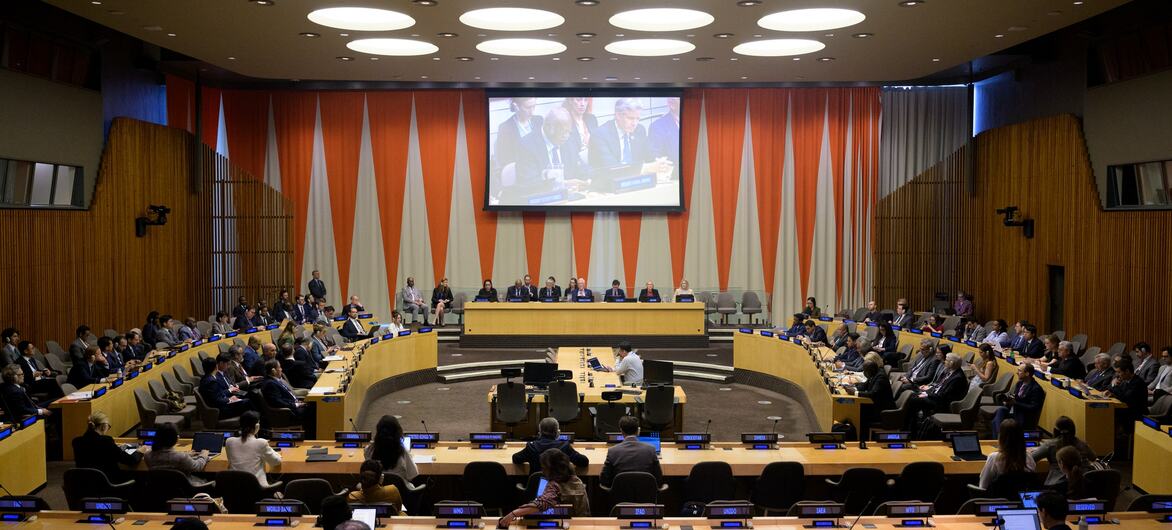
From humanitarian crises and youth unemployment to climate resilience and development financing, many of today’s global challenges pass through a single United Nations body that is quietly turning 80 this year.
Established in 1945 under the UN Charter, the Economic and Social Council (ECOSOC) was designed to ensure that peace and security would be backed by economic stability, social progress and international cooperation.
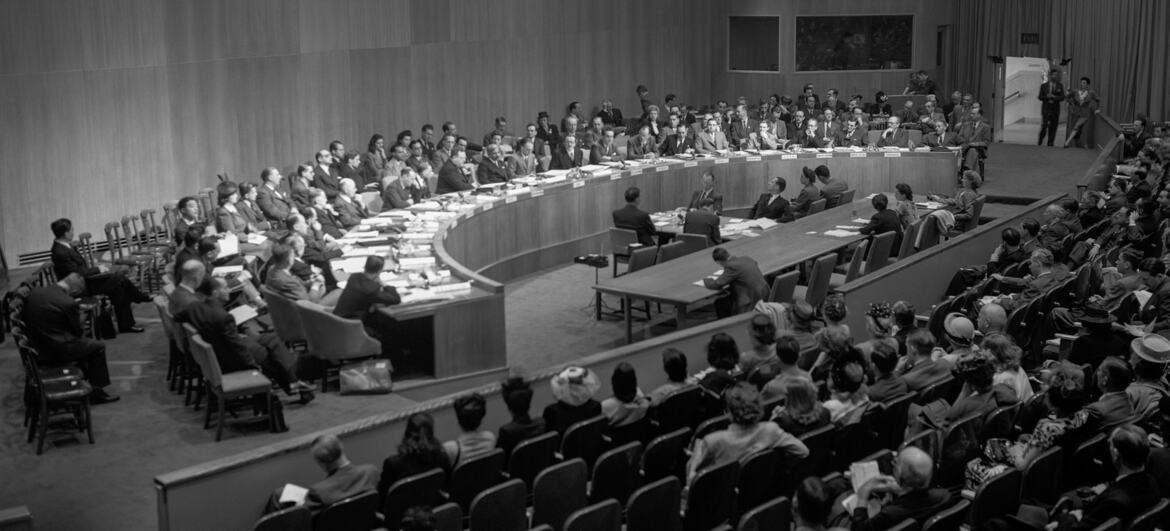
Eight decades after its first meeting in London in early 1946, ECOSOC remains a central – if often working out of the spotlight – engine of the UN’s work on sustainable development.
A wide remit by design
ECOSOC is the primary forum within the United Nations for policy dialogue on global economic, social and environmental issues, bringing together Member States, UN specialized agencies and other partners to debate priorities, share evidence and agree on collective action.
Its mandate includes coordinating the work of regional economic and social commissions, functional commissions, expert bodies and UN funds and programmes, which deliver development assistance and policy guidance that affect people’s daily lives.
For people unfamiliar with the UN system, what sets ECOSOC apart is its practical reach. It helps guide how the UN responds to disasters, supports countries recovering from crises, and aligns international efforts to reduce poverty, create jobs and protect the environment.
ECOSOC is also responsible for following up on major UN conferences and summits, helping ensure that high-level commitments do not fade once the news cycles move on.
ECOSOC 2026 session at a glance
President: Lok Bahadur Thapa (Nepal)
Elected on 31 July 2025, becoming the first representative of Nepal – a least developed and landlocked developing country – to serve as ECOSOC President.
Presidency priorities: “Delivering better”
- Transforming agriculture and food systems to strengthen resilience and help end hunger.
- Digital entrepreneurship and youth engagement, harnessing the potential of youth populations.
- Climate action and resilience, with a specific focus on risks linked to glacier lakes and flooding.
- Reforming the international financial architecture to make it more inclusive and responsive.
- Using the ECOSOC’s 80th anniversary, to reflect on its role and future relevance
Click here to read more.
Evolving with a changing world
Over time, ECOSOC has evolved to meet a changing global landscape. Its membership has expanded from 18 countries at its founding to 54 today, with Member States elected by the General Assembly to overlapping three-year terms that ensure geographical balance.
General Assembly reforms over the past decade have reinforced ECOSOC’s coordinating role within the UN system, sharpening its ability to identify emerging issues, promote innovation and integrate the economic, social and environmental dimensions of sustainable development.
Implementing the SDGs
A key focus of ECOSOC’s current cycle is the implementation of the 2030 Agenda for Sustainable Development, the UN’s global blueprint to end poverty, protect the planet and ensure prosperity for all.
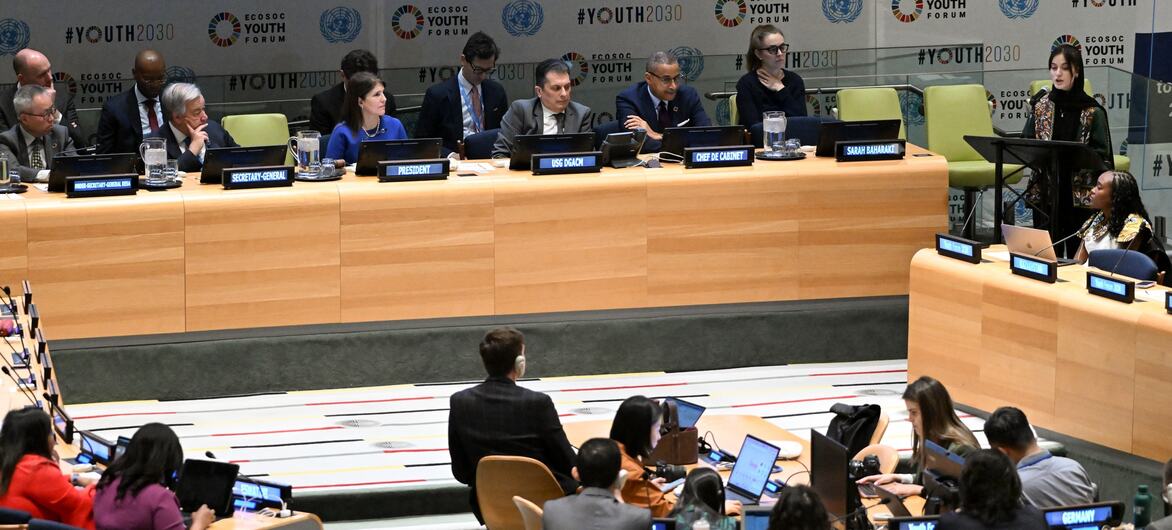
ECOSOC provides political guidance and oversight for this agenda through its annual programme of work, bringing ministers, senior officials, civil society leaders, academics and the private sector together around shared priorities.
At the heart of this work is the High-level Political Forum on Sustainable Development (HLPF), convened annually under ECOSOC’s auspices. The HLPF reviews progress on the Sustainable Development Goals (SDGs), including voluntary national reports from governments that take stock of progress and challenges.
Seldom in the headlines
Unlike other main bodies of the Organization, such as the General Assembly and the Security Council, ECOSOC’s meetings seldom make the headlines, but they reflect the complexity of modern global governance.
The humanitarian affairs segment brings together governments and partners each year to strengthen coordination in response to protracted and costly crises.
Other segments – including operational activities, coordination and management – guide the work of UN development agencies, review expert recommendations on topics from public health to geospatial information, and address country-specific or regional concerns requiring focused attention.
A bridge for civil society
ECOSOC also acts as a bridge between the UN and the wider world.
More than 3,200 non-governmental organizations hold consultative status with ECOSOC, giving them a formal channel to contribute expertise and on-the-ground perspectives to debates and decisions. Dedicated forums for youth, scientists, development partners and other stakeholders reflect a recognition that global problems require inclusive solutions that extend beyond governments alone.
80 years old, but as vital as ever
As ECOSOC marks its 80th anniversary on 23 January 2026, its core mission remains unchanged: to foster cooperation in pursuit of shared economic and social progress.
In a world facing intersecting crises – from climate change and inequality to humanitarian emergencies – the Council’s quiet work of coordination and consensus-building continues to shape how the international community responds, and why it still matters to people far beyond UN conference rooms.
Inside the ECOSOC Chamber
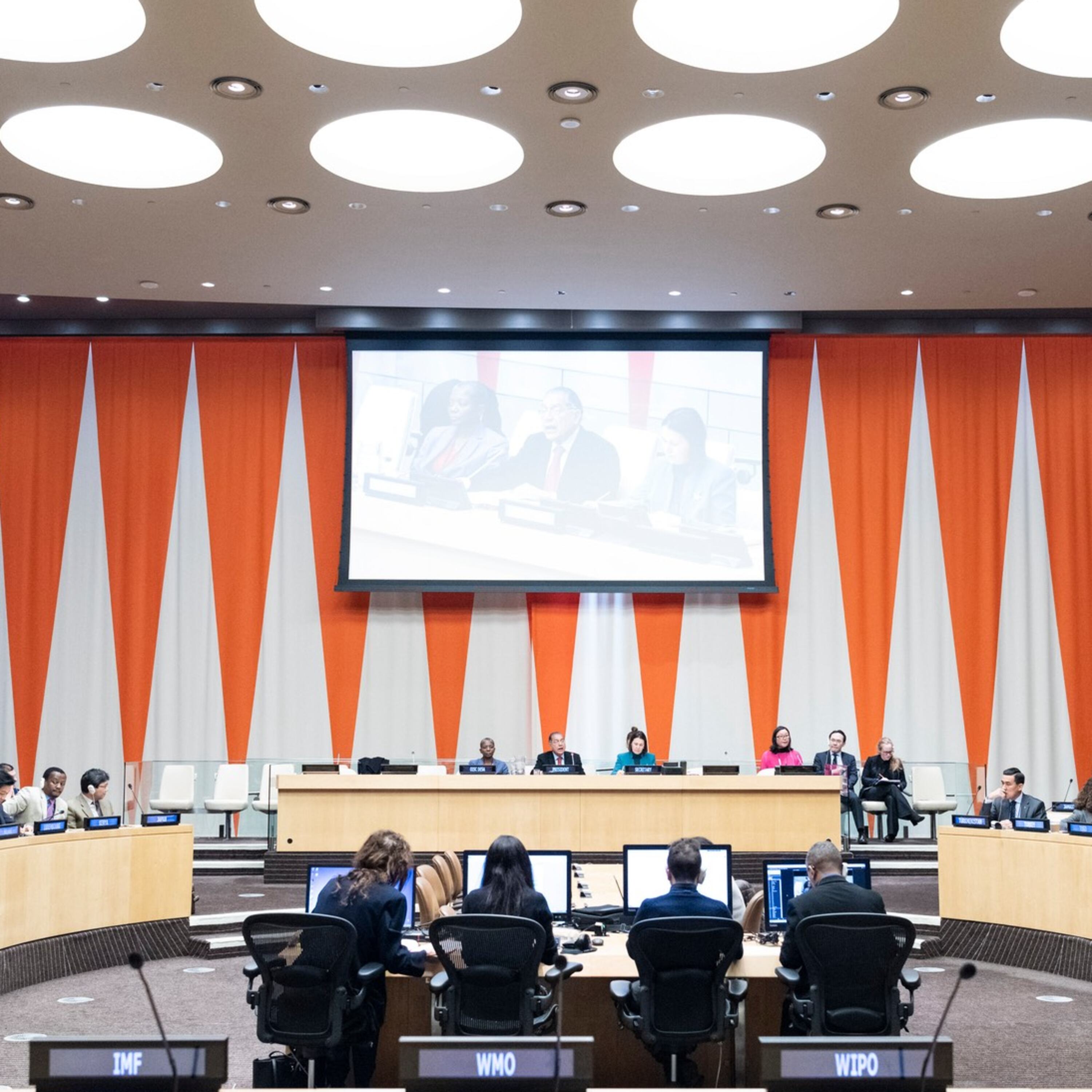
The ECOSOC Chamber at United Nations Headquarters in New York is the principal meeting room where the Council conducts its formal sessions, including high-level segments and ministerial discussions.
Architecturally significant, the Chamber was designed by Swedish architect Sven Markelius and inaugurated in 1952. It was comprehensively renovated in 2013 as part of the UN Capital Master Plan.
The Chamber features several symbolic design elements, including a set of large woven curtains known as Dialogos, intended to evoke dialogue and the exchange of ideas – central to ECOSOC’s role as a forum for consensus-building among governments and global development partners.
One of the most striking features its unfinished ceiling. Exposed pipes and ducts were deliberately left visible to symbolize that the work of the United Nations – and the pursuit of economic and social progress – is never complete, but an ongoing collective effort.
Read more about the ECOSOC Chamber here
Click here for our coverage of the Economic and Social Council.
© UN News (2026) — All Rights Reserved. Original source: UN News