

In Taliban-Ruled Afghanistan, One Woman Refuses a Life of Dependence
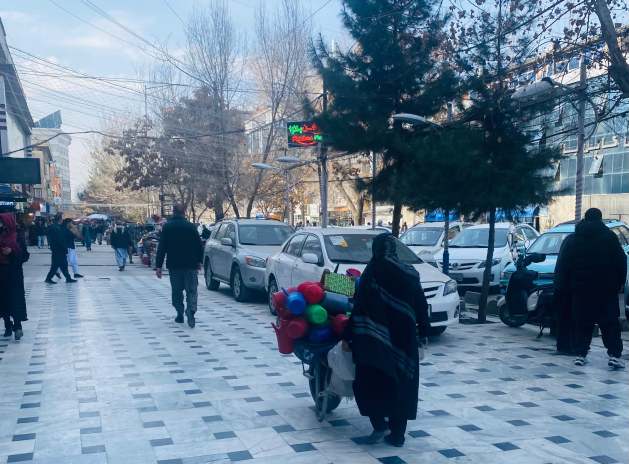
KABUL, August 7 (IPS) - The Taliban’s rise to power robbed Mehrmaa of her husband, her job and her chance to live freely.
It was a cold, snowy night in March 2022 when Mehrmaa’s neighbors brought her husband’s lifeless body home. He had disappeared more than seven months earlier. Mehrmaa had barely managed to cope with the new restrictions imposed on women by the Taliban, and now she felt as if the weight of the world was on her shoulders.
“At the end of our road home, there were seven coffins containing bodies that had been delivered to their families. Seven months ago they had been taken alive and now they have been returned dead,” Mehrmaa says.
Mehrmaa describes how, in July 2021, the Taliban took over the provinces and its forces entered her hometown on motorbikes. The Taliban raised their flag in the centre of the city as a sign of victory. Government helicopters bombed the city, leaving many people homeless and without shelter. Mehrmaa’s province was the first to fall under Taliban oppression. Many fled in panic.
“The state kidnapped many young men to defend the city, including my husband.”
After the Taliban takeover, women were threatened with imprisonment if they walked the streets alone.
“Women were flogged in public for small and frivolous reasons. Widowed women and underage girls were forced into marriages without their consent.”
Women faced daily hardships, regardless of whether they had male relatives to protect them.
“Now that the Taliban are in power in Afghanistan, what can we do? We only live for our children. Women want to work so they can earn money for their families.”
Under the Taliban, women were forbidden from working. Mehrmaa wanted to continue working to support her children. That drove her onto the streets.
“Now I live a nomadic life with my children. We have no permanent home and we don’t stay in one place for long.”
Work became a means of survival
Mehrmaa is a trained teacher and midwife. She treats women’s fertility problems with herbs and gives massages for knee, back and joint pain. Under her late husband’s guidance, Mehrmaa learned to drive. She ran the first driving school for women in her province and taught hundreds of women how to drive.
Then the Taliban banned women from driving. Under the direction of the Ministry of the Promotion of Virtue and the Prevention of Vice, or morality police, local Taliban authorities reprimanded Mehrmaa and issued her a warning.
“They say driving is only for men. But women have proved that they, too, can drive. Even those who don’t have a husband in their family have learnt to drive.”
After her husband died, Mehrmaa had to continue working to feed her children. To survive, she returned to the city and began working as a teacher.
Despite changing careers, Mehrmaa was once again banned from working. Girls were banned from attending school from high school onwards, and educational institutions were closed to them. Mehrmaa took up work as a domestic helper and also provided personal physical education lessons to girls and women who had been excluded from school.
She is also a skilled physiotherapist. She founded the first women-only sports and massage centre so that she could help women manage their weight and improve their overall health. Mehrmaa’s health advice has given hope to women who had lost faith in their recovery.
Through her work, Mehrmaa met an 18-year-old girl who had fallen into a well two years earlier, damaging her legs, arms and ribs in the accident. Mehrmaa treated the girl’s muscles by massaging them with olive and black cumin oil. In less than two months, the girl was able to move.
The girl’s father praised Mehrmaa’s skills at the local mosque. Men heard about her healing abilities and rushed to propose marriage to her.
The Taliban regime considers it shameful for an unmarried woman to work alone. When the morality police learnt that Mehrmaa had rejected all offers of marriage, they banned her from working.
Mehrmaa rejected a life of dependence on others.
“For the sake of my children, I want to earn my own honest living and not live under the humiliation of anyone,” she says.
Sometimes injustice is a greater pain than poverty.
“I will continue to fight against forced marriage for the sake of my children and in memory of my late husband, until my last breath,” Mehrmaa says.
Once again, Mehrmaa moved with her children, this time to the northeast of the country. She brought with her hope for justice and a better future.
The women of her new village encouraged Mehrmaa to stay and help provide healthcare at local clinics. They told her about the countless pregnant women who die before they can reach a hospital.
The women in the village speak of Mehrmaa with admiration, describing her as incredibly kind and capable.
“It’s as if there’s light in every finger of hers,” they say, using an Afghan proverb to describe someone who is highly skilled and brings much good to those around them.
Despite constant losses, threats, and marriage proposals, Mehrmaa keeps going. She fights for her children, for women in need, and for a better future. Mehrmaa envisions an Afghanistan where women can work freely, study, and take care of their families.
© Inter Press Service (20260807171314) — All Rights Reserved. Original source: Inter Press Service