

30 Years of War, 30 Years of Impunity in DR Congo
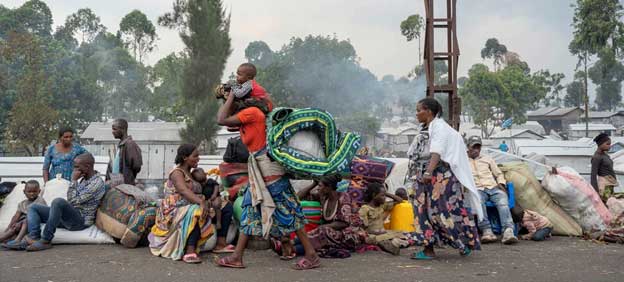
WASHINGTON DC, October 15 (IPS) - It has been 30 years since Rwanda-backed rebel forces attacked Lemera hospital in what was then eastern Zaire, killing 37 patients and medical staff. This was one of the first major atrocities during what became known as the First Congo War, helping to unleash decades of foreign-backed rebellions and grave abuses against civilians by all sides, including ethnic-based massacres, widespread rape and sexual violence, forced recruitment of children, abductions, torture, mutilation, and forced displacement.
The Congolese Nobel Peace Prize laureate, Dr. Denis Mukwege, began his career as a doctor at Lemera hospital, and he was there on October 6, 1996 when the place he thought was safe, protected by international humanitarian law, became the scene of carnage. Dr. Mukwege has since dedicated his life to supporting survivors of sexual violence in the Democratic Republic of Congo and to advocating justice for victims.
The attack on Lemera hospital was one of the 617 incidents in the United Nations Mapping Report, which documents alleged serious violations of international humanitarian and human rights law in Congo between 1993 and 2003.
Yet the serious crimes went on. Despite the important work of the International Criminal Court (ICC) and Congolese military courts, the vast majority of alleged perpetrators remain unpunished, including high-level government and military officials from Congo, Rwanda, and Uganda.
Attacks as horrific as the one on Lemera hospital continue today, as an abusive Rwanda-backed armed group, known as the M23, controls large swathes of North and South Kivu provinces, while numerous other armed groups as well as Congolese army forces and their allies continue to target civilians.
Many of the commanders responsible for abuses that Human Rights Watch and others have documented in recent months are the same ones whose crimes we have documented for decades – often as they move from one armed group to another, integrate into the Congolese army, and then leave again when they have new grievances. Impunity for these past crimes has fueled the abuses we’re documenting today.
What’s missing now is the political will to prioritize justice for the Congolese people. With millions killed during hostilities or dying from conflict-related causes, the war in Congo is widely regarded as the deadliest conflict for civilians since World War II. Yet despite, or perhaps because of, its brutal and seemingly intractable nature, the conflict rarely dominates headlines or high-level diplomatic agendas.
When Congo does capture the world’s attention, it is more often for its natural resources than the plight of its citizens. Powerful foreign countries and companies – facilitated and enabled by self-serving national leaders – exploit and plunder the country’s wealth. Congo’s minerals help power the technological revolution driving so much of global economic growth, all while a litany of grave abuses go unpunished and undeterred.
To break this culture of violence and impunity, world leaders should put meaningful pressure on both the Congolese and Rwandan governments to end all support to abusive armed groups operating in Congo.
They should also press the Congolese government to implement a vetting program, with international support, to remove those implicated in serious human rights abuses from the Congolese security forces, intelligence services, and government positions.
And they should support a multi-tiered justice response to address the scale and gravity of Congo’s impunity gap. This should include support to the ICC and its ongoing investigation in Congo, the pursuit abroad of universal jurisdiction cases wherever possible, and continued support to improve Congo’s military justice system.
There also needs to be an internationalized justice mechanism to complement the work of the ICC and purely domestic courts, and a comprehensive reparations program for victims of serious international crimes.
I was honored to join Dr. Mukwege in Brussels and Strasbourg in recent days to initate a campaign, “30 Years of War, 30 Years of Impunity,” during events organized by the Panzi Foundation, the René Cassin Foundation, the city of Brussels, and the Eurometropolis of Strasbourg, to raise awareness about the conflict in Congo and to mobilize strong international action to end the cycles of violence, abuse, and impunity.
As Dr. Mukwege said in Strasbourg: “Thirty years of war is thirty years too many. Thirty years of impunity is thirty years too many. … . It is time to place the right of millions of victims to justice at the heart of efforts to establish peace and consolidate the rule of law.”
Ida Sawyer is crisis, conflict, and arms director at Human Rights Watch.
© Inter Press Service (20261015142224) — All Rights Reserved. Original source: Inter Press Service