

Creating Opportunities in the Maritime Transition for Latin America and the Caribbean
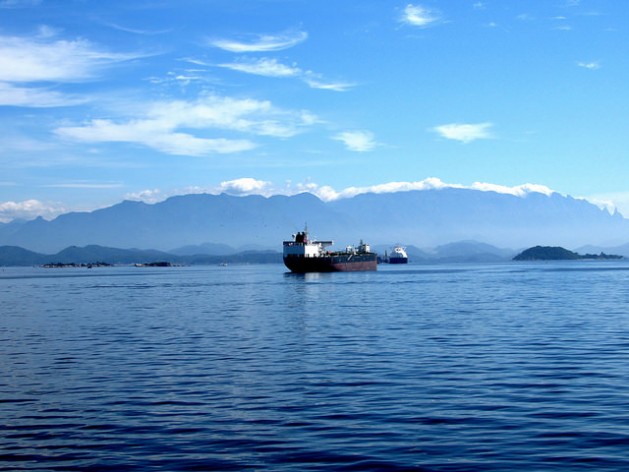
LONDON, November 26 (IPS) - The COP31 climate summit in Antalya, Türkiye comes at a decisive moment for humanity. We are now grappling with a scenario in which the Paris Agreement goal of limiting global warming to 1.5 °C will not be met, which brings the concept of “overshoot” to the fore. The best current aspiration is to limit the extent of that overshoot, peak emissions as soon as possible, and then return to 1.5 °C.
The maritime shipping industry contributes 3% of all greenhouse gas (GHG) emissions, or approximately 1 billion tons of CO₂, annually. If the shipping industry were a country, it would be the world’s sixth-largest emitter. But we have ways to reduce the sector’s impact.
This week, the 23rd Intersessional Working Group on Reduction of GHG Emissions from Ships of the UN’s International Maritime Organization (IMO) will meet in London to discuss how to decarbonize shipping.
At the center of the negotiations is the IMO’s Net-Zero Framework, whose text was approved in 2025, but whose formal adoption remains pending. The framework combines two instruments of extraordinary significance for the maritime sector, with global reach: a worldwide standard to progressively reduce the greenhouse gas intensity of marine fuels, and a global emissions pricing mechanism.
More than 80% of international trade by volume is carried by sea. IMO decisions will have implications for trade costs, export competitiveness, port investment decisions, energy infrastructure, and future fuel demand.
It is therefore essential to broaden how countries prepare for these negotiations. Maritime and environmental authorities will continue to play a central role, but the decisions on the table also require the systematic participation of those responsible for trade, energy, infrastructure, finance, and economic development.
Trade ministries can assess which export sectors are most exposed to changes in shipping costs. Energy authorities can determine whether their countries have the conditions to produce the marine fuels of the future or of port electrification and electric vessels. Infrastructure and finance officials can identify the investments needed for those opportunities to materialize.
The pathway to net-zero emissions generates global benefits, but its costs and opportunities are not evenly distributed. Nor do all countries arrive at the negotiating table with the same capacity to model impacts, assess technological alternatives, estimate trade effects, or design policies that allow them to capture new economic opportunities. Closing that knowledge gap is an essential condition for a just maritime transition.
Latin America and the Caribbean should not limit itself to assessing how much it will cost to adapt to the new rules. The region has significant potential advantages: extraordinary renewable resources, the capacity to produce hydrogen-derived fuels, strategically located ports, and an industrial and human talent base that could take part in new value chains. The challenge is also to assess the potential benefits of the transition, and to develop the capacities, infrastructure, and markets needed to capture them.
Philanthropy has a very relevant role to play here. Beyond supporting research, advocacy, and educational efforts, and pre-competitive project coordination, it can help build institutional capacity in countries and regions that need to generate their own technical knowledge and participate with greater weight in the international processes that will define the rules for the upcoming decades. Philanthropic funding can ensure not only more active participation from organizations in the many countries that currently have more limited roles, but also that any outcome reached internationally is truly durable and that implementation of the transition is not confined to developed countries.
Take the Micronesian Center for Sustainable Transport, for example. To change how climate funding reaches Pacific Island Countries, they helped create the Pacific Blue Shipping Partnership, a new effort led by the countries themselves to coordinate efforts to cut emissions from domestic shipping more equitably.
Proteus | Latin American and Caribbean Center for Maritime Decarbonization and Competitiveness was launched on 24 November in London. It is a new regional platform created to strengthen the technical capacity of Latin America and the Caribbean in the face of the maritime transition. With delegations from several countries of the region, the Center presented a first study focused on Costa Rica, which examines the level of ambition of different decarbonization pathways, their potential costs, and the economic opportunities each could unlock.
Costa Rica is an especially illustrative case as around 95% of its electricity generation came from renewable sources in 2023. That energy base can become an advantage for new port electrification opportunities and, potentially, for producing some of the marine fuels of the future.
This is precisely the kind of analysis Latin America and the Caribbean needs to multiply: studies built from within the region, with local data, capable of translating a global negotiation into concrete public policy decisions on energy, trade, ports, and industry at the national and regional levels.
For Latin America and the Caribbean, taking part in the transition of the backbone of international trade must mean helping to design new rules for the industry, and capturing a fair share of the value they generate.
Tania Miranda is Senior Manager for Maritime Shipping at ClimateWorks Foundation and Chair of the Advisory Board of Proteus.
© Inter Press Service (20261126133718) — All Rights Reserved. Original source: Inter Press Service