News headlines for “Health Issues”, page 7
UN Special Rapporteur Urges the Protection of Children’s Rights Amid Deepening Conflict and Digital Threats
- Inter Press Service

UNITED NATIONS, August 12 (IPS) - On July 7, the United Nations (UN) Secretary-General Antonio Guterres presented a report from the Special Rapporteur on the sale, sexual exploitation, and sexual abuse of children, Ai Kihara-Hunt, to the General Assembly, underscoring her goals and priorities for the implementation of protection measures for children worldwide. The report, submitted in coordination with the Human Rights Council, highlights the systemic barriers that leave children increasingly vulnerable to sexual exploitation and abuse, including weak government oversight, limited support and justice services for victims, and worsening protracted crises.
WHO chief voices concern over Trump Administration’s executive order on vaccines
- UN News

The head of the World Health Organization (WHO) on Wednesday upheld the safety of childhood vaccines in response to a new directive from the White House to overhaul the recommended inoculation schedule.
Obstetric Violence: Syrian Women Speak Out
- Inter Press Service
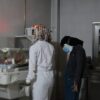
ALEPPO, Syria, August 11 (IPS) - The abuse 30-year-old Nour Al-Badawi experienced in an Aleppo public hospital while giving birth resulted in her having two major follow-up operations and left her with depression and anxiety.
Resilience Is Not Enough: OCHA Sounds Alarm on Underfunded Humanitarian Crisis in Afghanistan
- Inter Press Service
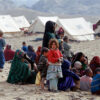
UNITED NATIONS, August 11 (IPS) - “Mainly, people tell me they’re exhausted. They’re exhausted from being poor, from being hungry, from repeated climate shocks, mounting debt, and the daily struggle to provide for their families,” Olga Cherevko, Spokesperson for the UN Office for the Coordination of Humanitarian Affairs (OCHA) in Afghanistan, told UN reporters on August 4.
Ebola deaths top 2,000 as scientists race to develop vaccine
- UN News

Local officials in the DR Congo (DRC) reported on Tuesday that deaths from the Ebola virus disease have surpassed 2,000, with half of that number in the last 20 days.
Living Longer at Age 80
- Inter Press Service

PORTLAND, USA, August 10 (IPS) - Upon reaching the age of 80, men and women are living longer than ever before. These gains in longevity among octogenarians represent a remarkable demographic achievement. The additional years of life provide new opportunities for older adults and their families while also presenting important social, economic, and healthcare challenges for societies.
The World’s Aid Workers Must Be Protected
- Inter Press Service
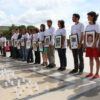
NAIROBI, Kenya, August 7 (IPS) - This summer, an ambush on a marked humanitarian convoy in Duk County, South Sudan, left 17 dead and five injured. While the UN called for an immediate investigation, history suggests the victims’ families will wait indefinitely for answers.
Ebola in DR Congo: Childhood deaths rise; hopes raised over new vaccine
- UN News
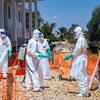
More than 300 children have died in the Ebola outbreak in the eastern Democratic Republic of the Congo (DRC), the UN said on Friday, as health experts urged trials of the only vaccine against the disease to halt further spread of the rare Bundibugyo species.
New Ebola vaccine trial launches as outbreak spreads in DR Congo
- UN News
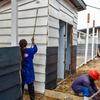
Results may be months away, but efforts are advancing towards enhanced treatment and the world’s first vaccine for the Bundibugyo species of Ebola, the World Health Organization (WHO) said on Tuesday as deaths and cases rise in the largest ever outbreak on record in the Democratic Republic of the Congo (DRC).
Female Genital Mutilation: Winning the Argument, Losing the Funding
- Inter Press Service
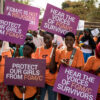
MONTEVIDEO, Uruguay, August 3 (IPS) - Last August, a one-month-old girl in The Gambia bled to death after being subjected to female genital mutilation (FGM), a practice that had been illegal in the country since 2015. FGM is a human rights violation, whatever the appeals to faith or tradition made in its defence, but now the Gambian Supreme Court is being asked to strike the country’s ban down. This is the second attempt in two years to make FGM legal again.
Powered by