

Nature and Animal Conservation
Author and Page information
- This page: https://www.globalissues.org/article/177/nature-and-animal-conservation.
- To print all information (e.g. expanded side notes, shows alternative links), use the print version:
As explained in the biodiversity section of this web site, conservation of ecosystems and the species within them would help to maintain the natural balances disrupted by recent human activity.
A report from the global conservation organization, WWF, has suggested that since 1970 the pressure we exert on the planet has almost doubled and the natural resources upon which we depend have declined by more than 33% .
However desirable conservation may seem, in reality it is a struggle.
On this page:
- It’s an Uphill Struggle to Conserve
- Declining Number of Large Carnivores
- Declining Number of Tigers
- Declining Number of Lions
- Declining Number of Rhinos
- Near Extinction of Vultures in India
- Declining number of polar bears
- Declining number of penguins?
- Declining amphibian populations
- Declining number of monkeys, apes and other primates
- AIDS Research also Affected
- New species still being found; makes conservation more important
- Sustainable Development and Conservation
- Species at risk elsewhere
- Corporate Accountability
- Low Frequency Active Sonar Affect Whales, Dolphins and Other Sea Life
- More Information
It’s an Uphill Struggle to Conserve
Unfortunately, despite the effort put into conservation by organizations and activists, their work can easily be undermined by those who have other interests. This occurs, for example, from habitat destruction, illegal poaching, to influencing or manipulating laws designed to protect species.
The current form of globalization has also been criticized for ignoring sustainable development and environmental concerns. For many years, critics, NGOs, activists and affected peoples have been accusing large corporations for being major sources of environmental problems.
As a recent example, a study reported by the journal Nature concluded that almost a third of threats to animal species around the world stem from trade to meet the demands of richer nations. And with some poorer nations such as China increasing their development, this picture will get more complex.
Consequently, helping species and ecosystems to survive becomes more difficult.
Declining Number of Large Carnivores
Three quarters of the world’s big carnivores are in decline. A study in the journal Science, notes that these large animals — such as lions, leopards, wolves and bears — are in decline, due to declining habitats and persecution by humans. In the developed world, most large carnivores are already extinct, while in the rest of the world, most face threats of extinction locally or globally.
This also has a negative impact on the environment, perhaps partly formed by outdated-views that predators are harmful for other wildlife. As the study notes, these large carnivores are an intrinsic part of an ecosystem’s biodiversity. As a simple example, the loss of a large carnivore may mean in the short term the herbivores they prey on may increase in numbers but this can also result in a deterioration of the environment as the herbivores can graze more, largely unchecked.
Current ecological knowledge indicates that large carnivores are necessary for the maintenance of biodiversity and ecosystem function. Human actions cannot fully replace the role of large carnivores. Additionally, the future of increasing human resource demands and changing climate will affect biodiversity and ecosystem resiliency. These facts, combined with the importance of resilient ecosystems, indicate that large carnivores and their habitats should be maintained and restored wherever possible.
This observation applies to the seas as well, whereby a few decades ago some fisherman had justified hunting and killing whales because they were affecting the fish supply. It turned out that this disruption of the natural food chain led to a series of ecosystem changes that reduced fish supplies, and many fishermen’s livelihoods were destroyed. This is explained further in this site’s section on biodiversity loss (in particular the section on declining ocean biodiversity).
Declining Number of Tigers
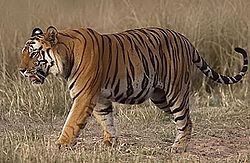
Take for example the continued declining numbers of tigers, the largest of the big cats.
The population of tigers is believed to have declined by 95 percent in the last century.
Tigers continue to face challenges imposed by poaching, retributive killings and habitat loss.
Tiger bone is also in high demand for traditional medicines in China and some other parts of the world, often based on mistaken beliefs, or weak evidence for their effectiveness.
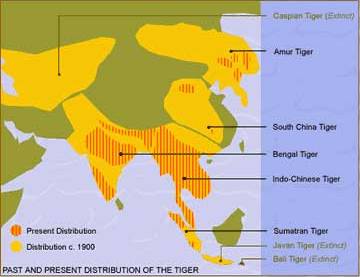
IUCN, the International Union for Conservation of Nature, is the world’s oldest environmental organization, working around the world.
Periodically, they produce the IUCN Red List of Threatened Species to highlight species that are extinct or extinct in the wild, critically endangered, endangered or vulnerable.
Their data suggests that the global tiger population has declined to an estimated range from 3,402-5,140 tigers, revised down from estimates of 5,000 to 7,000 made a few years earlier. The Bali, Caspian, and Javan tigers are already classified as extinct (in the 1940s, 1970s, and 1980s, respectively).
Noting the above declines, the BBC released a collection of videos on tigers and other species. They also noticed that tigers have disappeared from over 90% of their historic range over the past century. They add that recent estimates suggest less than 1,000 scattered over India and fewer than 40 are left in China.
It’s not just tigers either. Rare leopards, deer and other animals are also being illegally traded and many other animals are dwindling in numbers, some of which are mentioned below.
Declining Number of Lions
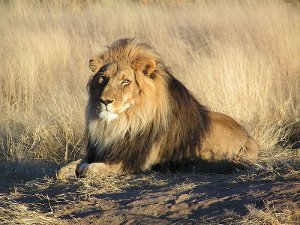
And another iconic animal, the lion, is also dwindling in numbers. The BBC reports (October 2003) that fewer than 20,000 lions now survive in Africa, compared to 200,000 in the early 1980s.
With such prominent and iconic animals dwindling, what of other less emblematic creatures, the BBC also asks?
Sport or trophy hunting was cited as a major cause of the decline with males — young or old — primarily targeted. Another reason was the population pressures that have meant encroachment onto lands closer to lions.
Tourism had not really benefited the people of such communities, and so they do not see the benefit in preserving them.
But a decade later, by 2013, some nations are seeing a shift: Zambia decided to ban hunting of lions and leopards as it sees tourism for viewing the animals alive more lucrative than blood-sport tourism. Similarly, Botswana is banning all sport hunting in 2014.
While very welcome, it has come only when economics becomes a factor, which means that populations have to go through unnecessary declines before things are (easily) done to prevent it.
Declining Number of Rhinos

Although almost all species of rhinos have been recognized as critically endangered for many years, the conservation organization, the International Union for Conservation of Nature (IUCN) noted in 2009 that rhino poaching worldwide is poised to hit a 15-year-high driven by Asian demand for horns.
As with the killing of sharks just for their fins, whereby the body is discarded once the fin is cut off the shark, rhinos are often killed just for the horns. In some Asian countries it is wrongly believed the horns have medicinal value.
The IUCN is finding some 3 rhinos a month are being killed. In some places that number is even higher. In Africa, the total rhino population is estimated to be around 18,000 and in India/Nepal only 2,400.
At the end of 2011, the IUCN declared that the West African wild black rhino was extinct, while a subspecies of white rhino in Central Africa may be extinct. In addition, the last Javan rhino outside Java is believed to be extinct. Although overall numbers have been increasing lately, various subspecies are still vulnerable to poaching.
Ironically rhino protection has been one of conservations great triumphs given how decimated many populations were about a century ago. South Africa, home to the largest population of rhinos (around 80% of all African rhinos), has been at the forefront of conservation, but as the IUCN warned a few years ago, poaching is again on the increase and numerous species remain vulnerable.
New Scientist notes that the increase in rhino poaching since 2008 has been exponential bringing them ever closes to the tipping point.
In 2009, ICUN were fearing some 3 rhinos a month were being killed. In 2012, it was almost 2 a day in South Africa alone, up 50% from 2011.
This increased even more, to 1004 rhinos killed in South Africa in 2013.
TRAFFIC, a wildlife trade monitoring network, reported that South Africa has witnessed a rising spiral of organized, violent rhino-related criminal activity. Much of this comes from Vietnam as well as other countries such as China, Thailand and Malaysia, all for the mistaken belief that rhino horns can help cure hangovers and cancer. Some of the criminal networks involved are also believed to be involved in other illegal activities such as drug and diamond smuggling, human trafficking and illegal trade in other wildlife products such as elephant ivory.
Near Extinction of Vultures in India
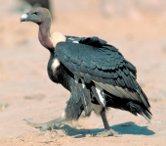
BMA News, published by the British Medical Association (BMA), reported on the near-extinction of several vulture species in India (July 9, 2005).
The BMA noted that in the 1980s, these birds were the most abundant large birds of prey in the world. However, in the last 12 years, the population had crashed by 97%.
In a country where these birds actually provide a useful service by scavenging rotting carcasses, this is seen as a big problem.
How did this happen?
- The anti-inflammatory, diclofenac, (similar to ibuprofen), was used by cattle farmers as a popular cure-all to treat a variety of diseases.
- Vultures feeding on carcasses of cows treated with the drug died of kidney failure as it was a poison for the vultures.
- The use of this medication was
careless and casual.
Why the careless and casual nature of this medicine use? The article opined that there was only one answer: ferocious marketing by Big Pharma to help ensure its products were used by the widest possible consumer spectrum.
(Big Pharma
refers to the huge multinational pharmaceutical companies that have a lot of influence around the world on various global health issues. This site’s section on pharmaceutical corporations and medical research discusses more about this industry.)
Declining number of polar bears
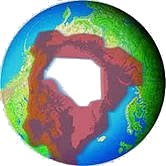
The World Wildlife Fund for Nature lists toxic pollution, oil exploration, and hunting, as well as climate change, as the threats polar bears face.
Polar bears are found throughout the circumpolar Arctic on pack ice, along or near coasts, and on islands:
The situation has become dire enough for the Bush Administration in the US to propose to list the polar bear as threatened under the Endangered Species Act.

This itself is an interesting turn of events as the Bush Administration has typically been reluctant to acknowledge concerns about climate change, and a lot of lobbying by environmental groups has led to this proposal.
Earlier in 2006, the World Conservation Union (IUCN) had already put the polar bear on their Red List of Threatened Species.
Declining number of penguins?
A concern about crashing numbers of a particular species of penguin in recent years, the rockhoppers, shows that there may be numerous complicated factors causing this, and it is not always easy to know for sure. In the Falkland Islands alone, the species numbers have dropped from 600,000 to 420,000 in just 6 years, and down from 1.5 million in 1932. But from all their habitats millions have recently vanished.
Scientists are struggling to wonder whether it is starvation due to overfishing, climate change, a combination, or some other factors affecting this species.
Declining amphibian populations

Amphibians are particularly sensitive to changes in the environment. Amphibians have been described as a marker species or the equivalent of canaries of the coal mines
meaning they provide an important signal to the health of biodiversity; when they are stressed and struggling, biodiversity may be under pressure. When they are doing well, biodiversity is probably healthy.
Unfortunately, as has been feared for many years now, amphibian species are declining at an alarming rate.
As described further on this site’s biodiversity section, causes for such an alarming rate of decline is not entirely natural.
Declining number of monkeys, apes and other primates
A report by the world’s foremost primate authorities, the International Primatological Society, presented the state of primates around the world. They found that of the world’s 634 kinds of primates almost 50 percent are in danger of going extinct.
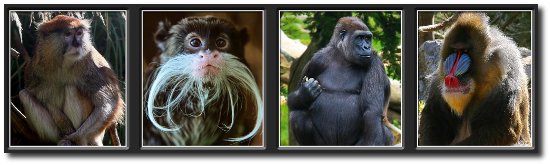
Breaking that down further , the IUCN had the following numbers and percentages of primates that fell into their Red List classification for species that are deemed Vulnerable, Endangered or Critically Endangered:
- Africa: 63 species and subspecies (37% of all African primates)
- Asia: 120 species and subspecies (71% of all Asian primates)
- Madagascar: 41 species and subspecies (43% of all Malagasy primates)
- Neotropics: 79 species and subspecies (40% of all Neotropical primates)
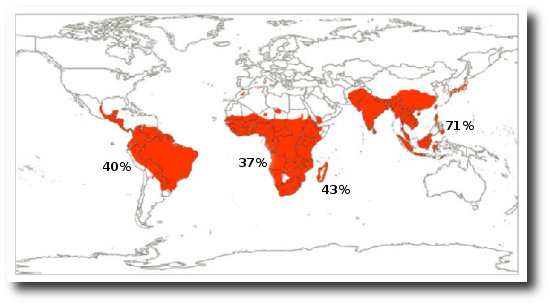
Causes included habitat destruction, the hunting of primates for food and an illegal wildlife trade.
It’s also important to note that within the various species of apes are sub-species. For example, mountain gorillas are a species of gorilla, and mountain gorilla numbers are incredibly low, approximately 720, according to the International Gorilla Conservation Program.
Gorillas have often been stereotypes as aggressive, yet they are almost the opposite, and as this following award-winning video shows, there is much in their gentle and peaceful nature that humans can relate to.
AIDS Research also Affected
In 1999 scientists revealed what they believed was the origins of AIDS. The source comes from a type of chimpanzee that is immune to the virus. Unfortunately, the forests in which they live are being opened up by logging companies, resulting in a destruction of the chimpanzee’s habitat.
Also hunting of these and other animals is on the increase in the forest. All these factors are preventing further studies of the possible cures for AIDS. (For more about the immense problems around the world from AIDS, including political issues, check out this web site’s section on AIDS.)
New species still being found; makes conservation more important
As reported by University of California, Berkeley, using DNA comparisons, scientists have discovered what they have termed an evolutionary concept called parallelism, a situation where two organisms independently come up with the same adaptation to a particular environment.
This has an additional ramification when it comes to protecting biodiversity and endangered species. This is because in the past what we may have considered to be one species could actually be many. But, as pointed out by scientists, by putting them all in one group, it under-represents biodiversity, and these different evolutionarily species would not get the protection otherwise needed.
An example of this can be seen with the African elephant, where forest dwelling species are found to be different species to the ones found in the savannahs, as reported by the Telegraph newspaper. As the article also points out, Instead of assuming that 500,000 elephants exist in Africa, it now seems that there are many fewer of each kind, and
they are both much more endangered than we presumed
, said Dr Georgiadis [of the Mpala Research Centre in Kenya.]
In June 2002, it was announced that two never-before described species of monkey have been found in Brazil’s Amazon rainforest. In October 2004, the BBC reported that a new giant ape has been found in the Democratic Republic of Congo, similar to a giant chimpanzee but behaving much like gorillas. In December 2004, a new species of monkey was discovered in India. These remarkable finds shows that there is still much to discover and learn about biodiversity in general.
In February 2006, scientists revealed that they had discovered hundreds of new species in a remote mountain rainforest region of western New Guinea. These species included birds, frogs, butterflies, palm trees, and many other plants yet to be classified. Other animals such as tree kangaroos, wallabies, and anteaters—all extremely rare elsewhere—were also found. In addition, scientists noticed that many of the animals were not afraid of humans, and some were even easily picked up, suggesting they had generally not encountered humans before.
In March 2006, Scientific American reported that in Laos, a rodent, believed to have been extict for 11 million years, was found alive and so provides a compelling argument for preservation efforts in Southeast Asia.
In December 2008, WWF released a report noting that over 1000 new species have been discovered in the Greater Mekong Region of Southeast Asia in just the last decade from 1997 to 2007.
The region covers Cambodia, Lao PDR, Myanmar, Thailand, Vietnam and the southern Chinese province of Yunnan, the six countries through which the Mekong River flows. The species include 519 plants, 279 fish, 88 frogs, 88 spiders, 46 lizards, 22 snakes, 15 mammals, 4 birds, 4 turtles, 2 salamanders and a toad.
In addition, it was also estimated that thousands of new invertebrate species were also discovered during this period, further highlighting the region’s immense biodiversity.
Images of some of the species were also published:
Conservation, protecting and preserving is therefore more about the species in question; it requires the protection of their habitat too, which in turn helps many other species in those same areas.
Sustainable Development and Conservation
The factors described above that affect AIDS research also highlights a deeper aspect of other related issues affecting conservation. In Europe, for example, threats such as increased agricultural/land requirements, hunting, persecution and land-claims etc are contributing to a shrinking biodiversity in Europe.
Efforts to move towards sustainable development and conservation efforts are therefore beginning to be based on the understanding that issues such as poverty need to be addressed, to provide people with alternatives.
Poverty and Conservation; Need to address root causes
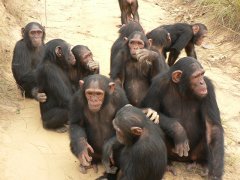
On April 16, 2003, Britain’s BBC aired an award-winning documentary titled Ape Hunters, about how apes in Central Africa are being hunted for their bushmeat, almost to extinction.
The documentary also explored the inter-relationship and challenges between
- Commercial logging
- Increased bushmeat consumption, and
- How poachers fared when offered sustainable development as an alternative to hunting
The documentary highlighted that while in the wealthier parts of the world we see conservation as desirable and easily recognize the importance and urgency of protecting the rapidly declining numbers of the great apes, what is less recognized are the complex multitude of causes, of which the wealthy world also plays a negative part. In effect, it has been easier to blame others
and almost ignoring our own impacts.
That is, as well as hunting for bushmeat leading to concerns about dwindling numbers of animals, the causes of the increase in bushmeat consumption need understanding.
For example, in small villages on the frontiers of the forest, individual bushmeat consumption has been part of local customs for a long time, as there are no domesticated animals, and the forest has been the source of survival for villagers, for most of their requirements.
However, increased poverty in nations such as Cameroon has forced more villagers to the bigger cities to look for work. This has brought the custom of bushmeat consumption to a larger population, thus increasing demand for it.


In addition, increased commercial logging (about 50% of the timber goes to Europe, the documentary pointed out) has resulted in dense forest being opened up allowing hunters and poachers to go further into the forest than ever before.
Bushmeat hunting is more profitable than other options, even though some hunters pointed out that if there were other options, they would not hunt. Occasionally, illegal logging and commercial logging company employees such as truckers have also been involved in illegal trading of bushmeat.
Sustainable development alternatives have been attempted. For example, projects have promoted the protection of the apes, rather than hunting. This has been through encouraging and provide real incentives for hunters themselves to protect the apes. A focus has been to attract tourists, who would be willing to pay to see these animals in the wild, thus sustaining the people and paying for conservation and other measures.

Although this approach has proven successful in other places, it is unfortunately not always guaranteed to work. The documentary followed some former-hunters who were attracted to the idea, but also highlighted the difficulties in this. For example:
- Causes of poverty were still not being addressed, so it was hard for people to go for alternatives.
- To pay former hunters, the projects of course needed proof that these people were indeed attempting to find the apes and allow those apes to slowly get familiar and accustomed to humans, so that tourists could eventually be guided in. However, finding and photographing these apes in the dense jungle could be so challenging that sometimes it would seem like a futile effort.
- Although there were successful sitings and eventual interaction, the promise of tourists has not materialized, and so funding was dwindling.
- The villagers had also been encouraged to grow small plots of cash crops, such as cassava and plantain. As these were growing near the forests, occasionally a group of apes would destroy those crops in their search for food, causing anger amongst the villagers whose immediate survival depended on those crops, as many people would go hungry otherwise.
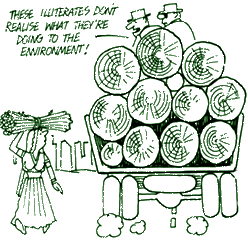
In detailing the impact of the logging companies in opening up the forests for increased destruction of habitat and more poaching, some African development organizations also pointed out that western consumer life styles therefore had an impact on the dwindling numbers of apes, because those demands fuel a lot of deforestation.
Effects of Pollution
Pollution (land and marine) are long known to have negative impacts on wildlife and the environment.
From industrial and agricultural run-offs to household waste and more can end up far from the source, causing problems for people and the environment, even as far as the arctic, as the video from WWF notes.
The WWF also says over 80% of marine pollution comes from land-based activities and that a staggering amount of waste, much of which has only existed for the past 50 years or so, enters the oceans each year.
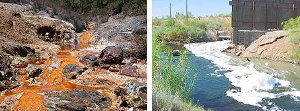


Examples of waste produced on land ending up in the oceans that the WWF lists include:
- Oil
- Fertilizer
- Solid garbage
- Sewage disposal
- Toxic man-made chemicals
The WWF also notes that more oil pollution comes from land than from oil spills, while fertilizer runoff contributes to various oceanic dead zones around the world. The solid garbage includes plastic bags, bottles, packaging, etc. Sewage disposal is often untreated and toxic chemicals contaminate almost every marine organism, from the tiniest to the largest.
Inter Press Service adds that military debris also threaten coral ecosystems, reefs, fish and marine wildlife:
The U.S. Army dumped over 8,000 tonnes of chemical weapons off Hawaii,said Paul Walker, director of Global Green, at the recently concluded Fifth U.N. International Marine Debris Clearance conference in Hawaii. Around 300,000 tonnes of chemical warfare agents were dumped in oceans from 1946 to 1965. Upwards of 400,000 gas filled-bombs and rockets float in U.S. waters. 40,000 tonnes of Conventional Weapons (CW) are in the Baltic Sea. 21,000 tonnes of CW agents float in Australian waters, and more than 6,600 tonnes off the coast of Japan.
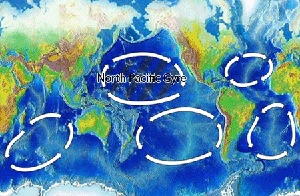

In the North Pacific Ocean, is a great gyre (a great ocean current) of marine litter known as The Great Pacific Garbage Patch, formed as a result of marine pollution gathered by ocean currents drawing in garbage from far away places such as Japan and North America. Some types of plastics and other garbage from this gyre has ended up in the stomachs of marine animals and birds, including sea turtles and albatross birds.
Greenpeace says that at least 267 different species are known to have suffered from entanglement or ingestion of marine debris including seabirds, turtles, seals, sea lions, whales and fish. Some of these species are found in the North Pacific Gyre.
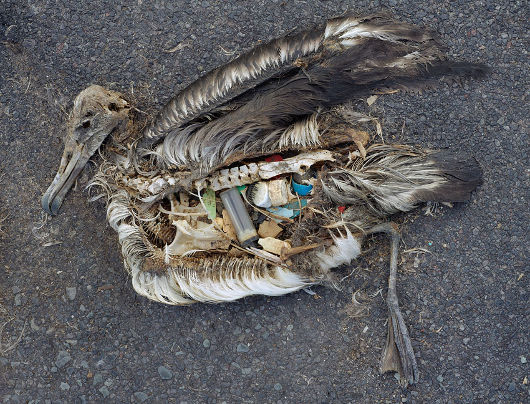
The UNEP (United Nations Environment Programme) also notes that marine litter poses a growing threat to marine and coastal development and that most marine litter consists of material that degrades slowly, if at all, so a continuous input of large quantities of these items results in a gradual build-up in the marine and coastal environment.
Species at risk elsewhere
While the documentary mentioned above focused on Cameroon, other places in Africa and around the world also show similar relationships between poverty, consumption, and environmental destruction.


The fourth most populous country, Indonesia, houses 10 percent of the earth’s remaining tropical forests. Not only are forests depleting year by year, but species that depend on the forests are also disappearing, and these species are needed to ensure a stable ecosystem.
The person of the Forest
, or Orangutan, is one such species at risk due to corruption, excessive logging and poaching. Palm oil plantations have recently been increased because of world demand and their use as biofuels. Mining and fragmentation by roads are other problems they face.
Other species at risk in Indonesia include the Sumatran Tiger, Sumatran and Javan Rhino and the Asian Elephant.
See the following for some more information on related issues:
- From this web site:
- Causes of Poverty
- Behind Consumption and Consumerism
- Sustainable Development
- Loss of Biodiversity, in particular the section on deforestation
- Centre for Science and Environment in India, provides many articles on sustainable development projects recognizing the importance of involving local people in conservation issues. A cartoon of theirs also captures the inter-related aspects vividly:
© Centre for Science and Environment,
Campaign on Forests - The African Conservation Foundation is a portal web site with many links and information on all sorts of issues related to conservation in Africa.
- (The links in these above pages, and at the end of this page provide a lot more information too.)
Corporate Accountability
Another source of problems that can affect an environment and the species that live in it stems from poor or careless industrial practices or management of industrial waste by government and large corporations. In Russia, for example, radioactive waste is threatening the Arctic region. The figures and impact of this mentioned in the previous link suggests that the amount of radiation is similar to that which was present at the Chernobyl incident in 1986.
The Gold industry has also left a set of environmental, social and political problems in its wake. For example, a dam on a gold mine owned by Aurul SA broke, spilling waste water, highly contaminated with cyanides and heavy metals. From the river in Romania it made its way into Hungary. Amongst various other things, according to the World Wide Fund for Nature, WWF,
- A rare species of otter, that was only 400 strong before the spill can no longer be seen.
- More than
100 tonnes of dead fish have been collected from the river’s surface—but many more are believed to be lying on the river bottom. In addition to those species directly affected by the toxic spill, there is a secondary danger to all species which feed on anything living in the river
. - Farmers have reported dead or blinded livestock.
- The ecological damage has been huge and the cost estimates are still to be completed. Some scientists fear that it will take many years to restore the waters.
WWF’s special coverage of this issue is no longer available online, but they have a report about it which has further details.
The corporate-led form of globalization that we see today also affects how natural resources are used and what priorities they are used for. This site’s section on corporations and the environment looks into some of these issues further.
Media coverage of these issues also feels a bit limited. For example, dramatic incidents, such as nuclear meltdowns or large tanker oil spills may create sustained media coverage but other incidents which may be just as damaging in their impact, but less dramatic, are heard of much less, and certainly not in such a sustained manner.
Even with oil spills, some huge spills go almost unmentioned. As reported by the Swedish Umeå International School of Public Health and noted by The Guardian, more than 30bn gallons of toxic wastes and crude oil had been discharged into the land and waterways of Ecuador’s Amazon basin over the past 3 decades. .
That 30 billion compares to the 10.8 million gallons spilled in the Exxon Valdez disaster in 1989 in Alaska or 205 million gallons spilt in BP’s Deepwater Horizon disaster in the Gulf of Mexico. The report also claims there are at least two big oil spills per week in the area. The report also details the damage and wasteful extraction process further. (Chevron are facing huge fines in Ecuador for the environmental damage, which they dispute.)
The magnitude of the spills in Ecuador is so much larger than the more dramatic oil spills, yet it is the latter that people tend to remember, as they are the ones more constantly reported on, especially at prime time.
And as well as environmental damage, such practices often contribute to social problems including local conflict, corruption, crime and instability as the oil curse in Nigeria has shown (which, as noted by The Guardian has had over 7,000 oil spills between 1970 and 2000, with thousands of smaller ones still waiting to be cleaned up, for example. Between 1976 and 1996, more than 2.4m barrels contaminated the environment. Shell, a major player in the Niger Delta, claims most of their spills are caused by vandalism and terrorism, which local communities hotly dispute).
There are countless other examples of how industrial run-off or other practices has caused a lot of environmental damage. And much of it is for our wasteful lifestyles, but as the following quotes highlight, these are examples of working for the wrong kind of efficiency.
It is true that cutting down forests or converting natural forests into monocultures of pine and eucalyptus for industrial raw material generates revenues and growth. But this growth is based on robbing the forest of its biodiversity and its capacity to conserve soil and water. This growth is based on robbing forest communities of their sources of food, fodder, fuel, fiber, medicine, and security form floods and drought.
The closure of industries faced with cheaper goods produced by foreign competitors is correctly labeled as the efficiency of a market economy. But as the automobile engineers said when they built those five hundred horsepower gas-guzzlers for a world that truly wanted efficient cars,
We are working for the wrong kind of efficiency.
Low Frequency Active Sonar Affect Whales, Dolphins and Other Sea Life
The United States Navy and NATO have been using and testing Low Frequency Active Sonar (LFAS) to detect enemy submarines. Many dolphins and whales who use their own sonar to navigate the oceans have been severely affected. The sound is so loud (over 235dB) that it can and kill and maim whales, dolphins and sea life. LFAS is known to be harmful to humans as well.
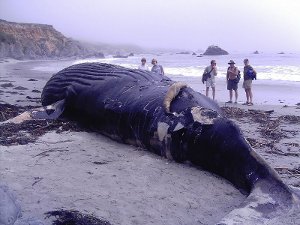
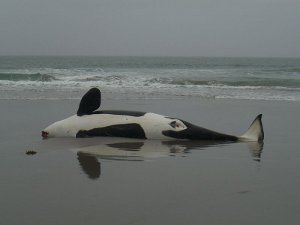


Global protesting and four lawsuits have convinced the US Navy to end its Low Frequency Active Sonar (LFAS) tests early in the waters off Hawaii. In many places, the general public has reacted strongly to the damage inflicted on marine life and the protest is growing fast as more people become aware of the tests. The campaign still goes on to ensure awareness is raised.
Unfortunately, tests still continue and whales and other marine animals are thought to have been being killed as a result. And, according to environmental organization, Natural Resources Defense Council, the U.S. Navy is now seeking the power to exempt itself from environmental laws
that are designed to address this concern. (See also this link for additional information.)
For more on LFAS:
- The Stop LFAS campaign web site has generated over half a million email protests and provides links to more information
- A report from the National Resources Defense Council, titled Sounding the Depths; Supertankers, Sonar, and the Rise of Undersea Noise
-
These articles from the BBC:
- Julianna Kettlewell, Whales
suffer from the bends
, BBC, December 23, 2004 - Call for study on impact of sonar, BBC, October 23, 2004
- Sonar 'may cause whale deaths', BBC, October 8, 2003
- Janet Williams, US Navy sued over new sonars, BBC, August 8, 2002
- Why sonar may harm whales and dolphins, BBC, August 4, 2002
- Julianna Kettlewell, Whales
- Military sonar blamed for mass dolphin strandings, by Lewis Smith, for The Times (London), April 8, 2009
More Information
For more information on animal and nature conservation, in general: (as I have hardly done this subject much justice so far!)
- The World Wide Fund for Nature presents information about all aspects of nature.
- The March 1997 issue of New Internationalist magazine is devoted to endangered species.
- The webdirectory is a search engine for environment issues. They have thousands of links.
- Oneworld.net’s coverage of conservation provides many articles.
- The African Conservation Foundation is a portal web site with many links and information on all sorts of issues related to conservation in Africa.
Author and Page Information
- Created:
- Last updated: